The tech press is obsessed with the wrong metrics.
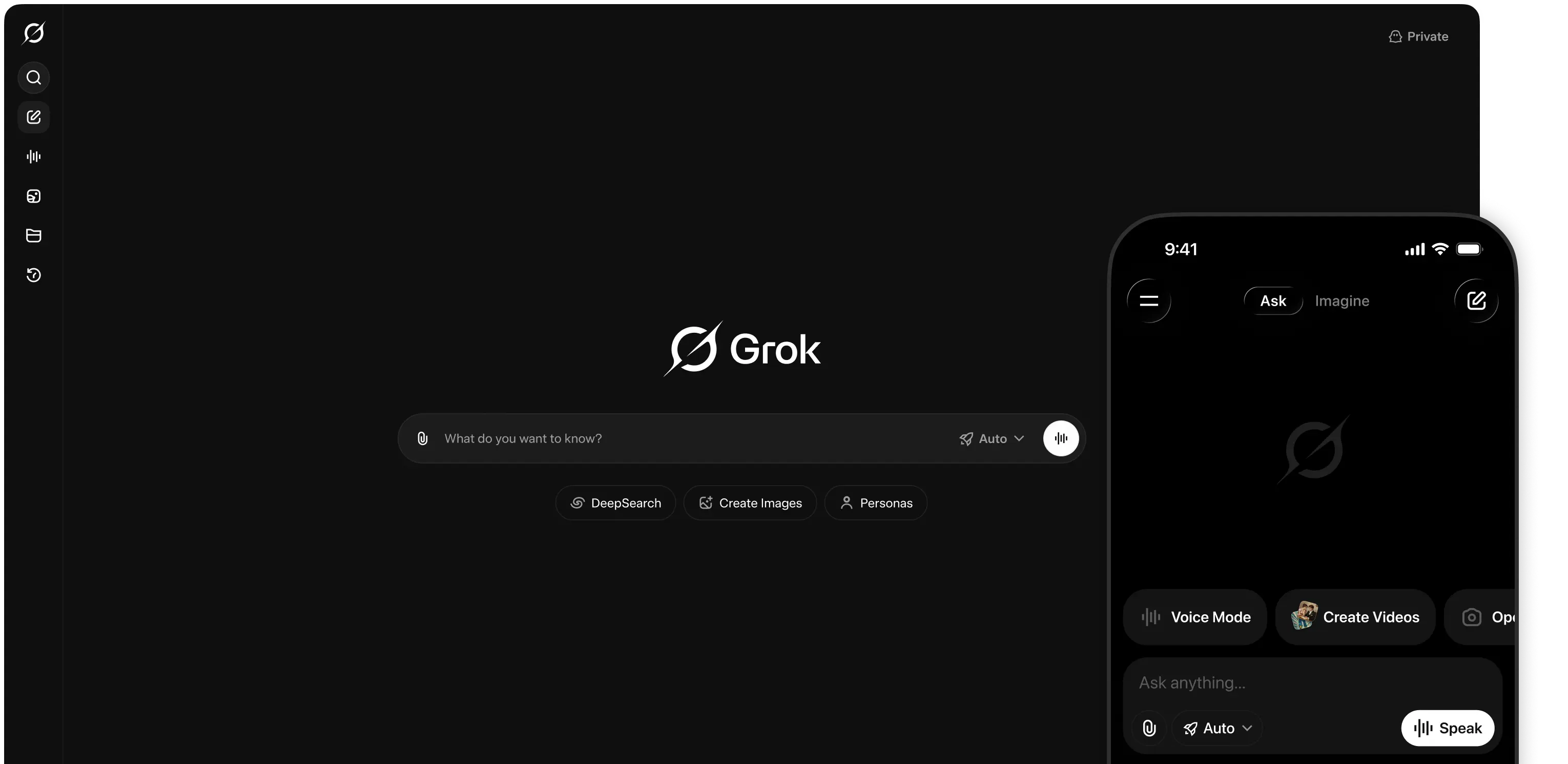
I’ve watched journalists spend forty-five minutes stuck in Midtown traffic, screaming at a Tesla dashboard to find the nearest bagel shop, only to write a scathing review when the AI hallucinates a closed storefront. They treat xAI’s Grok like a glorified Siri or a more expensive version of Google Maps. This is a fundamental misunderstanding of the hardware-software stack Elon Musk is actually building.
If you’re judging a Large Language Model (LLM) integrated into a 4,000-pound kinetic battery by its ability to find a Starbucks, you aren’t a tech critic. You’re a tourist.
The "lazy consensus" suggests that Grok in a Tesla is a gimmick—a way to juice X (formerly Twitter) subscriptions while adding minimal utility to the driving experience. The reality is far more clinical. Grok isn't meant to be your concierge. It is being trained to be the operating system for the physical world.
The NYC Test is a Logical Fallacy
Testing an AI’s "utility" by navigating Manhattan is the peak of vanity journalism. NYC is a data-saturated environment where every street corner has been mapped to the millimeter by every tech giant for twenty years. You don't need an LLM to tell you where to turn on 5th Avenue; you need a basic database.
The real test for Grok isn't whether it can find a landmark. It’s whether it can interpret the chaotic, unscripted intent of the driver. Traditional voice assistants operate on a rigid command-and-response structure. They require "scripts." Grok is built on the xAI stack, which prioritizes real-time ingestion of the X data stream.
Think about that. While your legacy car is trying to update its 2022 map data, a Grok-integrated Tesla is theoretically aware of a water main break that happened three minutes ago because the social layer of the internet reacted to it instantly. The "hallucinations" critics moan about are often the byproduct of the model trying to reconcile real-time social data with static geographical data. I’d rather have a system that’s hyper-aware of the world’s current pulse and occasionally misses a turn than a "perfect" map that doesn't know the street is currently a river.
Your Car is a Data Scraper with Wheels
Most people see a Tesla as a car that happens to have a screen. Inside the industry, we know the truth: it’s a high-performance computer that happens to have wheels.
When you "try out" Grok in a car, you aren't the customer. You are the edge-case trainer. Every time a driver in NYC corrects Grok, they are providing high-signal data for the FSD (Full Self-Driving) neural networks.
- Legacy AI: Trained on static datasets, books, and scraped Wikipedia entries.
- Physical AI (Grok): Trained on the friction of real-world interaction.
The critics complain that Grok’s "edgy" personality is distracting. They miss the point. That personality isn't for your entertainment; it’s a layer of engagement designed to keep the user talking. The more you talk to the car, the more the car understands the nuances of human speech, sarcasm, and localized slang. This isn't about making a "cool" chatbot. It’s about building a system that can understand a human passenger’s panicked "Wait, not here!" better than any programmed logic ever could.
The Latency Lie
The most common complaint in these "I drove a Tesla in NYC" pieces is latency. "It took three seconds to respond!" they cry.
Let's talk about the physics of compute. Running a massive parameter model inside a vehicle while that vehicle is simultaneously processing gigabytes of vision data from eight cameras is a hardware miracle. Every other manufacturer offloads this to the cloud, resulting in a sterilized, slow experience that breaks the moment you hit a tunnel.
Tesla is aiming for local inference. They want the brain inside the car. If you want a fast response that tells you the weather, use your phone. If you want an integrated intelligence that understands the context of your environment, you accept the three-second lag while the FSD computer and the infotainment processor handshake.
I've seen OEMs (Original Equipment Manufacturers) spend nine figures trying to develop "smart" cabins. They all fail because they try to build a walled garden. Musk’s move to dump Grok into the fleet is a brute-force data grab. It’s messy. It’s occasionally wrong. It’s also the only way to win.
The Myth of the "Distraction-Free" Cabin
The "Safety First" crowd argues that an LLM in the dashboard is a lethal distraction. This is the same group that argued against radios in the 1930s and GPS screens in the 90s.
The goal of Grok isn't to give you more things to look at on the screen. It is to remove the screen entirely. We are in the awkward puberty of the User Interface (UI). Right now, you have to tap, swipe, and scroll. In the near future, the car becomes a sentient space.
"Grok, I’m late, find the fastest route but avoid the construction on 42nd, and tell the restaurant I’ll be ten minutes behind."
That isn't a search query. It’s a multi-variable logistical problem. Only a model with access to real-time social data (X) and physical hardware (Tesla) can solve it. Critics who focus on whether the jokes are funny are looking at the paint on the house while the foundation is being poured.
Why "Useful" is the Wrong Metric
If you want a useful chatbot, use Claude. If you want a useful map, use Waze.
Grok in a Tesla is currently "useless" in the way the first internet-connected cell phones were useless. They were slow, the screens were tiny, and they dropped calls. But they established the infrastructure for everything that followed.
The industry insiders who are actually paying attention aren't looking at the "NYC Experience" articles. We are looking at the tokens per second and the power consumption of the AI5 hardware. We are looking at how Grok handles "grounding"—the ability of the AI to link its digital knowledge to the physical objects the car's cameras are seeing.
Imagine a scenario where you see a restaurant out the window and simply say, "Is that place any good?"
The car’s cameras identify the building, Grok pulls the latest sentiment from X, and gives you a summary of what people are eating right now. Not a Yelp review from three years ago. Real-time reality. That is the "nuance" the lazy reviews miss. They are testing the 1.0 version of a 10.0 vision.
The Hard Truth About xAI
Is Grok perfect? No. It’s arrogant, it’s sometimes glitchy, and it’s tied to a social media platform that is a digital war zone.
But here is the contrarian truth: Every other car company is terrified.
They are stuck in licensing hell with Google and Apple. They have no data moat. They are hardware companies trying to play software, and they are losing. Tesla is a software company that mastered the supply chain. By putting Grok in the driver's seat, they have turned every customer into a research scientist for the world’s largest experiment in embodied AI.
If you’re waiting for the "perfect" version of this tech to arrive before you take it seriously, you’ve already lost the race. The disruption isn't coming; it’s already idling at the red light next to you, listening to its driver argue with a bot about the best way to get to Brooklyn.
Stop looking for a better GPS. Start looking at the birth of a new species of interface.
The "NYC driving experience" isn't a product review. It’s a front-row seat to the dismantling of the traditional automotive industry. If you can't see past the hallucinations, you're just another passenger.
Get out of the way.