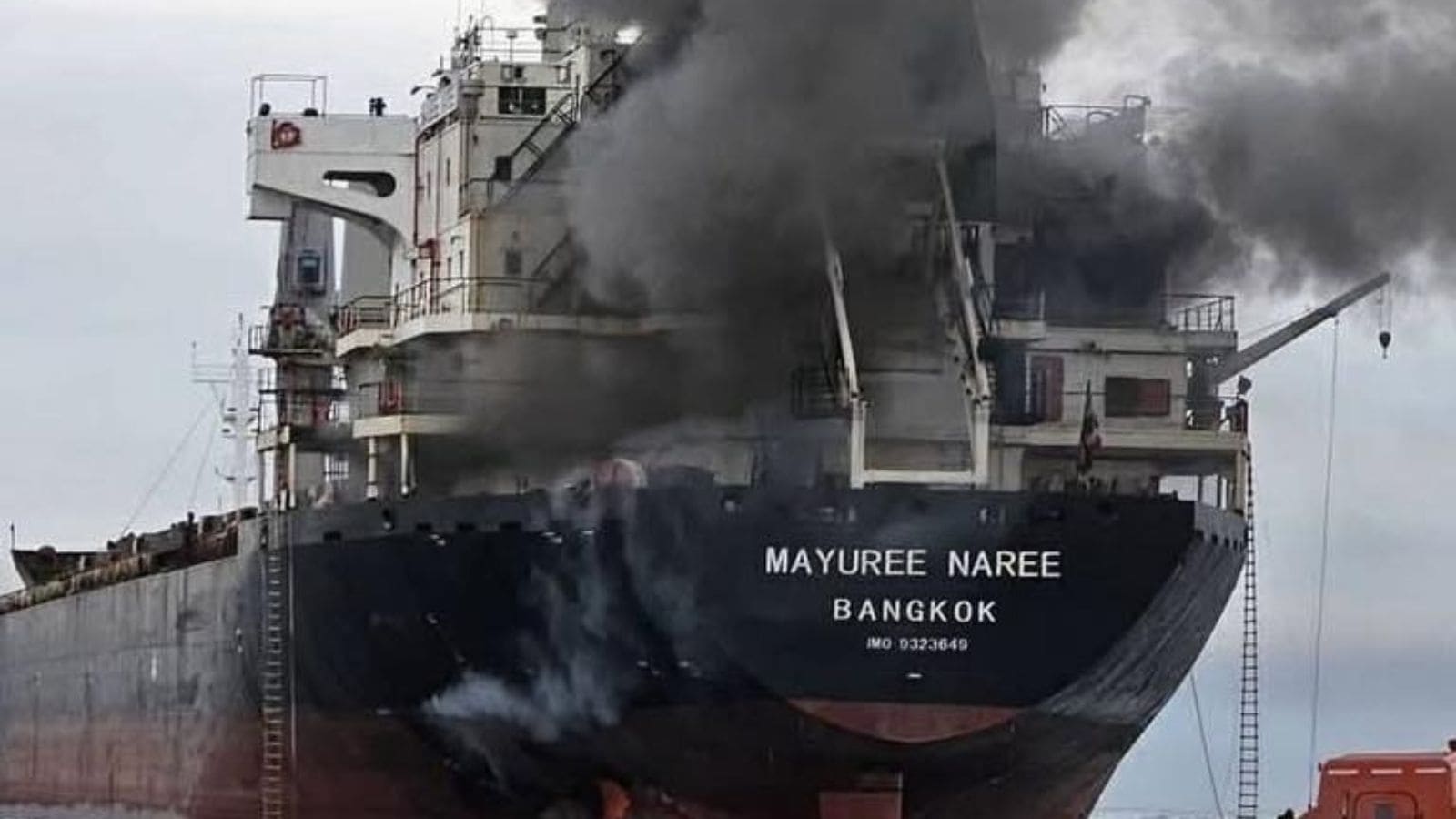
The Strait of Hormuz just reminded the global shipping industry why it’s the most dangerous choke point on the map. When the Gujarat-bound bulk carrier Mayuree Naree was targeted recently, it wasn't just another maritime statistic. It was a direct hit on India’s energy and trade security. This vessel, laden with cargo destined for Indian shores, found itself in the crosshairs of regional volatility that's rapidly spiraling out of control. India has already "deplored" the strike, but diplomatic language doesn't patch holes in a hull or protect sailors navigating these treacherous waters.
You have to look at the geography to understand the stakes. The Strait of Hormuz is a narrow strip of water separating Oman and Iran. It connects the Persian Gulf with the Gulf of Oman and the Arabian Sea. At its narrowest, the shipping lane is only about two miles wide in either direction. That’s a tiny window for the world’s oil and gas to pass through. When a ship like the Mayuree Naree gets harassed or attacked here, the ripples are felt in every petrol pump and factory across the Indian subcontinent. Also making headlines in related news: The UK Counter Terrorism Trap and the Policing of Grandmothers.
Why the Mayuree Naree Attack Changes the Narrative
For months, the focus of maritime security stayed locked on the Red Sea and the Houthi rebels in Yemen. That was the primary headache. But the strike on the Mayuree Naree proves that the instability is migrating. This ship wasn't wandering aimlessly. It had a clear destination in Gujarat, a state that serves as the industrial engine of India.
The attack happened in a zone where "accidental" strikes are rare. It was calculated. India’s Ministry of External Affairs didn't mince words, expressing deep concern over the deteriorating security situation. This isn't just about one ship. It’s about the precedent. If Gujarat-bound vessels aren't safe in the Strait, the entire supply chain for western India is at risk. We're talking about a massive logistical nightmare that could force ships to take longer, more expensive routes, or stop sailing altogether. More information into this topic are covered by NBC News.
The Reality of Maritime Choke Points
Choke points are the Achilles' heel of global trade. The Strait of Hormuz handles roughly 20% of the world's liquid petroleum consumption. For India, that percentage is even more terrifying. We rely on this narrow passage for a huge chunk of our crude oil and LNG imports.
When you're a captain on a ship like the Mayuree Naree, you don't have many options. You can't just "swerve" to avoid a drone or a missile in a two-mile wide lane. You're a sitting duck. The technology used in these attacks is getting cheaper and more precise. We aren't seeing old-school piracy with speedboats and ladders anymore. We're seeing sophisticated aerial and sea-surface drones that can be launched from miles away with zero footprint.
India's Growing Role as a Maritime Policeman
New Delhi has been forced to step up. The Indian Navy has already increased its footprint in the Arabian Sea and the Gulf of Aden. They’ve been credited with several high-profile rescues and anti-piracy operations lately. But the Strait of Hormuz is a different beast. It’s a geopolitical minefield.
Directly intervening in the Strait means dancing around the territorial waters of powerful regional players. It’s a delicate balance. India wants to protect its ships without getting dragged into a regional war. That’s why the "deploring" of the strike is so significant. It’s a signal that India’s patience is wearing thin. We’re moving past the stage of just sending "concern" emails. There’s a real push for more aggressive patrolling and perhaps even onboard security details for high-value cargo ships.
The Economic Cost of Insecurity
Let’s talk money. Shipping isn't cheap, and it’s getting pricier by the hour. When a ship is attacked, insurance premiums for every other ship in that region skyrocket. These are called "War Risk" premiums.
- Insurance Spikes: A single attack can cause insurance costs to jump by 10% to 15% overnight for the entire fleet in the area.
- Freight Rates: Ship owners start charging "security surcharges" to cover the extra risk and the cost of private guards.
- Fuel Consumption: If ships have to sail faster to minimize their time in the "kill zone," they burn significantly more fuel.
All these costs get passed down to you. The price of the plastic in your phone, the fuel in your car, and even the food on your table is tied to the safety of ships like the Mayuree Naree. If the Strait stays this volatile, expect those prices to climb. It’s a simple equation of risk vs. reward. Right now, the risk is winning.
What the Competitors Missed
Most news outlets are just reporting the "what." They tell you a ship was hit, India got mad, and the ship is moving again. They miss the "why" and the "what next." They don't mention that the Mayuree Naree represents a shift in targeting patterns.
Earlier, ships were targeted based on their links to specific Western nations. Now, it seems like the net is widening. Being "neutral" or "Gujarat-bound" isn't the shield it used to be. This is a chaotic environment where the rules of engagement are being rewritten in real-time. If you're running a business that depends on imports, you can't afford to ignore this. The "safe" routes of 2023 are the combat zones of 2026.
How Shipping Companies are Reacting
Don't think the big players are just sitting around waiting for the next hit. They're changing how they operate. Some are turning off their AIS (Automatic Identification System) transponders to go "dark" while passing through the Strait. It's a gamble. If you go dark, you're harder to target, but you're also a massive collision risk in a crowded lane.
Others are hiring private maritime security companies (PMSCs). These are often former special forces operators who live on the ship for the duration of the transit. They bring high-tech surveillance and, in some cases, defensive weaponry. It’s a return to the era of armed merchant ships. It sounds like a movie, but it's the daily reality for crews in the Gulf.
The Human Element
We often forget the crew. The people on the Mayuree Naree didn't sign up for a war zone. They signed up to move cargo from point A to point B. The psychological toll of sailing through these waters is immense. Sailors are reporting high levels of stress and anxiety. Some are even refusing to sign contracts if the route includes the Strait of Hormuz or the Red Sea. This is leading to a labor shortage in the shipping industry, which—you guessed it—makes everything even more expensive.
Navigating the New Normal
If you're involved in logistics, manufacturing, or even just someone who cares about the economy, you need to watch the Indian Navy’s next move. They’re the ones who will define how India protects its interests. Expect to see more bilateral security agreements with Gulf nations. India is already working closely with the UAE and Oman to share intelligence.
The goal is to create a "security corridor" that allows Indian-flagged or Indian-bound vessels to pass with a higher degree of certainty. It won't be easy. It requires constant communication and a massive amount of naval hardware. But for a country that wants to be a global manufacturing hub, there isn't another choice. We can't build a "Make in India" future if the raw materials are sitting at the bottom of the ocean.
Stop thinking of maritime security as something that happens "out there." It's happening right now, and it affects your wallet. The Mayuree Naree is a wake-up call. We need to diversify our trade routes and invest heavily in our naval capacity. If we don't, we're essentially giving a third party a kill-switch for our economy.
Check your supply chain resilience today. If your business depends on a single shipping lane through the Middle East, you're more vulnerable than you think. Look into alternative ports, air freight for critical components, or regional warehousing to buffer against the next inevitable strike in the Strait.



