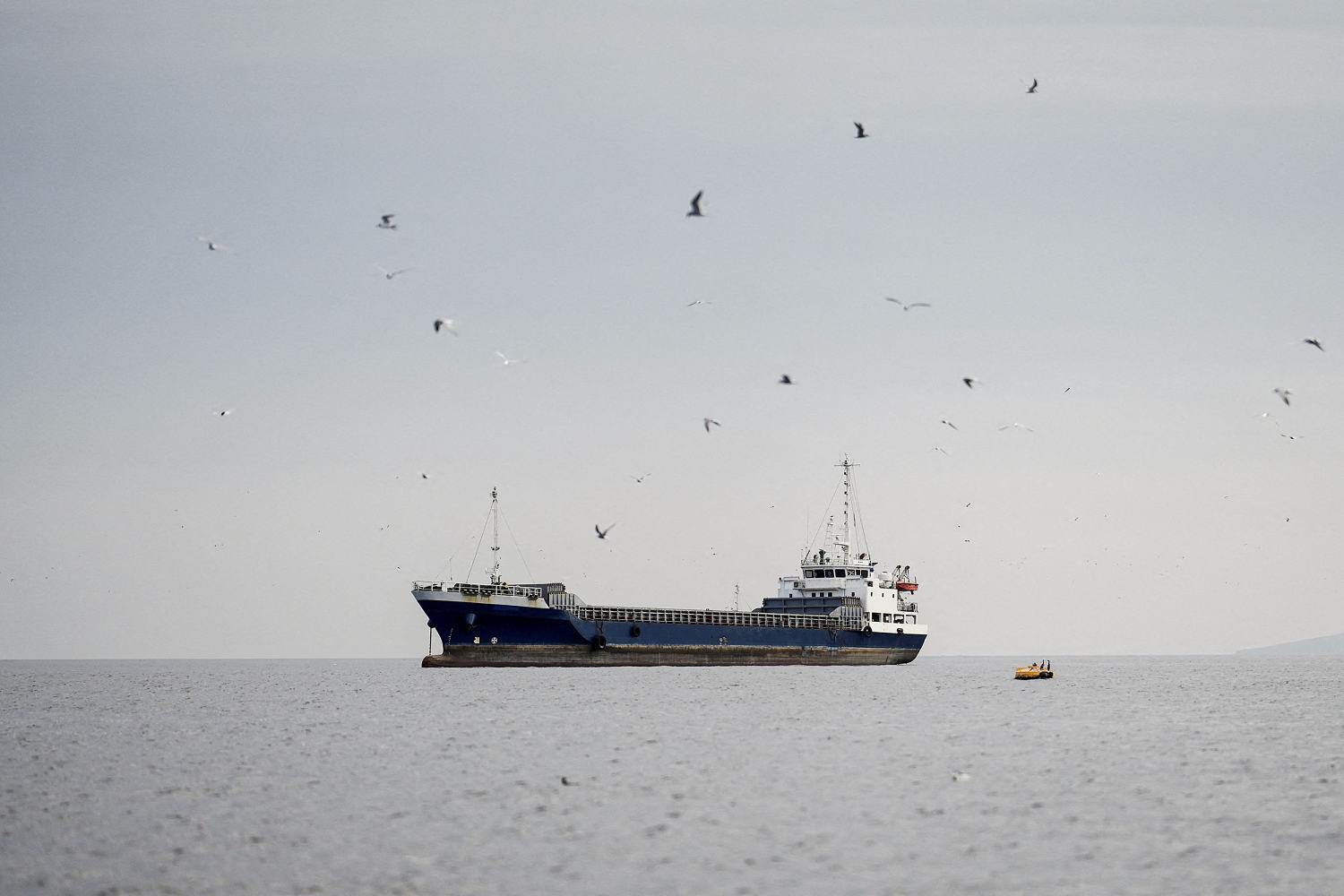
Crude oil markets are currently locked in a cycle of violent volatility driven by the escalating threat of a blockade in the Strait of Hormuz. While mainstream reports focus on daily price ticks, the deeper reality involves a fundamental shift in how global energy security is priced against geopolitical risk. Traders are no longer just betting on supply and demand; they are hedging against a total structural failure of the world’s most critical maritime artery. If the Strait closes, even partially, the resulting shock would likely push Brent crude far beyond the $100 mark, triggering a global inflationary spiral that central banks are ill-equipped to handle.
The Geopolitical Trigger Finger
The Strait of Hormuz is a narrow stretch of water, only 21 miles wide at its thinnest point, separating Oman and Iran. It carries roughly 20% of the world’s total petroleum liquids consumption every single day. This isn't just another shipping lane. It is the jugular vein of the global economy. When tensions flare between regional powers and Western interests, this strip of water becomes the ultimate leverage point.
Recent price swings aren't accidents. They are the market reacting to a specific brand of "shadow warfare." We see a pattern of seized tankers, drone interference, and naval posturing that serves a single purpose: to remind the world that the flow of oil is a privilege, not a right. For an analyst who has watched this play out since the tanker wars of the 1980s, the current climate feels different. The sophistication of the weaponry involved has outpaced the defensive capabilities of commercial shipping.
The Illusion of Diversification
Many argue that the rise of American shale and increased production in Guyana or Brazil has cushioned the blow of Middle Eastern instability. That is a dangerous oversimplification.
While the United States is now a net exporter of crude, oil is a fungible global commodity. If 20 million barrels per day (bpd) are removed from the global ledger because the Strait is mined or blockaded, the price spikes everywhere. A refinery in New Jersey or a gas station in Munich still pays the global market rate. You cannot "drill your way out" of a massive supply disruption in the Persian Gulf because the infrastructure of the world is built on the assumption that this water remains open.
The Mechanics of a Maritime Blockade
Closing the Strait doesn't require a massive conventional navy. It requires uncertainty.
In the world of shipping insurance, uncertainty is expensive. As soon as a kinetic event occurs—a missile strike on a VLCC (Very Large Crude Carrier) or the deployment of sea mines—insurance premiums, known as War Risk Surcharges, skyrocket. We have seen these rates jump by 500% in a matter of days during previous escalations.
When it becomes too expensive or too dangerous to insure a hull, the ships stop moving. You don't need to sink every tanker to stop the flow of oil; you just need to make the cost of moving it higher than the profit of selling it. This is the "soft blockade," a psychological and financial strangulation that precedes any physical barrier.
The Strategic Petroleum Reserve Trap
Governments often point to the Strategic Petroleum Reserve (SPR) as a safety net. This is a finite resource. In recent years, the U.S. SPR has been drawn down to levels not seen in decades to combat domestic inflation. Using the reserve to manage political optics during peacetime leaves the cupboard bare when a genuine supply emergency hits.
If the Strait of Hormuz shuts down for more than 30 days, the global SPR drawdowns would struggle to fill the 20 million bpd gap. We would see a scramble for physical barrels that would make the 1973 oil embargo look like a minor market correction.
China and the New Energy Diplomacy
One factor often ignored by Western media is the role of China as the primary customer of Gulf oil. Beijing imports roughly 10 million bpd of crude, much of it passing through Hormuz. This creates a complex triangular tension.
- Iran relies on China as its primary economic lifeline.
- China requires stability in the Strait to keep its industrial engine running.
- The West wants to maintain the flow of oil while sanctioning the very actors who control the Strait.
This puts China in a unique position of power. They are the only party with enough diplomatic and economic weight to talk both sides back from the ledge. However, if Beijing decides that a period of high oil prices serves their long-term goal of weakening Western economies or accelerating the global transition away from the dollar, they may choose to let the chaos simmer.
The Problem with Pipeline Workarounds
There are pipelines designed to bypass the Strait, such as the East-West Pipeline in Saudi Arabia and the Habshan-Fujairah pipeline in the UAE. On paper, these can move about 6.5 million bpd.
In practice, this is a drop in the bucket. These pipelines are also vulnerable to sabotage and lack the capacity to handle the sheer volume of a fully functioning sea route. Furthermore, they terminate at loading terminals that can become bottlenecks themselves. The "bypass" is an insurance policy that only pays out a fraction of the total loss.
Speculators and the Fear Premium
The "fear premium" is the extra cost added to a barrel of oil based on the probability of a supply disruption. Typically, this sits at $2 to $5. In the current environment, it has swelled.
Commodity traders use sophisticated algorithms to track satellite imagery of tanker movements and AIS (Automatic Identification System) data. When a tanker turns off its transponder near the Iranian coast, the algorithms trigger buy orders. This creates a feedback loop where even minor technical glitches or routine naval exercises can trigger a $3 jump in the price of West Texas Intermediate (WTI).
The danger here is decoupling. The price of oil is increasingly detached from the actual physical movement of goods and is instead being driven by the "paper market"—futures and options held by entities that have no intention of ever taking delivery of a single drop of oil. When the paper market panics, the real world pays the price at the pump.
The Fragility of Global Just-in-Time Shipping
We live in an era of just-in-time delivery. Refineries do not keep months of supply on hand; they keep days. A disruption in the Strait of Hormuz cascades through the supply chain with terrifying speed. Within a week, shipping schedules in Asia are thrown into disarray. Within two weeks, European refineries begin cutting runs. Within a month, global air travel and freight costs begin to climb, impacting the price of everything from iPhones to avocados.
The Coming Re-evaluation of Risk
Financial institutions have spent the last decade focused on the "energy transition" and the long-term decline of fossil fuels. They ignored the short-term reality of physical bottlenecks.
The current swings in oil prices are a wake-up call that the transition is not happening fast enough to negate the power of a few strategically placed sea mines. We are entering a period where "geopolitical risk" is no longer a footnote in an analyst's report—it is the lead headline.
Investors who assume the U.S. Navy will always keep the lanes open are betting on a historical status quo that is being challenged. Modern anti-ship missiles and asymmetric drone swarms mean that even a superpower's presence does not guarantee the safety of commercial transit. The cost of protecting these lanes is rising, and eventually, that cost will be permanently priced into every gallon of fuel.
The Inflationary Spiral
The real threat isn't just a high gas price. It is the destruction of consumer sentiment. When energy costs rise, it acts as a regressive tax on the entire population. It eats away at discretionary spending and forces businesses to raise prices to cover logistics.
Central banks, already struggling to hit their 2% inflation targets, find themselves in a "lose-lose" scenario. If they raise interest rates to fight the energy-driven inflation, they risk a deep recession. If they do nothing, the cost of living becomes unbearable.
The Strategic Reality
The volatility we are witnessing is the market attempting to price the unpriceable. How do you value a barrel of oil when the most important trade route in the world is under constant threat?
The answer is that you don't. You simply wait for the next headline, the next seized ship, or the next failed diplomatic mission. The Strait of Hormuz is no longer just a geographical feature; it is a permanent volatility engine. Until there is a fundamental shift in the security architecture of the Middle East, or a radical reduction in global oil dependence, the "swings" aren't going away. They are the new baseline.
The hard truth is that the global economy is one bad night in the Persian Gulf away from a decade-defining crisis. Every time the price of oil jumps $2 on news of a "minor skirmish," the market is telling us exactly how thin the ice really is. You should stop looking at the price of oil as a reflection of how much we are using, and start looking at it as a measurement of how much we are afraid of losing.
The era of cheap, reliable energy transit is over, replaced by a permanent state of high-stakes maritime brinkmanship.