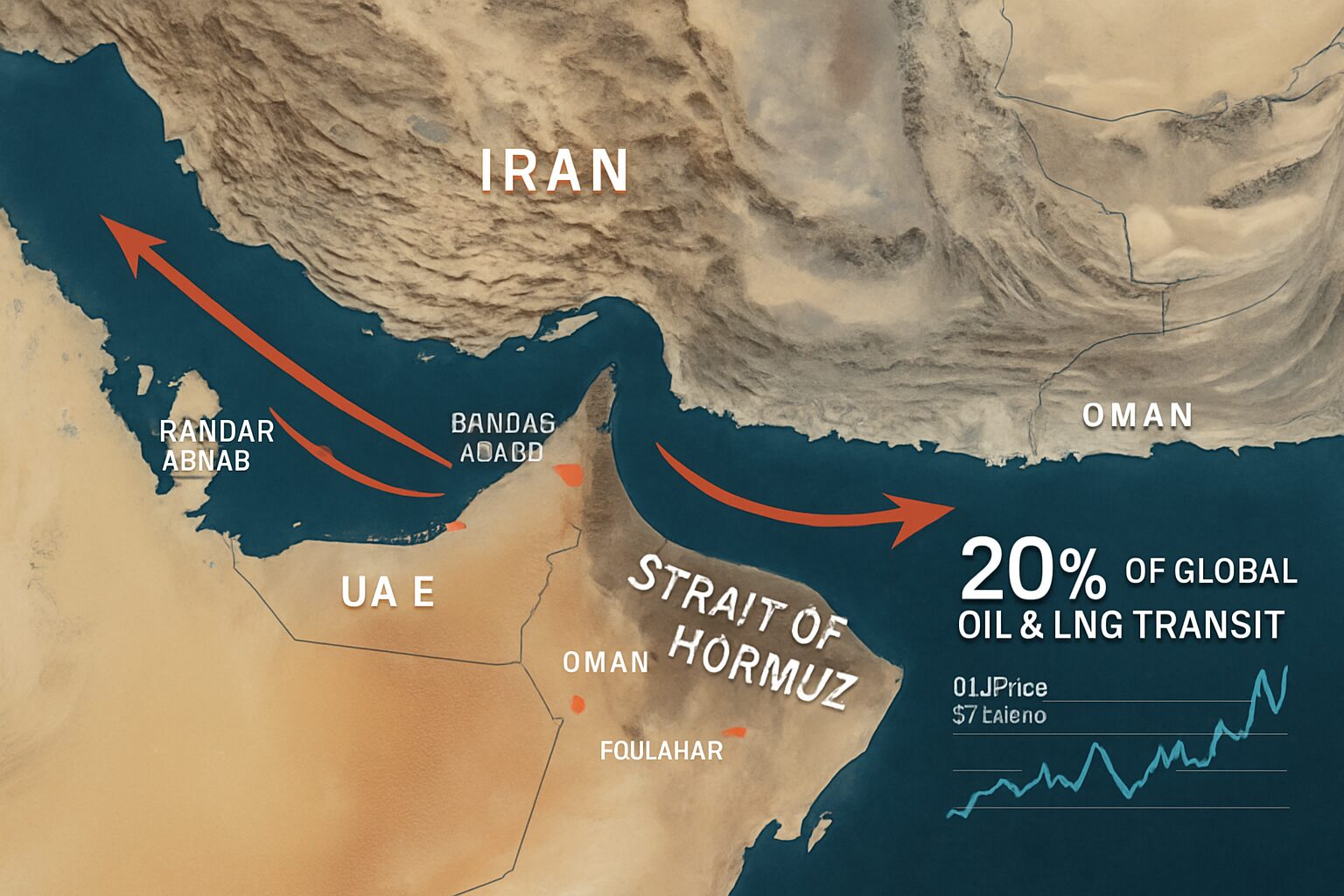
The global economy is currently holding its breath as a twenty-two-nation coalition demands that Iran reopen the Strait of Hormuz. For three weeks, the world's most critical energy artery has been choked.
United States Central Command recently announced that it has successfully degraded Tehran’s ability to threaten the waterway. Heavy five-thousand-pound bunker-buster bombs slammed into subterranean missile storage facilities along the Iranian coastline. Radars were smashed. Intelligence nodes were flattened. To read the official communiqués, one might assume the crisis is subsiding.
Do not believe it. The crisis is not subsiding; it is mutating into a much more dangerous beast.
Treating the de facto blockade as a simple problem of target degradation fundamentally misreads the Persian Gulf. In my decades covering resource warfare and maritime choke points, the playbook remains unchanged. Naval commanders love counting destroyed targets. Oil traders and maritime insurers, however, count risk. While the Pentagon tallies shattered concrete, commercial ship crossings through the strait have plummeted by ninety-five percent compared to peacetime averages.
The immediate reason is a terrifying game of geopolitical chicken between Washington and Tehran. The White House has issued a forty-eight-hour ultimatum, threatening to obliterate Iran's power grid if the strait is not opened to all traffic. Tehran shot back immediately. Iran's military command warned that if its power plants are touched, the strait will be slammed shut indefinitely until every single megawatt of generating capacity is rebuilt.
Here is the inconvenient truth. Opening a body of water is not like flipping a switch. You cannot bomb a shipping lane into being safe.
Why the Coalition of Twenty-Two Cannot Guarantee Safety
The joint statement signed by twenty-two nations, including the United Kingdom, France, Germany, Japan, Bahrain, and the United Arab Emirates, is a heavy display of diplomatic theater. It condemns attacks on unarmed commercial vessels. It demands compliance with international maritime law. It signals a willingness to coordinate naval escorts and prep for minesweeping.
But a joint statement does not alter the physical geography of a waterway that narrows to twenty-one miles wide.
To understand why the coalition is struggling, look at the mathematics of modern asymmetric warfare. During the Tanker War of the 1980s, standard naval escorts could shield slow-moving crude carriers from basic naval guns and primitive unguided missiles. Today, standard defense systems face an entirely different animal.
Consider a hypothetical commercial vessel transiting the outbound shipping lane. In this scenario, the ship is exposed to a two-hundred-and-seventy-degree arc of threat bears. It is not just facing conventional naval ships. It is facing truck-mounted, mobile anti-ship cruise missiles hidden in the jagged coastal mountains of Iran. It is facing swarms of cheap, one-way attack drones. It is facing fast-attack boats that can lay sea mines under the cover of darkness and disappear before dawn.
The Asymmetric Math
- Anti-Ship Cruise Missiles: Modern sea-skimmers utilize terminal maneuvering. They hug the waves, giving shipboard radar seconds to react.
- Sea Mines: Traditional minesweeping is a slow, methodical, and dangerous process. Coalition minesweepers would be sitting ducks for shore-based artillery while trying to clear a channel.
- The Insurance Wall: Even if the United States Navy declares the channel clear, commercial shipping will not return until the insurance syndicates at Lloyd's of London agree. Right now, they do not.
The Iranian Ministry of Foreign Affairs is already exploiting this gap. Tehran claims the strait is technically open to neutral traffic, blaming the halt in shipping on Western-induced panic and insurance costs. By shifting the blame to private commercial self-regulation, Iran exerts maximum economic pressure while attempting to avoid the direct legal trigger of a formal naval blockade.
The Strategic Petroleum Reserve Illusion
The coalition statement proudly welcomed the International Energy Agency authorizing a coordinated release of strategic petroleum reserves. They promised to work with producing nations to ramp up output.
This is a temporary anesthetic, not a cure.
Releasing strategic reserves does not solve the structural shock of losing twenty percent of the global daily oil and gas supply. Pre-war, approximately twenty million barrels of oil flowed through Hormuz every twenty-four hours. There is no pipeline network on earth capable of absorbing that volume. Bypassing the strait via overland routes through Saudi Arabia can handle a fraction of standard capacity. Furthermore, fixed land pipelines are stationary, easy-to-hit targets for drone strikes.
The market knows this. North Sea Brent crude has already punched through the roof, climbing over fifty percent in a month. When energy costs spike this fast, it acts as a massive regressive tax on every economy on earth.
The manufacturing centers of East Asia are particularly exposed. Japan and South Korea rely almost exclusively on Middle Eastern imports to keep their heavy industries breathing. European economies, already nursing wounds from years of persistent inflation, cannot absorb a permanent doubling of energy inputs.
The Fatal Flaw in Conventional Air Campaigns
The fatal flaw in Washington's current military posture is the belief that air superiority translates to maritime security.
It does not. We learned this lesson the hard way in the Red Sea. Despite months of sustained bombardment by coalition aircraft, a motivated regional actor utilizing cheap drones and hidden mobile launchers can disrupt commercial shipping indefinitely.
Destroying a fixed, hardened underground missile depot is a clear tactical victory. It removes a specific set of inventory from the board. But it does not destroy the industrial knowledge required to build more drones, nor does it eliminate the hundreds of hidden, truck-mounted launchers scattered along thousands of miles of rugged coastline.
To truly open the Strait of Hormuz by military force, the coalition would need to achieve something far more complex than degrading fixed targets. It would require a sustained, localized maritime insurgency campaign.
American and allied warships would have to operate inside the strait for months. In those tight waters, the natural advantages of large American destroyers are compressed. Reaction times are slashed to zero. To effectively clear the shore-side threat, the coalition would need to consider boots on the ground, raids on coastal missile batteries, and a permanent naval screen. That is not a temporary policing action. That is a full-scale regional war.
If the administration follows through on its promise to hit civilian power plants, the regional escalatory ladder breaks. When you remove a nation's power grid, you remove their incentive to play by traditional gray-zone rules. An Iran without electricity has nothing left to lose. In that scenario, the deployment of smart sea mines across the shipping channels becomes a virtual certainty. Clearing those mines would take weeks, if not months, during which the global energy supply would effectively remain severed.
The twenty-two-nation coalition is a powerful symbol of global frustration, but symbols do not load oil tankers. Traders and ship owners require hard security. Until the threat of asymmetric coastal fire is neutralized, the paper safety guaranteed by the coalition will remain just that. The true leverage lies not with the bombers dropping five-thousand-pound munitions, but with the insurance adjusters calculating the math of risk in London.
The path out of this crisis requires acknowledging that you cannot bomb a shipping channel open if the coastal batteries are mobile, hidden, and endlessly replaceable. If the primary goal is the resumption of global trade, kinetic escalation against civilian infrastructure will achieve the exact opposite. To restore the flow of twenty million barrels of oil, the coalition must offer more than ultimatums and air raids. It must find a diplomatic off-ramp before the forty-eight-hour clock runs out, or risk a permanent freeze of the world economy. Ready the naval escorts, but keep the diplomats on the line. They are the only ones who can actually reopen the strait.