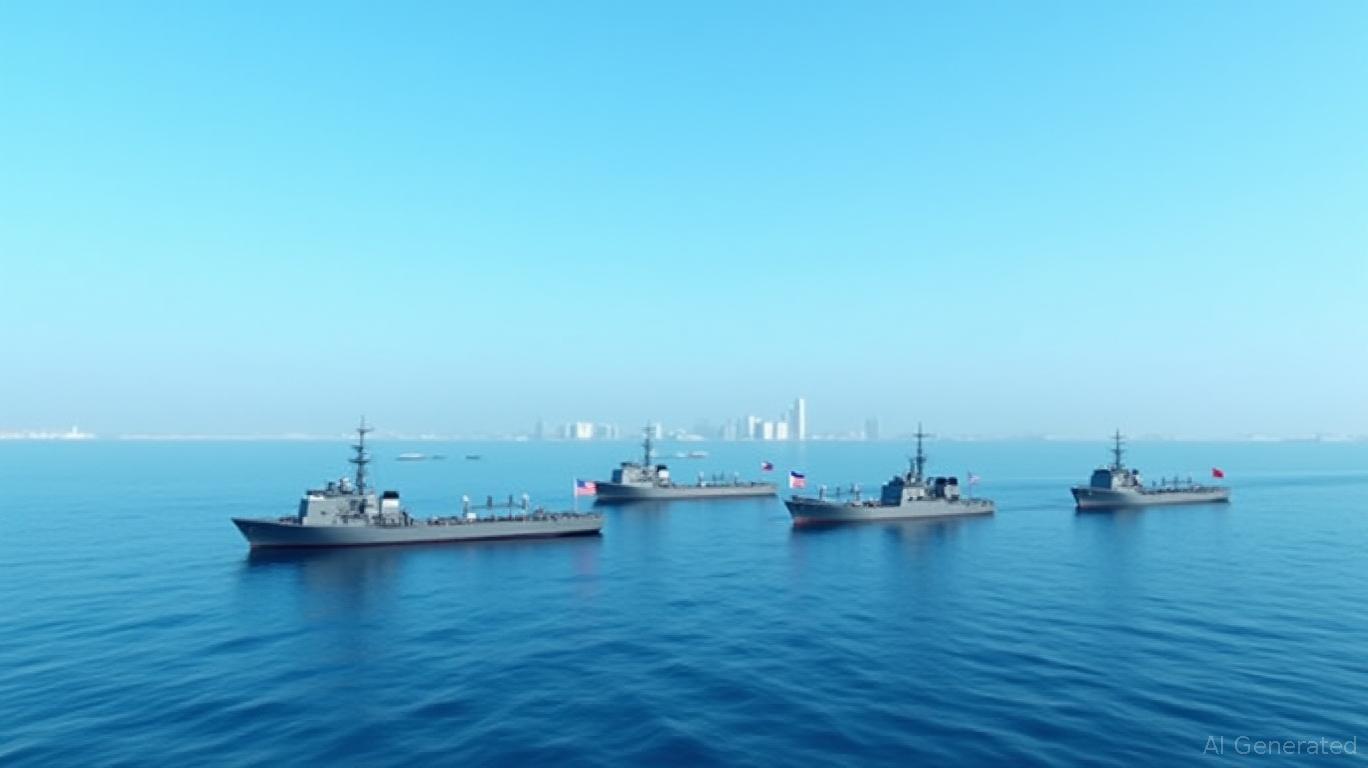
The maritime world just received a blunt lesson in the new math of geopolitics. When the White House recently signaled that allies should shoulder the burden of policing the Strait of Hormuz, the response was not a rush to the docks, but a deafening silence. This isn't just a diplomatic snub. It represents a fundamental breakdown in the post-1945 consensus that the United States guarantees the safety of the global commons in exchange for geopolitical alignment. For decades, the "blue water" dominance of the U.S. Navy was the invisible infrastructure of global trade. That infrastructure is now fracturing.
Allies in Europe and East Asia are no longer willing to treat Middle Eastern maritime security as a reflexive commitment. They see a trap. By sending warships to the Persian Gulf under a "Maximum Pressure" banner, these nations fear they are not protecting trade, but rather endorsing a specific, high-risk confrontation with Iran that they did not design and cannot control. The refusal to send ships is a cold, calculated move to avoid being dragged into a regional conflagration that would spike oil prices and destabilize domestic economies already reeling from inflationary pressures.
The Myth of Shared Burden
Washington often frames naval deployments as a shared responsibility among "civilized nations." The reality is far more transactional. For a country like Japan or South Korea, the Strait of Hormuz is a lifeline. Roughly 20% of the world’s petroleum liquids pass through this narrow waterway daily. You would think these nations would be the first to volunteer their destroyers. They aren't.
The hesitation stems from a hard-earned skepticism regarding American long-term strategy. Allied capitals are looking at the political volatility in the U.S. and asking a simple question: If we commit our assets today, will the policy change entirely after the next election? This perceived lack of consistency has turned a once-solid security architecture into a series of tentative, bilateral arrangements.
Furthermore, the cost-benefit analysis has shifted. Modern naval warfare in confined waters like the Strait of Hormuz is no longer a matter of simply showing the flag. It involves defending against swarms of fast-attack craft, sophisticated sea mines, and anti-ship cruise missiles. For a mid-sized navy, losing a single high-end frigate in a "skirmish" is a national catastrophe. Most allies have decided that the risk of a kinetic encounter far outweighs the diplomatic brownie points earned by standing with Washington.
The Commercial Reality of Piracy and State Action
Insurance markets tell the story that politicians try to hide. When the U.S. calls for a naval coalition and gets no takers, "War Risk" premiums for tankers don't just go up; they become volatile. Underwriters at Lloyd’s of London don't care about diplomatic solidarity. They care about the presence of hulls in the water that can deter seizure.
The absence of a unified coalition creates a vacuum that private security or "shadow" fleets are happy to fill. We are seeing a move toward a more fragmented, "pay-to-play" model of maritime security. Some shipping giants are already exploring private escorts or changing their flags of convenience to nations they believe have better back-channel relations with Tehran. This is the death of the "freedom of navigation" principle. It is being replaced by a system of secret deals and specialized protection.
Consider the technical reality of the Strait. At its narrowest point, the shipping lanes are only two miles wide in each direction. There is no room for error. When the U.S. demands a naval presence but fails to secure it, they essentially signal to regional actors that the lanes are open for harassment. Iran understands this perfectly. They don't need to sink a ship to win; they only need to make the cost of transit high enough that the world begs for a deal.
Tactical Limitations of the Modern Destroyer
There is a technical reason for the reluctance that rarely makes it into the evening news. The naval assets most allies possess are designed for high-seas, blue-water combat. They are floating batteries of sensors and long-range missiles meant to fight other large ships or defend against aircraft at a distance.
In the Strait of Hormuz, these billion-dollar assets are effectively trapped in a "shooting gallery."
- Asymmetric Vulnerability: A $2 billion Aegis-equipped destroyer can be disabled by a $50,000 suicide drone or a mine that costs even less.
- Rules of Engagement: Allied captains are terrified of a "USS Vincennes" moment—accidentally triggering a war by misidentifying a civilian target in a crowded, high-stress environment.
- Logistical Fatigue: Maintaining a continuous presence in the Gulf requires a massive support tail that most European navies simply no longer have.
Without a clear, unified command structure that protects individual captains from the political fallout of a mistake, nobody wants to be the one on station when the first shot is fired.
The Pivot to Diplomacy by Omission
By staying distant, U.S. allies are practicing a form of "diplomacy by omission." They are signaling to both Washington and Tehran that they are opting out of the escalation cycle. France and the UK, for instance, have attempted to maintain their own independent maritime awareness missions that are explicitly not part of the U.S.-led command. They want the security without the stigma.
This creates a dangerous "muddle through" scenario. You have multiple, uncoordinated naval groups operating in the same crowded water, all with different rules of engagement and different red lines. Instead of a "coalition of the willing," we have a "constellation of the wary."
The Economic Backfire
The irony of the U.S. demand for allied ships is that it often triggers the exact economic shock it is meant to prevent. The mere talk of a "naval buildup" causes oil futures to jump. For the manufacturing hubs of Germany or the energy-hungry cities of India, the "security" offered by a massive naval deployment looks a lot like a threat to their GDP.
They have realized that in the 21st century, energy security is found in diversification and diplomacy, not just in the barrel of a naval gun. China, for example, is the largest importer of Gulf oil, yet they rarely participate in these Western-led security constructs. Instead, they use their "Belt and Road" influence to secure long-term contracts and neutral status. Allies are watching this and wondering if the "American way" of securing the seas is simply outdated.
Strategic Abandonment
We are witnessing the slow-motion sunset of the era where the U.S. Navy acted as the world’s 911 service. The refusal of allies to send ships isn't a one-off event. It is a symptom of a deeper realization: the cost of maintaining the global order has become too high for the leader, and the benefit of participating in that order has become too low for the followers.
When the call goes out and the ships stay in port, the message is clear. The world is moving toward a regionalized security model. This means that in the future, if you want your cargo protected in the Persian Gulf, you better hope your government has a good relationship with the local power players, because the global cavalry isn't coming.
The shift toward this new reality is already reflected in the ship-building programs of mid-tier powers. They aren't building ships to project power globally; they are building coastal defense forces to protect their own immediate interests. The era of the "global cop" is being replaced by a world of gated communities.
Ensure your supply chains are mapped to this reality. If your business relies on the unhindered flow of goods through contested chokepoints, understand that the "protection" you’ve taken for granted for seventy years is now a discretionary service that may not be available when you need it most.
Audit your maritime exposure now.