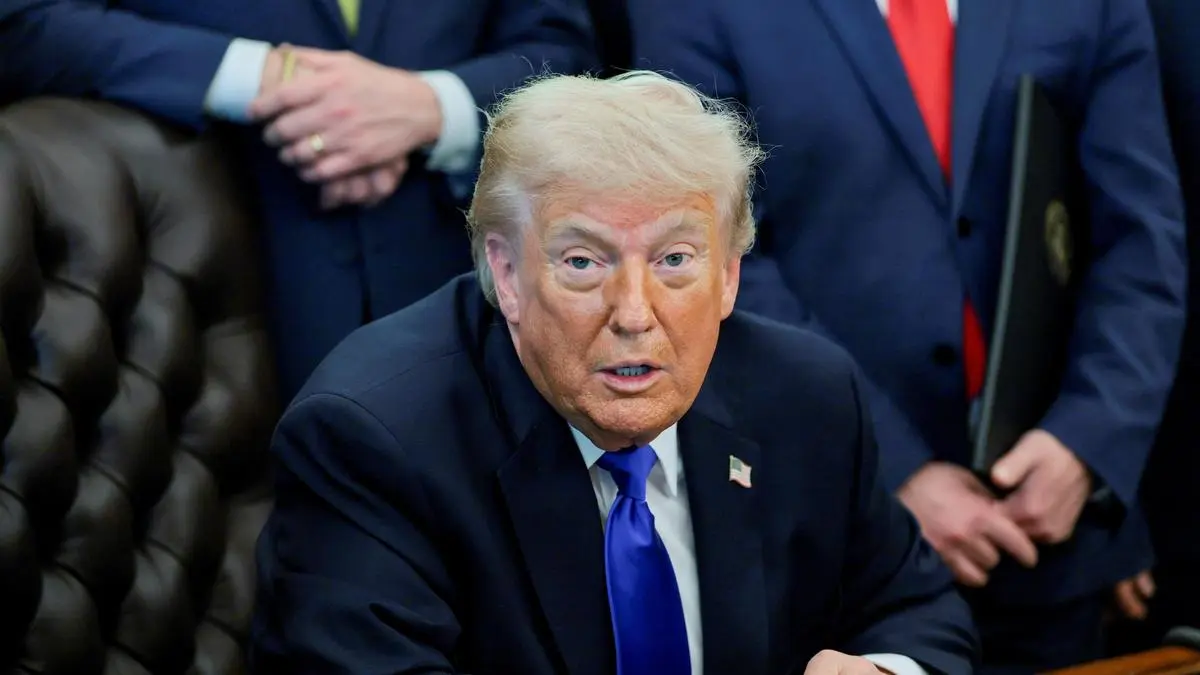
The collapse of the ceasefire agreement between the United States and Iran represents a calculated shift from managed friction to unconstrained geopolitical competition. When Donald Trump declared the "termination" of the ceasefire, he effectively transitioned the administration’s posture from a defensive holding pattern to an offensive leverage-seeking operation. This move coincides with the expiration of war powers deadlines, creating a constitutional and tactical vacuum that requires immediate structural analysis.
The Triad of Ceasefire Erosion
The failure of the ceasefire was not an isolated event but the result of three specific systemic stressors. Understanding these stressors provides a blueprint for how modern diplomatic frameworks disintegrate under populist-nationalist pressure.
- The Information Asymmetry Gap: The U.S. executive branch operates on a different intelligence-to-action timeline than its legislative counterpart. While the War Powers Resolution attempts to bridge this by mandating a 60-to-90-day reporting window, the executive utilized the ambiguity of "imminent threat" definitions to bypass congressional oversight. This creates an environment where the ceasefire becomes a rhetorical tool rather than a legal constraint.
- Proxy Equilibrium Decay: Ceasefires in the Middle East rarely involve direct state-on-state combat. Instead, they manage the "proxy ceiling"—the maximum level of violence allowed by non-state actors before the primary patrons are forced into direct conflict. The termination of the ceasefire indicates that the utility of these proxies has surpassed the benefits of diplomatic restraint for the Iranian Revolutionary Guard Corps (IRGC), forcing a reactive posture from the U.S.
- Domestic Political Synchronization: The timing of the termination aligns with internal U.S. legislative deadlines. By declaring the ceasefire dead precisely as war powers authorities reached their limit, the executive reclaimed the narrative of "commander-in-chief" autonomy, effectively neutralizing a potential "lame duck" period in foreign policy.
The Cost Function of Retaliatory Cycles
Conflict escalation follows a predictable cost function where the price of inaction eventually exceeds the risk of kinetic engagement. In the current context, the U.S. administration identified that maintaining a "zombie" ceasefire—one where Iran-backed militias continue low-level harassment while the U.S. remains bound by diplomatic promises—was an unsustainable drain on strategic capital.
The logic of termination follows a basic game theory model: The Grim Trigger. In this scenario, cooperation continues until one party cheats, at which point the other party defects indefinitely to prevent further exploitation. By officially terminating the ceasefire, Trump signaled a permanent move toward a "Tit-for-Tat" strategy with higher stakes.
Mechanics of the War Powers Deadline
The War Powers Act of 1973 serves as the primary friction point between the executive and legislative branches. The deadline's arrival forces a binary choice: withdraw forces or seek authorization. However, by declaring the ceasefire terminated due to external aggression, the administration frames its subsequent actions as "defensive," which historically provides a legal loophole to bypass the requirement for a formal declaration of war.
This creates a Strategic Ambiguity Buffer. The administration can now conduct targeted strikes while claiming these are individual defensive responses rather than a sustained campaign, thereby resetting the clock on congressional oversight with each new engagement.
Mapping the Iranian Response Matrix
Iran’s response to the ceasefire termination will likely be partitioned across three operational tiers, each designed to test U.S. resolve without triggering a full-scale regional war.
- Tier 1: Maritime Harassment: Targeting transit corridors in the Strait of Hormuz to drive up global insurance premiums for energy shipments. This creates indirect economic pressure on U.S. allies in Europe and Asia.
- Tier 2: Cyber-Kinetic Integration: Launching low-attribution cyberattacks against regional infrastructure—such as desalination plants or power grids—to demonstrate a technical overmatch that complicates traditional military defense.
- Tier 3: The Nuclear Leverage Play: Accelerating enrichment levels as a bargaining chip. The termination of the ceasefire removes the primary incentive for Iran to adhere to any vestigial nuclear constraints, moving the "breakout time" closer to a critical threshold.
The Failure of Congressional Oversight
The arrival of the war powers deadline reveals a fundamental flaw in the 1973 Resolution: it lacks an automatic enforcement mechanism. When an administration chooses to ignore the spirit of the law by redefining the nature of "hostilities," the legislature is left with few options beyond the "power of the purse"—a slow and politically risky process.
The erosion of this oversight creates a Governance Deficit. In the absence of a clear legislative mandate, foreign policy becomes increasingly personalized, driven by the executive's immediate tactical needs rather than a long-term grand strategy vetted by the broader government. This creates volatility in international markets, as foreign actors cannot distinguish between a permanent shift in U.S. policy and a temporary tactical maneuver.
Economic Implications of the Termination
The immediate fallout is visible in the volatility of the Brent Crude index. Markets price in the "geopolitical risk premium" when ceasefires fail, but the current situation is unique due to the fragmentation of the global energy market.
- Supply Chain Resiliency: Unlike the oil shocks of the 20th century, the U.S. is now a net exporter. Consequently, the termination of the ceasefire hurts U.S. adversaries (China) and allies (the EU) more than it hurts the domestic U.S. economy. This creates an "energy-as-a-weapon" dynamic where the U.S. can afford a higher level of regional instability than its competitors.
- Currency Hedging: The move toward conflict typically strengthens the USD as a safe-haven asset. However, if the termination leads to a prolonged, unfunded military engagement, the long-term inflationary pressure could weaken the dollar's dominance in the petroleum trade (the "petrodollar" system).
Operational Realignment
With the ceasefire "terminated," U.S. Central Command (CENTCOM) must transition from a posture of "Active Defense" to "Competitive Persistence." This involves:
- Dynamic Force Employment: Moving naval and air assets in unpredictable patterns to deny Iranian intelligence a fixed target set.
- Preemptive Neutralization: Shifting the Rules of Engagement (ROE) to allow for strikes against proxy assembly points before an attack is launched, rather than waiting for "first light" confirmation of an incoming missile.
- Interdiction Operations: Increasing the frequency of seizures of Iranian weapons shipments in the Arabian Sea to degrade the IRGC's ability to resupply regional partners.
The termination of the ceasefire is not a return to war, but a return to a state of high-intensity competition where the boundaries are fluid and the costs are high. The administration has bet that the risk of unconstrained friction is lower than the cost of a failing peace. To succeed, the U.S. must now demonstrate that it can manage the resulting escalation without being drawn into a "forever war" that lacks a clear exit criteria or a defined victory condition.
The most effective strategic play involves leveraging the current "no-man's-land" of the war powers deadline to force a new, more lopsided agreement. The U.S. should utilize the period of "unconstrained response" to inflict disproportionate costs on Iranian infrastructure, effectively resetting the baseline for future negotiations. By the time Congress can mount a formal challenge to the executive's authority, the tactical landscape will have shifted enough to render previous legislative concerns moot.