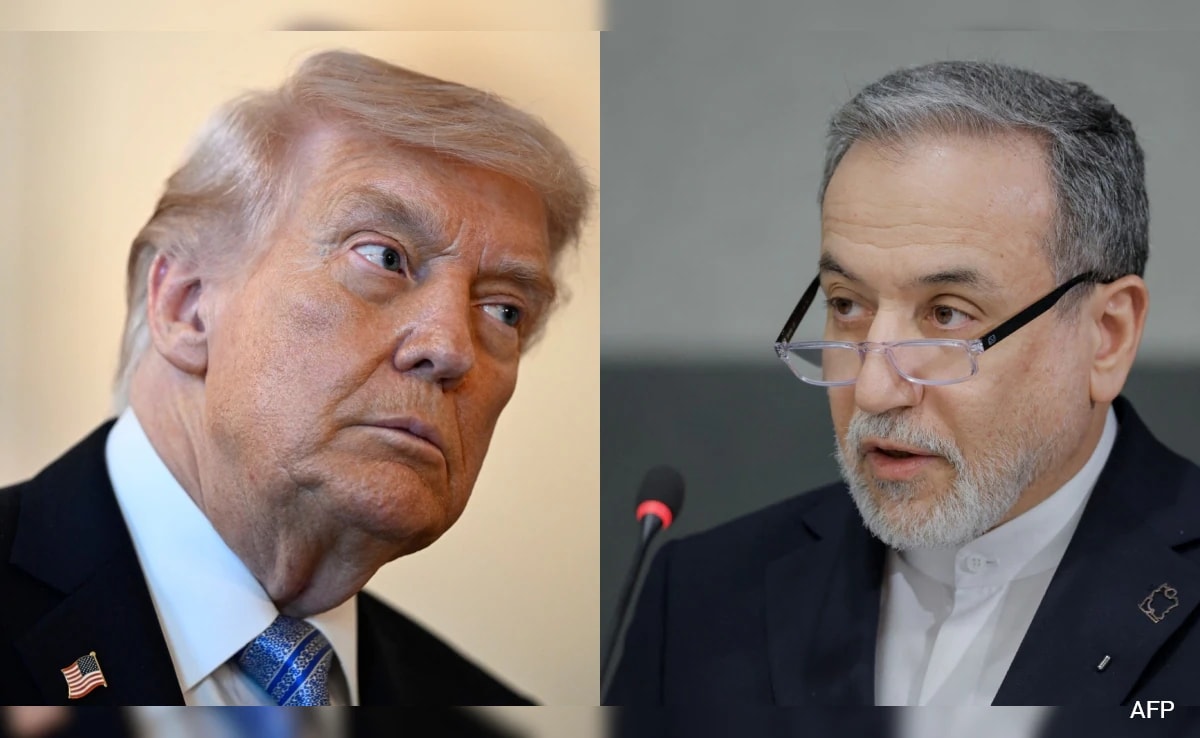
Donald Trump’s "blow off" warning to Tehran—a pledge of disproportionate kinetic response to any escalation during a fragile ceasefire—functions as a deliberate application of game theory’s "Madman Theory" to re-establish a deterrence threshold that had arguably decayed into a cycle of predictable, low-stakes attrition. By removing the ceiling on potential retaliation, the administration shifts the conflict from a Managed Escalation Cycle to a High-Variance Risk Model. This move forces Iranian leadership to recalculate the expected utility of their regional proxies, as the cost-benefit analysis of "gray zone" warfare now includes the non-zero probability of direct, catastrophic state-level consequences.
The Triad of Deterrence Erosion
The current instability stems from a fundamental breakdown in the three variables required for effective deterrence: Capability, Communication, and Credibility.
- Capability: While US kinetic superiority is undisputed, its application has historically been constrained by domestic political friction and fear of regional contagion. Iran has exploited this by utilizing asymmetric assets—Houthi rebels, Hezbollah, and Iraqi militias—to inflict tactical damage without triggering a strategic response.
- Communication: Previous diplomatic signaling often prioritized de-escalation over clear boundary setting. This created a "permissive environment" where Iranian-backed groups could probe the limits of US resolve with minimal fear of blowback.
- Credibility: Deterrence fails when the target believes the threat is a bluff or that the cost of execution exceeds the threatener's will. The "blow off" warning is a direct attempt to repair this specific pillar by introducing irrationality—or the appearance of it—back into the strategic equation.
The Cost Function of Proxy Warfare
Iranian regional strategy relies on a favorable cost function where the Islamic Revolutionary Guard Corps (IRGC) provides low-cost matériel and training to local actors who then absorb the brunt of any kinetic counter-strikes. This creates a buffer between Iranian sovereign territory and the consequences of its foreign policy.
The US shift toward a "total response" doctrine fundamentally alters this equation by targeting the "Principal" rather than the "Agent." In legal and economic terms, this is an attempt to pierce the corporate veil of proxy warfare. If Tehran can no longer externalize the risks of its regional maneuvers, the internal political cost of maintaining those proxies rises sharply. This creates a bottleneck in the IRGC's ability to project power, as every minor drone strike by an Iraqi militia now carries the potential for a direct strike on Iranian energy infrastructure or command-and-control hubs.
The Mechanics of the Fragile Ceasefire
The ceasefire in question is not a formal treaty but a "Stochastic Equilibrium." It persists only as long as both parties perceive that the cost of breaking it exceeds the benefits of continued hostility.
- The Iranian Incentive: Tehran seeks to preserve its nuclear breakout capacity while maintaining regional influence. A full-scale war with the US would likely result in the destruction of the very nuclear infrastructure they have spent decades protecting.
- The US Incentive: Washington seeks to secure global trade routes (specifically the Bab al-Mandab and the Strait of Hormuz) and protect regional allies without committing to another multi-decade ground occupation.
The "blow off" warning introduces a "Trigger Variable" into this equilibrium. By stating that even a minor infraction could lead to a massive response, the US is attempting to shorten the "OODA loop" (Observe, Orient, Decide, Act) of Iranian decision-makers. They are no longer deciding if a specific rocket attack is worth the risk; they must decide if the entire proxy network is worth the risk of total war.
Strategic Asymmetry and the Information Gap
A significant risk in this strategy is the "Information Gap"—the discrepancy between what a leader says and what their subordinates or proxies do on the ground. The Iranian command structure is not a monolith. Local commanders may act with a degree of autonomy, or "accidental escalations" may occur due to technical errors or miscommunications.
Under a standard proportional response model, an accidental strike can be de-escalated through backchannels. Under the "blow off" doctrine, the margin for error disappears. This creates a "Security Dilemma" where the US feels compelled to follow through on a massive threat to maintain future credibility, even if the triggering event was unintended. This lack of "Off-Ramps" is the primary structural weakness of the current US position. It maximizes deterrence but also maximizes the risk of unintended total escalation.
The Economic Lever: Sanctions as Kinetic Preparation
Deterrence is not purely a military exercise; it is an integrated economic strategy. The enforcement of "Maximum Pressure" 2.0 serves to degrade Iran's ability to fund its "Deep Defense" (the IRGC's regional network).
- Currency Devaluation: By restricting access to hard currency, the US forces the Iranian central bank into inflationary cycles, reducing the purchasing power of the internal security apparatus.
- Logistical Degradation: Sanctions on dual-use technologies slow the production of the very drones and missiles that form the backbone of Iranian-backed strikes.
This economic attrition is designed to ensure that if a "blow off" event does occur, Iran’s ability to sustain a prolonged conflict is already compromised. It is the "Soft Power" preparation for a "Hard Power" eventuality.
Cognitive Dissonance in Tehran's Response
Tehran’s response—a mix of defiant rhetoric and calls for regional stability—reflects a state of cognitive dissonance. They must project strength to maintain domestic legitimacy and the loyalty of their proxies, yet they must also signal a desire for de-escalation to avoid the very "blow off" promised by Washington.
The second limitation of the Iranian response is their reliance on "Strategic Patience." This doctrine assumes that the US political will is finite and that by simply outlasting a specific administration, Iran can return to its previous status quo. However, the current US rhetoric suggests a shift in the "Overton Window" regarding Iran, where the floor for acceptable Iranian behavior has been permanently raised.
Calculating the Escalation Ladder
To understand the trajectory of this standoff, one must analyze the specific rungs of the escalation ladder.
- Low-Intensity Friction: Small-scale drone/rocket attacks with no US casualties. Historically met with localized airstrikes on proxy warehouses.
- The Red Line Event: An attack resulting in US fatalities or significant damage to a strategic asset (e.g., a carrier or major embassy).
- The Kinetic Pivot: The "blow off" moment. This would likely involve strikes on Iranian soil, targeting IRGC naval bases, missile sites, or drone manufacturing facilities.
- Full-Scale Regional Contagion: Iran responds by closing the Strait of Hormuz and activating Hezbollah’s rocket reserves against Israel, leading to a multi-front regional war.
The "blow off" warning is an attempt to skip rung 1 and 2 entirely, forcing Iran to jump straight to the calculus of rung 4. By making the leap to rung 4 appear inevitable, the US hopes to freeze the conflict at rung 0.
Tactical Realities vs. Strategic Rhetoric
The efficacy of a threat is measured by its "Real-Time Adjustability." If the US threat is too rigid, it becomes a trap for the issuer. If it is too flexible, it is ignored. The administration’s challenge is to maintain a "Calculated Ambiguity"—being clear about the severity of the response while remaining vague about the specific "Tripwire."
This creates a psychological burden for the Iranian leadership. They must now treat every maritime encounter and every militia maneuver as a potential existential threat. The friction this introduces into Iranian operations is a tactical win for the US, even if a single shot is never fired. It slows their operational tempo and forces resources away from expansion and toward internal defensive readiness.
The Failure Mode: Over-Signaling and Credibility Traps
The primary risk to the US strategy is "Over-Signaling." When a superpower issues frequent, high-decibel warnings, the market value of those warnings tends to depreciate. If a provocation occurs and the US response is anything less than the "blow off" promised, the deterrence threshold will not just return to its previous level—it will collapse.
Tehran is likely betting on this "Credibility Gap." They are searching for the "Sub-Threshold Peak"—the maximum level of provocation they can achieve that is high enough to embarrass the US but low enough to make a "blow off" response look like an overreaction to the international community.
Navigating the Strategic Bottleneck
The current ceasefire is a pause, not a resolution. For the US to successfully navigate this period, it must move beyond rhetoric and establish a "Verifiable Deterrence Framework." This requires:
- Aggressive Intelligence Sharing: Publicly exposing Iranian-backed plots before they occur to strip Tehran of plausible deniability.
- Hardening Regional Assets: Reducing the "Target Surface Area" so that proxies have fewer opportunities to trigger the "blow off" mechanism accidentally.
- Synchronized Allied Response: Ensuring that regional partners (Saudi Arabia, UAE, Israel) are prepared for the "Day After" a potential kinetic pivot.
The "blow off" warning has effectively reset the board, but the game is now in a high-stakes "Sudden Death" mode. The margin for diplomatic or tactical error has been reduced to near-zero. The strategic play is no longer about managing the conflict; it is about forcing a fundamental choice upon the Iranian regime: total regional integration or the high-probability risk of state-level kinetic dismantling. Tehran's move will depend on whether they believe the US has the internal political cohesion to execute a threat that would inevitably lead to a global energy shock and a reorganized Middle Eastern order. Any sign of domestic US wavering will be interpreted as a green light for resumed proxy aggression. Therefore, the most critical component of the "blow off" warning is not the words themselves, but the visible, bipartisan readiness to sustain the economic and military costs of their implementation.