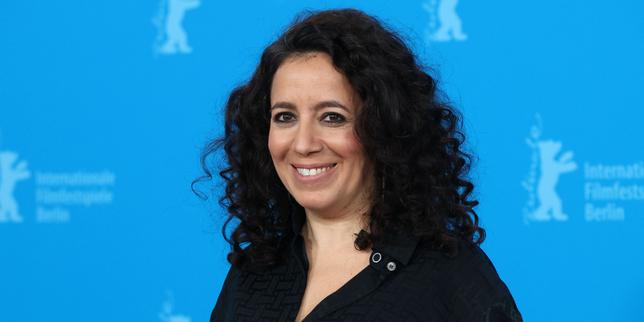
The absence of queer female narratives in Arab cinema is not a byproduct of creative oversight but a calculated outcome of three intersecting systemic pressures: state-level censorship, the regional film financing model, and the rigid patriarchal coding of "honor" within the cultural zeitgeist. When Leyla Bouzid asserts that "two women who love each other does not exist" in this cinematic tradition, she describes a forced vacuum. To analyze this, one must move beyond the surface-level observation of "taboo" and instead deconstruct the specific mechanisms—economic, legal, and social—that render these identities invisible on screen.
The Triad of Suppression: Why Content is Filtered
The production of any film in the MENA (Middle East and North Africa) region must navigate a gauntlet of gatekeeping. This process functions through three distinct pillars:
- State Regulatory Oversight: Most Arab nations utilize centralized censorship boards that must approve scripts before filming begins and review the final cut before distribution. The legal framework often cites "the protection of public morals" or "religious sanctity" as the basis for banning depictions of homosexuality. This creates an immediate bottleneck at the ideation stage; directors rarely write what they know they cannot film.
- The Financing Constraint: Arab cinema relies heavily on co-productions, often involving European funds (like the CNC in France) or regional players (like the Red Sea Film Fund or Doha Film Institute). While European funds may encourage diverse narratives, regional funds operate under the constraints of their host governments. This creates a friction point where a filmmaker must choose between international "authenticity" and regional "viability."
- The Cultural Cost of Visibility: In many Mediterranean and Arab cultures, the woman is the repository of family honor (sharaf). While male homoeroticism has a complex, albeit often persecuted, history in regional literature and film (e.g., the works of Youssef Chahine), female queerness is perceived as a direct subversion of the patriarchal family unit. Representing it on screen is not seen as an artistic choice but as a revolutionary act that threatens the foundational social structure.
The Architecture of "A Voix Basse": A Technical Case Study
Bouzid’s work, specifically her focus on the sensory and the unspoken, attempts to navigate these constraints by utilizing a specific aesthetic strategy: Subtextual Realism. When the explicit cannot be stated, the director shifts the burden of narrative to the atmosphere.
This technique relies on:
- Tactile Cinematography: Focus on skin, breath, and proximity to signal intimacy that the dialogue is forbidden from acknowledging.
- The Sound of Silence: Using diegetic sound (ambient noise, heavy breathing, environmental shifts) to fill the space where a confession of love would typically exist in a Western narrative.
- Space as a Character: Setting scenes in claustrophobic, private interiors to contrast with the performative, public life required of the protagonists.
The limitation of this strategy is its inherent opacity. For a local audience, these cues can be dismissed as "close friendship." For an international audience, they may seem overly subtle. This creates a "dual-audience paradox" where the filmmaker must be loud enough to be understood by critics but quiet enough to bypass the censor.
The Economic Barrier to Queer Representation
Cinematic representation is an ROI-driven enterprise. The market for Arab cinema is segmented into domestic box office, regional streaming (e.g., Shahid), and the international festival circuit.
A film featuring a queer female romance faces a 90% reduction in its addressable regional market. If a film is banned in Egypt, Saudi Arabia, and the Gulf, it loses its primary revenue drivers. This financial risk forces producers to "sanitize" scripts during the development phase. The "cost of queerness" is, therefore, a quantifiable loss of distribution territory, making these projects high-risk assets that most regional production houses will not touch without significant foreign grants that decouple the film from the need for local profit.
Decoding the Patriarchal Gaze in Narrative Structure
In traditional Arab storytelling, the female character’s arc is frequently tied to her relationship with a male figure (father, husband, brother). A queer narrative breaks this dependency, creating a "narrative orphan"—a character whose motivations and desires do not align with the established social scripts.
This creates a structural problem for writers trained in traditional paradigms. To write a queer woman in this context is to write a character in a state of constant friction with her environment. There is no "neutral" queer life in Arab cinema; every act of love is a political statement. This "politicization of the private" prevents the development of mundane or genre-based queer stories, trapping the characters in a permanent cycle of trauma or rebellion.
The Displacement of Identity: Diaspora vs. Homeland
A significant divide exists between filmmakers working within the region and those in the diaspora. Diaspora cinema (e.g., films produced in France, Canada, or the UK) has more latitude to explore queer themes, but it often faces accusations of "Westernization" or "catering to the white gaze."
This creates a credibility gap. If a queer Arab film is made in Paris, it is often dismissed by regional conservatives as an external imposition. Conversely, if it is made in Tunis or Cairo, it faces the aforementioned censorship. The result is a fractured body of work where the most explicit representations of Arab queerness are often those most alienated from their home audiences.
Breaking the Vacuum: The Strategic Shift Toward Digital and Underground Distribution
The future of queer female representation in Arab cinema does not lie in the traditional theater-censor model but in the exploitation of decentralized platforms.
The move toward structural change requires:
- Direct-to-Consumer Digital Models: Utilizing VPN-accessible platforms to bypass local box office bans.
- Transborder Collaboration: Strengthening the North African-Levantine production axis to share the "political risk" of controversial content.
- The Reclamation of Language: Moving away from Western labels of "LGBTQ+" and developing a vernacular of desire that is rooted in regional history and poetry, making the content harder to dismiss as a foreign import.
The persistence of the "invisible woman" in Arab cinema is a testament to the effectiveness of current social and legal controls. However, as independent digital distribution erodes the power of the state censor, the cost of suppression is rising. The strategic play for filmmakers now is not to seek permission from the old gatekeepers, but to build a parallel infrastructure that recognizes the queer Arab woman not as a "taboo" to be managed, but as a demographic and creative reality that has already arrived.