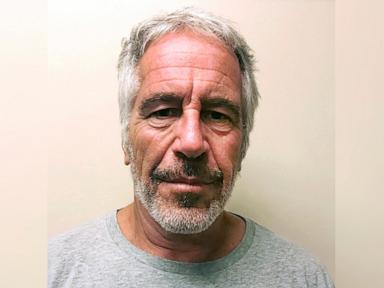
The suicide of Jeffrey Epstein at the Metropolitan Correctional Center (MCC) represents a total breakdown of redundant custodial systems. While media narratives focus on individual anecdotes—such as the recent claims regarding a discovered suicide note by former cellmate Bill Mersey—a rigorous analysis must move beyond the "who said what" and examine the structural logic of the high-security environment. To understand the legitimacy of these claims, one must audit the three critical failure vectors: the physical chain of custody, the psychological monitoring protocols, and the logistical impossibility of unmonitored communication within a Tier-1 Special Housing Unit (SHU).
The Triad of Custodial Redundancy
A high-security prison operates on the principle of overlapping oversight. In theory, no single point of failure should result in an unmonitored death or the clandestine transfer of documents. The Epstein case illustrates a simultaneous collapse of these three pillars. You might also find this similar story interesting: The Wings That Cannot Carry You Home.
- The Observational Mandate: Institutional policy required check-ins every 30 minutes. In a functional system, this 1,800-second window is the maximum "dark period." When guards falsify these records, they create a data vacuum that allows for unrecorded events, such as the drafting and concealment of notes.
- The Cellmate Variable: Total isolation is often a precursor to self-harm, yet the removal of Epstein’s cellmate shortly before his death remains a primary anomaly. The presence of a cellmate serves as a biological alarm system. Removing that system without a commensurate increase in electronic or visual monitoring violates basic risk-management logic.
- The Search and Seizure Protocol: In an SHU environment, the "privacy of the note" is an oxymoron. Standard Operating Procedure (SOP) dictates frequent "shakedowns." If a note existed and was not recovered until years later via a third party, it indicates a catastrophic failure in the facility’s search mechanics.
Evaluating the Veracity of Post-Hoc Testimony
The claim that an ex-cellmate discovered a suicide note provides a significant narrative hook but faces immense friction when measured against the logistical realities of federal detention. We must categorize the friction points into three distinct filters: the Timing Filter, the Custody Filter, and the Incentive Filter.
The Timing Filter
Epstein died on August 10, 2019. Any claim made years later by a former inmate must account for the "chain of discovery." In a high-turnover environment like the MCC, the likelihood of a high-value document remaining hidden in a cell through multiple cleanings and subsequent inhabitants is statistically negligible. Forensic sanitation protocols usually involve a complete strip-down of the cell following a high-profile death. As discussed in recent coverage by Al Jazeera, the effects are significant.
The Custody Filter
Prisoners do not move freely between cells with their belongings. Every item—from books to legal pads—is subject to inspection. If Bill Mersey or any other inmate came into possession of an original document written by Epstein, that document had to bypass multiple layers of physical screening. The mechanism for this transfer would require either a failure in the discharge search or a deliberate oversight by staff.
The Incentive Filter
Incentive structures for inmates are heavily weighted toward information brokerage. High-profile cases create a "secondary market" for information. In this market, the value of an artifact is tied to its scarcity and its ability to confirm or deny existing conspiracies. A data-driven analyst must weigh the probability of a "lucky find" against the probability of "fabricated value" intended for media monetization or legal leverage.
The Mechanism of the "Suicide Note" as a Logical Construct
From a behavioral analysis standpoint, a suicide note serves as a final exertive act of control. In the context of a "Power-Dominant" individual like Epstein, the function of such a note would likely be to manage the post-mortem narrative.
The reported contents of the note—describing life as a "torture"—align with the psychological state of "arrest shock." This occurs when an individual with high perceived social immunity is suddenly subjected to the total loss of agency inherent in the federal justice system. The transition from a multi-million dollar private island to a 60-square-foot concrete box creates a "Reality-Expectation Gap" that is often fatal.
The structural failure here was not just the lack of a guard’s presence, but the failure to quantify this gap in his psychological profile. If the note is authentic, it confirms that Epstein was operating in a state of ego-dissolution. If it is fabricated, it targets the public’s desire for closure in a case defined by its lack of transparency.
Dissecting the Bureau of Prisons (BOP) Operational Deficit
The systemic failures at MCC were not isolated incidents but symptoms of a decaying infrastructure. We can quantify the risk environment through the following metrics:
- Staffing Ratios: On the night of the event, the unit was staffed by individuals working extreme overtime. Fatigue correlates directly with a decrease in "High-Cognitive Monitoring."
- Maintenance Backlog: The failure of closed-circuit television (CCTV) cameras in the vicinity of the cell is a classic "Infrastructure Debt" issue. When critical hardware is not maintained, the system reverts from an objective record-keeping state to a subjective testimonial state.
- Information Siloing: The medical staff, psychological evaluators, and custodial staff often fail to synchronize their data. Epstein had been on suicide watch previously; the decision to downgrade his status without a "Continuous Monitoring Overlay" was a failure of data integration.
The Bottleneck of Forensic Proof
The ultimate test of the Mersey claim—or any claim involving recovered evidence—is the forensic verification of the medium.
- Graphological Analysis: Comparison of the handwriting against known Epstein samples.
- Ink Dating: Determining if the chemical composition of the ink matches the timeframe of the incarceration.
- DNA and Latent Print Recovery: Identifying who touched the paper and in what order.
Without these three technical validations, any "suicide note" remains a narrative artifact rather than a forensic fact. The current strategy of relying on inmate testimony creates a "circularity of hearsay" where the truth is obscured by the layers of the storytelling medium.
Strategic Forecast: The Permanent Cloud of Ambiguity
The inability of the Department of Justice to provide a definitive, transparent record of the final 24 hours of Jeffrey Epstein has created a permanent "Accountability Deficit." This deficit will continue to be filled by opportunistic narratives and unverified artifacts.
The institutional move forward requires a shift from "Passive Monitoring" (cameras and occasional walk-throughs) to "Active Biometric Integration." In future high-stakes incarcerations, the use of wearable vitals-monitoring technology would eliminate the "Half-Hour Dark Window" by providing real-time data on inmate heart rate and movement. Until such systems are implemented, the custodial environment will remain vulnerable to both actual security breaches and the subsequent proliferation of unverified claims that undermine public trust in the judicial process.
The strategy for any investigative entity must be to ignore the emotional weight of the note's content and focus exclusively on the "Logistics of the Find." If the logistics do not hold up to a stress test of prison SOPs, the evidence must be discarded as non-credible.