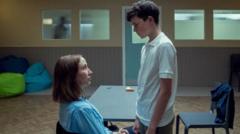
The 2026 BAFTA Television Award nominations function as a lagging indicator of high-capital investment in specific narrative architectures, most notably the "limited series" format. While mainstream reporting focuses on the surface-level achievement of the drama Adolescence leading with nine nominations, a more rigorous analysis reveals a shift in the British television production model. The dominance of this specific title is not merely a creative outlier; it represents the successful execution of high-density storytelling designed to maximize both domestic cultural relevance and international streaming portability.
The Production Value Multiplier in Limited Series
The heavy concentration of nominations for Adolescence—spanning Leading Actor (Stephen Graham), Supporting Actress (Erin Doherty), and Technical categories—demonstrates the "Production Value Multiplier." In this framework, a series concentrated into a single, high-stakes narrative arc allows for a higher per-minute budget allocation compared to long-running procedural dramas.
The technical nominations for Adolescence, specifically in Sound, Editing, and Cinematography, indicate that the BBC and its production partners have pivoted toward a "Cinematic Parity" model. This model seeks to erase the aesthetic boundary between prestige film and television. When a single production captures nearly 10% of the total available nomination slots in major categories, it suggests a consolidation of talent where top-tier film crews are increasingly sequestered into six-to-eight-episode television contracts.
The Mechanism of Talent Concentration
The BAFTA list illustrates a recurring pattern in the British casting ecosystem. The presence of established veterans like Stephen Graham alongside emerging talent signals a risk-mitigation strategy. Producers utilize "Anchor Talent" to secure financing and awards-season visibility, while "Discovery Casting" provides the narrative freshness required to distinguish a project in a saturated market.
- Anchor Talent: Established names (Graham, Doherty) provide the institutional trust necessary for BAFTA voters to engage with the material.
- Narrative Momentum: The "one-shot" or real-time conceit of Adolescence creates a technical hurdle that inherently attracts nominations in craft categories, as the difficulty of execution is visible to the voting body.
Institutional Hegemony and the Broadcaster Split
The distribution of nominations across platforms reveals the current state of the "Broadcaster vs. Streamer" conflict. While Netflix and Apple TV+ continue to penetrate the British awards ecosystem, the BBC remains the dominant institutional force. This dominance is not accidental; it is the result of a deliberate commissioning strategy that prioritizes "High-Concept Social Realism."
The BBC’s 40+ nominations across all categories reflect a vertical integration of British cultural identity and taxpayer-funded development. However, the rise of Channel 4’s Zombie and the presence of streamer-backed projects indicate a fragmentation of the "National Conversation." The "National Conversation" metric is the primary driver for BAFTA relevance; shows that provoke immediate social media discourse or address specific British socio-economic anxieties (e.g., the criminal justice system in Adolescence) possess a structural advantage over generic international thrillers.
The Comedy-Drama Convergence Paradox
The nominations for The Bear in the International category and the local success of Extraordinary highlight a breakdown in traditional genre definitions. The BAFTA "Comedy" categories are no longer defined by a laugh-per-minute ratio but by a "Tonal Elasticity" framework.
- Tonal Elasticity: The ability of a program to transition between absurdist humor and profound emotional trauma within a 30-minute runtime.
- Auteur-Driven Specs: Series that appear to be the singular vision of a writer-performer (e.g., Baby Reindeer) outperform traditional writers'-room models because they offer a clearer "Creative Signature" for voters to reward.
The exclusion of traditional multi-camera sitcoms from the major categories suggests that the BAFTA voting body now equates "quality" with "cinematic single-camera production." This creates a bottleneck for traditional comedy creators who lack the budget for high-end color grading and atmospheric sound design.
Technical Craft as a Leading Indicator of Series Longevity
The technical categories (Editing, Production Design, Sound) often predict which shows will have a lasting impact on the industry's "Visual Grammar." Adolescence's sweep of these categories indicates that its technical innovations—likely centered around its continuous-shot format or hyper-realistic soundscapes—will become the new baseline for prestige drama.
The relationship between "Craft Nominations" and "Best Drama" wins follows a clear correlation. A series that lacks technical recognition rarely secures the top prize, as the BAFTA membership includes a high percentage of craft professionals who value the "How" as much as the "What."
- Visual Grammar: The specific set of shots, lighting choices, and pacing that define a show’s identity.
- Craft Threshold: The minimum level of technical excellence required to be taken seriously as a "Prestige" contender.
Strategic Limitations of the Current Nomination Model
While the 2026 nominations celebrate a high point in British production, they also expose a "Sustainability Gap." The heavy reliance on a few marquee titles like Adolescence and The Crown (in previous years) suggests a "Top-Heavy" industry. If the "middle-class" of television—the reliable, multi-season procedurals—continues to be ignored by awards bodies, the industry risks a talent drain.
The focus on limited series creates a "Hit-or-Miss" economy. Producers are incentivized to gamble entire budgets on single-season events that can dominate an awards cycle, rather than building long-term franchises that provide steady employment and viewer loyalty. This shift mirrors the "Blockbuster-ization" of Hollywood film, where the space for moderate successes is shrinking.
The International Category as a Competitive Threat
The International category, featuring heavy hitters like The Bear and Beef, serves as a benchmark for British creators. The high production values and global reach of these American-backed projects force British broadcasters to choose between two paths:
- Hyper-Localization: Doubling down on specifically British themes that streamers cannot replicate (e.g., Adolescence).
- Global Emulation: Attempting to match the slickness and scale of US productions, often at the risk of losing their distinctive cultural voice.
Quantitative Assessment of the "BAFTA Bounce"
The "BAFTA Bounce" refers to the measurable increase in viewership and international licensing value a series experiences post-nomination. For a show like Adolescence, these nine nominations act as a de facto "Seal of Quality" that justifies higher licensing fees in the North American and Asian markets.
Data from previous cycles suggests that a "Leading Nominee" status increases the likelihood of a US streaming pickup by 65% for independent UK productions. This economic reality underpins the entire awards season; it is a trade show disguised as a gala.
The Influence of the Jury System
BAFTA’s use of juries for certain categories, designed to ensure diversity and prevent "block voting," introduces a layer of unpredictability. This system favors "Challenger Brands"—smaller shows that might be overlooked by a popular vote but possess high artistic merit. The nomination of Zombie suggests that the jury system is successfully counteracting the marketing spend of larger networks, though it cannot entirely negate the visibility advantage of a BBC lead-in.
Strategic Forecast: The Shift to "Immersive Realism"
The dominance of Adolescence confirms that the next three years of British television will be defined by "Immersive Realism." This movement prioritizes:
- Technical Virtuosity: Long takes, diegetic sound, and naturalistic lighting.
- Socio-Political Urgency: Themes of systemic failure, youth disenfranchisement, and institutional decay.
- Performative Intensity: Casting choices that favor "Method" styles or high-intensity emotional output.
For production companies looking to replicate this success, the directive is clear: move away from the "Glossy Thriller" and toward "Gritty Innovation." The market is currently rewarding technical difficulty and emotional rawness over escapism.
To capitalize on this shift, creators must integrate technical leads (Cinematographers and Editors) into the pre-production phase earlier than usual. The success of Adolescence proves that the "Story" is no longer just the script; the "Story" is the marriage of script and the physical constraints of the camera. The awards go to those who make the camera an active participant in the trauma of the characters.