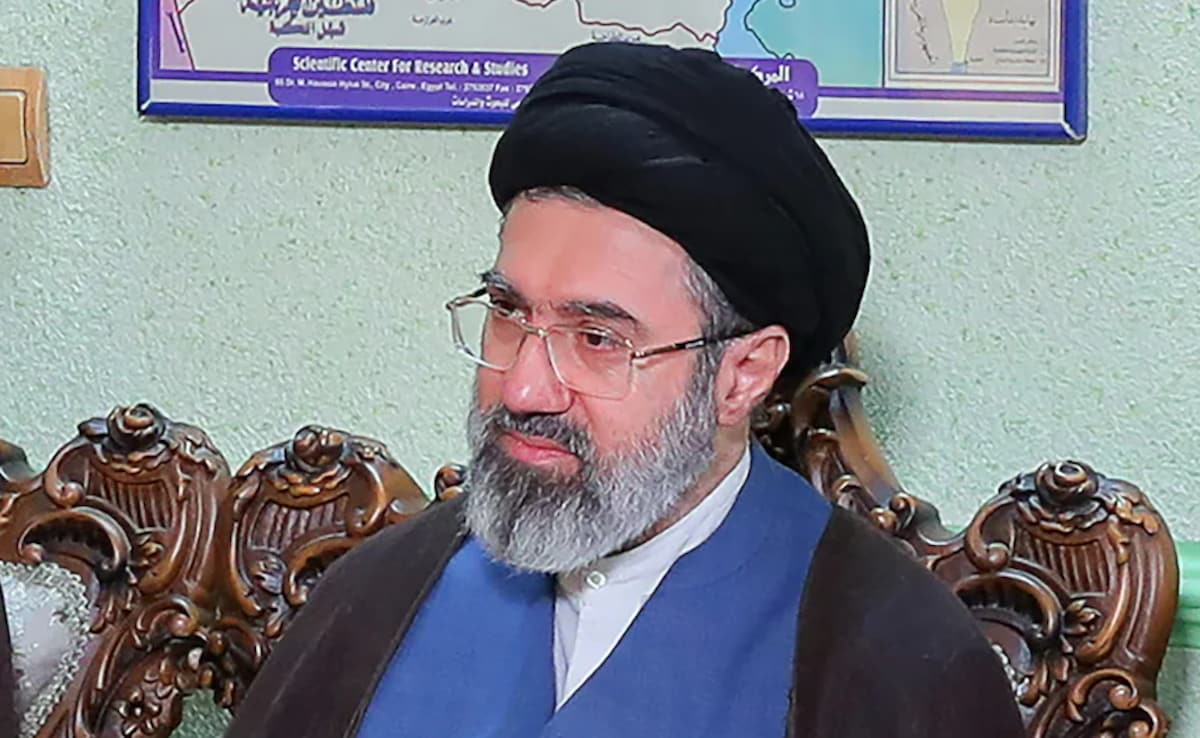
The selection of Mojtaba Khamenei as the apparent successor to the Supreme Leadership of Iran is not a mere exercise in dynastic ambition; it is a calculated risk-mitigation strategy designed to bridge the widening gap between ideological purity and institutional survival. In a system where the "Velayat-e Faqih" (Guardianship of the Jurist) requires both religious legitimacy and the backing of a sprawling paramilitary-industrial complex, the transition of power represents the most significant point of systemic failure. By elevating Mojtaba, the Iranian deep state—specifically the Islamic Revolutionary Guard Corps (IRGC)—is prioritizing continuity of the security apparatus over the traditional clerical consensus.
This transition is governed by three primary structural drivers: the consolidation of the "Shadow State," the neutralization of rival clerical factions, and the necessity of a leader who is inherently "hated by the enemy" to ensure internal cohesion.
The Tripartite Framework of Successor Selection
To understand the elevation of Mojtaba Khamenei, one must analyze the selection process through a matrix of three competing requirements: Institutional Fealty, Security Clearance, and Clerical Minimums.
1. The Shadow State and Institutional Fealty
For over two decades, Mojtaba Khamenei has functioned as the primary interlocutor between the Office of the Supreme Leader (the Beit-e Rahbari) and the IRGC. This role has allowed him to build a "Shadow State" that bypasses formal government ministries. His influence is not rooted in a public-facing role but in his control over the intelligence wings and the financial conglomerates—such as Setad—that fund the regime’s extra-budgetary operations.
The IRGC views a Mojtaba succession as a guarantee that their economic interests will remain untouched. Unlike a high-ranking Grand Ayatollah who might prioritize theological shifts or a populist politician who might seek rapprochement with the West to ease sanctions, Mojtaba is a known quantity. His survival is inextricably linked to the survival of the existing security architecture.
2. The Neutralization of Clerical Rivals
The traditional path to the Supreme Leadership requires "Marja’iyyat" (the status of a source of emulation). Mojtaba lacks the decades of public scholarship usually required for this rank. However, the regime has systematically lowered the clerical bar since the 1989 constitutional revision.
The strategy to elevate Mojtaba involved a two-decade-long campaign to marginalize potential rivals:
- The Pragmatist Wing: The death of Ebrahim Raisi in 2024 removed the most viable "loyalist" alternative who possessed the formal resume of a President.
- The Traditionalists: High-ranking clerics in Qom who might object to a dynastic shift have been silenced through a combination of financial incentives and the threat of the Special Court for the Clergy.
- The Reformists: Entirely purged from the Assembly of Experts, the body theoretically responsible for choosing the leader, ensuring the vote is a rubber-stamp exercise.
3. The "Hated by the Enemy" Doctrine
In the ideological framework of the Islamic Republic, external condemnation is viewed as a metric of internal integrity. The phrase "Must be hated by the enemy" serves as a vetting mechanism. If a candidate is perceived as someone the United States or Israel could "deal with," they are disqualified by the hardline core. Mojtaba’s involvement in the suppression of the 2009 Green Movement and his reported oversight of regional proxy operations solidify his "revolutionary" credentials. This creates a "sunk cost" for the regime; the leadership believes that by choosing someone the West has already sanctioned and demonized, they remove any incentive for that leader to "betray" the revolution through moderate reforms.
The Cost Function of Dynastic Transition
The shift toward a hereditary model introduces a specific set of risks that the Iranian leadership has weighed against the risk of an unpredictable outsider. This can be quantified as a trade-off between Internal Stability and Public Legitimacy.
The Legitimacy Deficit
The 1979 Revolution was explicitly anti-monarchical. Transitioning to a father-to-son model creates a profound ideological contradiction. The regime’s logic is that the loss of public "popular legitimacy" (which has already largely evaporated according to low voter turnout in recent elections) is less dangerous than the loss of "elite cohesion."
If the Assembly of Experts were to choose a weak or compromise candidate, the risk of a military coup by the IRGC or a splintering of the security forces increases. By choosing Mojtaba, the regime chooses the path of maximum elite alignment at the cost of total public alienation.
Operational Control vs. Theological Authority
The Supreme Leader must balance the role of a political-military commander with that of a spiritual guide. Mojtaba’s lack of spiritual charisma means the regime must rely more heavily on coercion. We can expect a transition period characterized by:
- Increased Pre-emptive Suppression: Hardening the domestic security environment to prevent protests during the mourning period of the current leader.
- Accelerated Nuclear Posture: Using the nuclear program as a "security shield" to deter external interference during the fragile transition weeks.
- Proxy Activation: Increasing the activity of the "Axis of Resistance" to project strength and signal that the transition has not weakened Iran’s regional reach.
The Mechanics of the Assembly of Experts
The Assembly of Experts is the constitutional body tasked with the selection, but it operates under the heavy influence of the Guardian Council, which vets its members. This creates a circular logic of loyalty:
- The Supreme Leader appoints the Guardian Council.
- The Guardian Council vets the Assembly of Experts.
- The Assembly of Experts selects the next Supreme Leader.
Recent sessions of the Assembly have been shrouded in secrecy, with reports indicating a "secret committee" has narrowed the list of candidates to just one or two names. The expedited elevation of Mojtaba to the rank of "Ayatollah" in state media and religious circles is the final technical hurdle being cleared. This "promotional surge" is a lead indicator that the decision has already been finalized in the backrooms of the Beit.
Fragility in the Transition Period
Despite the structural preparation, the Mojtaba Khamenei play has clear failure points. The primary bottleneck is the "First 100 Days" post-Ali Khamenei. During this window, any hesitation by the IRGC or a sudden surge in street protests could force a pivot.
The second bottleneck is the potential for a "Praetorian Guard" problem. If the IRGC realizes that Mojtaba is entirely dependent on them for survival, they may move from being the protectors of the Leader to being his masters. This would transform Iran from a clerical autocracy into a transparent military dictatorship, a shift that could alienate the remaining religious base of the regime.
The strategic play for the Iranian deep state is clear: prioritize the survival of the network over the sanctity of the office. The selection of Mojtaba Khamenei is a defensive maneuver. It signals a regime that no longer believes it can win over its population and has instead decided to consolidate its power within a tight, familial, and militarized circle.
Observers should look for the formalization of Mojtaba's role in the National Security Council as the final confirmation of his ascent. Any attempt by Western powers to influence this transition via sanctions or diplomacy is likely to be counter-productive, as the regime has explicitly designed this succession to be "resistance-proof." The focus must shift from "who" will lead to "how" the security apparatus will manage the inevitable friction of a dynastic shift in a post-revolutionary society.