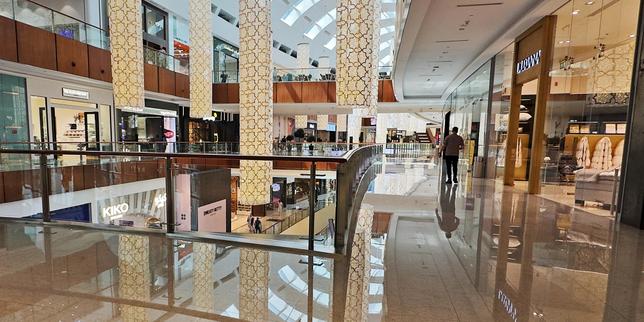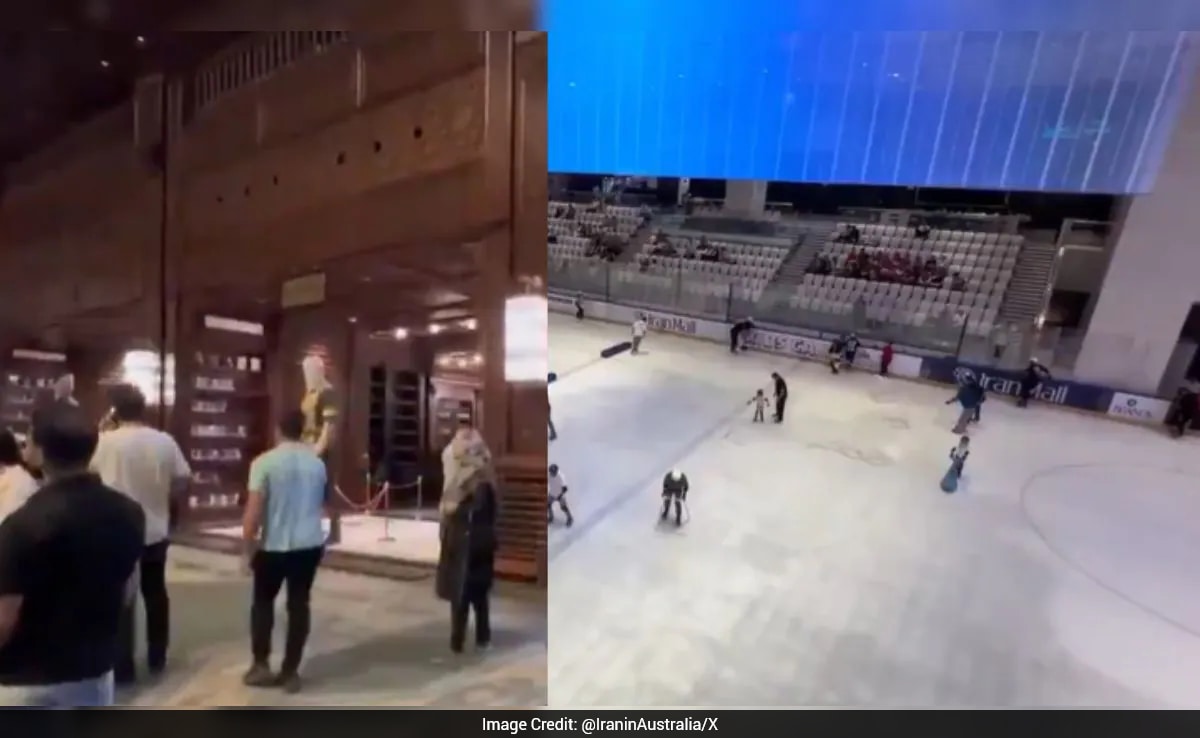
Western media loves a punchline. When the Iranian Embassy in Australia pushes a glossy video of the Iran Mall in Tehran—the largest shopping mall in the world by area—the reaction is predictable. Critics scoff at the irony of a sanctioned, hyper-conservative state flaunting a monument to global consumerism. They call it a "distraction" from Middle East tensions. They view it as a desperate PR stunt by a regime under pressure.
They are wrong. They are missing the point so spectacularly that it borders on negligence.
The Iran Mall isn't a shopping center. It is a 21-million-square-foot fortress of economic sovereignty. It is a massive, concrete middle finger to the Western banking system. If you think this is about selling Nikes or getting people to eat at a food court, you haven't been paying attention to how a "resistance economy" actually functions.
The Myth of the Sanctioned Ghost Town
The "lazy consensus" suggests that sanctions should have turned Tehran into a relic of the 1970s. The presence of a mall that dwarfs the Mall of America and Dubai’s finest should be a mathematical impossibility. Yet, there it stands.
Most analysts look at the Iran Mall and see a failed imitation of Western capitalism. I look at it and see a massive sink for liquidity. When your currency is under fire and your access to international markets is severed, you don't just sit on cash. You build hard assets. You create internal ecosystems that can’t be deleted by a SWIFT ban.
The Iran Mall is a hedge. It is a physical manifestation of capital that has nowhere else to go. For years, the Iranian banking sector, specifically Ayandeh Bank, poured resources into this project. Critics point to the debt and the "frozen" nature of the investment as a sign of failure. In reality, it is a deliberate move to anchor the domestic economy in something tangible. You can’t sanction a library that holds 67,000 volumes or a luxury hotel built into a mountain of steel.
Consumerism as a Defensive Weapon
Why would a "revolutionary" state promote a mall? Simple: Internal stability is bought with comfort, not just ideology.
The Western narrative insists that the Iranian public is starving for a taste of the outside world. The Iran Mall provides that taste, but on the state's terms. It’s an insulated bubble of high-end lifestyle that proves the domestic economy can provide everything the "forbidden" West offers.
- The Library (Jondishapour): It’s not just for books. It’s a statement of cultural continuity.
- The Traditional Bazaar (Timcheh-ye-Haj-Ali-Akbar): It’s a nod to the merchant class (the Bazaaris) who have historically been the kingmakers of Iranian politics.
- The Mirror Hall: It’s pure, unadulterated opulence designed to show that "maximum pressure" has failed to produce maximum poverty.
I’ve seen dozens of developers in emerging markets try to build "the world's biggest" anything. Usually, it’s a vanity project that ends in bankruptcy because they can't fill the space. But the Iran Mall doesn't need to be 100% occupied by H&M or Zara to succeed. Its success is measured by its existence. It is a psychological victory. It tells the Iranian middle class: "You don't need Dubai. We have Dubai at home."
The Australian "Stunt" is a Trade Signal
When the embassy in Canberra shares this content, they aren't trying to lure Australian tourists to Tehran for a weekend getaway. That’s the surface-level interpretation for people who read headlines and nothing else.
This is a trade signal directed at the Indo-Pacific.
Australia and Iran have a complex, long-standing trade history that predates current tensions. By showcasing the mall, the embassy is signaling a sophisticated, modern infrastructure ready for "non-oil" trade. They are highlighting the transition from a petro-state to a diversified economy.
If you are a logistics firm in Singapore or a textile exporter in Vietnam, you don't care about the political optics. You care about the 20 million square feet of retail and commercial potential. You care about the fact that Iran is the 17th largest economy in the world by Purchasing Power Parity (PPP). The mall is a brochure for a market that is far more resilient than Western pundits want to admit.
Why the "Ghost Mall" Narrative is Coping
You will often see videos of empty hallways in the Iran Mall used as "proof" that the project is a disaster. This is the same tired trope used against Chinese "ghost cities" a decade ago—cities that are now bustling hubs of industry.
Building at this scale is a 50-year play.
- Stage 1: Asset Creation. You build the shell. You park the capital. You protect the money from inflation.
- Stage 2: Internal Migration. You pull the population toward new hubs.
- Stage 3: Normalization. The "unnecessary" luxury becomes the new baseline.
The Iran Mall is currently in the late stages of Phase 1. It is a massive storage locker for national wealth. To judge its foot traffic during a period of intense regional military tension is like judging a skyscraper's utility while it’s still being framed.
The High Cost of the Truth
Is there a downside? Of course. The concentration of capital in a single project like the Iran Mall is a massive risk. If the internal economy stutters too hard, the debt load carried by the supporting banks could trigger a localized crisis.
Furthermore, the optics of such extreme luxury in a country facing double-digit inflation creates a palpable class friction. The "Resistance Economy" is great for the architects and the financiers; it’s a harder sell for the person struggling to buy imported medicine.
But from a geopolitical perspective, the mall is a masterstroke of defiance. It proves that the "Global South"—or whatever label we're using for the non-aligned world this week—is no longer waiting for permission from New York or London to build monumental infrastructure.
Stop Asking if it’s "Ethical" and Start Asking if it’s "Effective"
The media wants you to debate whether a mall is a "good look" for Iran right now. That is a distraction.
The real question is: How does a country under the most comprehensive sanctions regime in human history manage to build a structure that makes the best malls in London or Los Angeles look like suburban strip malls?
The answer is uncomfortable. It suggests that sanctions don't stop development; they just force it to become more creative, more insular, and more permanent. The Iran Mall isn't a sign of Iranian weakness or a "desperate" need for attention. It is a sign that the Western tools of economic warfare have reached their limit.
The mall is built. The capital is locked in. The embassy is laughing.
If you're waiting for the "collapse" that the headlines have been promising since 1979, you’re going to be waiting a long time. You can’t collapse a country that has the audacity, the engineering, and the sheer liquid capital to build a mountain of mirrors and marble while the rest of the world is trying to starve them out.
The Iran Mall is the ultimate proof that in the modern world, geography and concrete matter more than "messaging" and "optics."
Stop looking at the shops. Look at the foundation. It’s not going anywhere.