The smoke hasn't even cleared from the latest round of "Operation Epic Fury," and the White House is already sweating the "day after" problem. You've heard the rhetoric: peace through strength, the dawn of a new season, and the end of a nuclear threat. But behind the scenes, Donald Trump is wrestling with the one thing he always promised to avoid—a long-term American babysitting job in the Middle East.
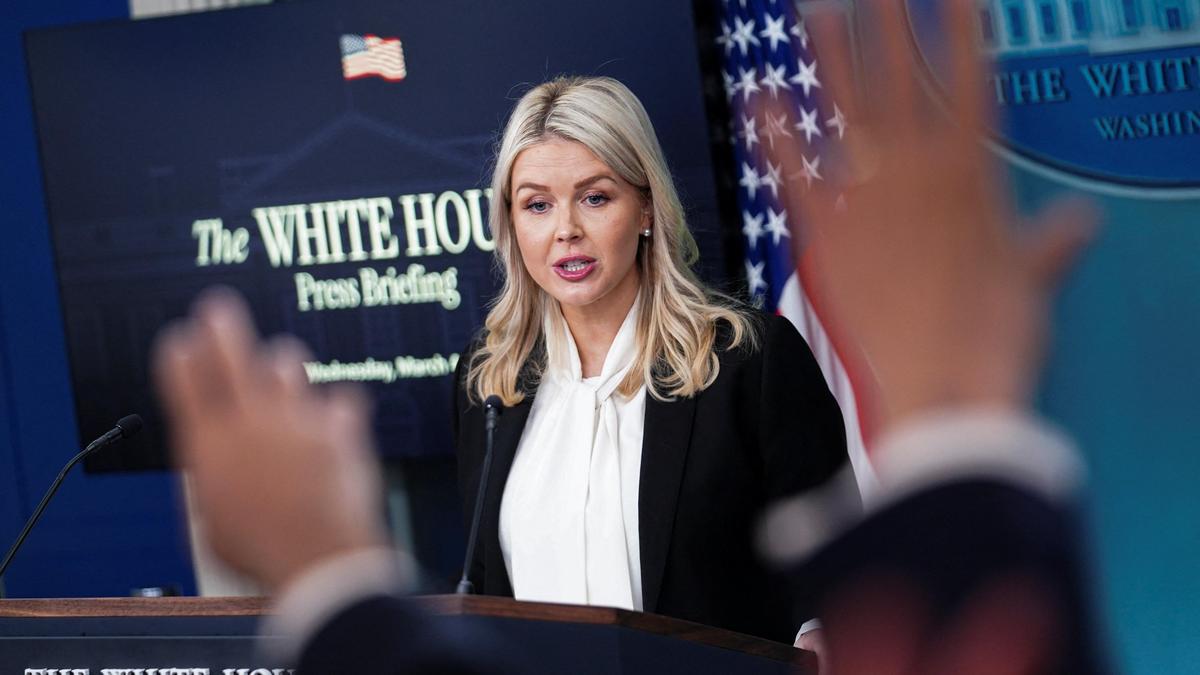
On Wednesday, Press Secretary Karoline Leavitt confirmed what many of us suspected. The administration is actively "weighing" what the U.S. role looks like once the bombs stop falling. This isn't just about military strategy; it's about a president who realizes he might have just inherited a 1,600-mile-wide vacuum. For another perspective, consider: this related article.
The Succession Nightmare Nobody Planned For
If you think taking out a Supreme Leader is the hard part, you haven't been paying attention to history. With Ayatollah Ali Khamenei reportedly killed in an Israeli strike, the power structure in Tehran is a shattered glass floor.
U.S. intelligence is currently obsessed with Mojtaba Khamenei, the late leader's son. He’s the frontrunner to take the throne, backed by the elite Revolutionary Guards. For Trump, this is the "worst-case scenario" he mused about in the Oval Office this week. He told reporters point-blank: Further insight on this matter has been provided by Reuters.
"I guess the worst case would be we do this, and then somebody takes over who's as bad as the previous person. You go through this and then, in five years, you realize you put somebody in who is no better."
It's a rare moment of public hesitation from a president who usually projects total certainty. He’s looking at the prospect of Mojtaba—a man deeply embedded in the clerical establishment—and wondering if all this "fire and fury" just cleared the path for a younger, more resilient version of the same enemy.
The Regime Change Gamble vs. America First
There’s a massive tension at the heart of the Trump 2026 doctrine. On one hand, you have hawks like Marco Rubio and Pete Hegseth talking about "obliterating" the terror regime. On the other, you have a president who built his brand on ending "forever wars."
Honestly, the math doesn't add up yet. The administration claims this isn't a war of choice, but a defensive necessity. They point to 47 years of "malign influence" and a nuclear program that was supposedly a year away from "immunity." But look at the numbers:
- Only 27% of Americans approve of these strikes.
- Half the country—including a quarter of the GOP—thinks Trump is too quick to pull the trigger.
- The Senate just narrowly killed a war powers resolution that would have clipped the president's wings.
The public isn't buying the "liberation" narrative as easily as they did in the early 2000s. People are worried about gas prices, the Strait of Hormuz being closed, and the fact that we've already lost six service members in a matter of days.
What Washington Actually Offered
Before the first Tomahawk missile left the tube, there was a secret offer on the table. We now know that the U.S. and Israel, via Omani mediators, offered Iran a "joint civilian nuclear program" with American investment.
The deal was simple:
- Dismantle all uranium enrichment infrastructure permanently.
- Receive nuclear fuel for peaceful energy and medical use.
- Get massive sanctions relief and U.S. cash.
Tehran said no. They called it a surrender, not a deal. Leavitt’s line is that they "refused to say yes to peace," which gave the U.S. the moral high ground to launch Epic Fury. But critics, and even some allies like Spain, are questioning the "imminent threat" justification. They see a war of choice disguised as a preemptive strike.
The Venezuela Model in the Middle East
Trump has been making some weird comparisons lately. He’s mentioned Venezuela and Cuba as blueprints for what's happening in Iran. Basically, he wants the regime to collapse under its own weight while the U.S. provides the "nudge" from 30,000 feet.
He’s explicitly dismissed the idea of backing Reza Pahlavi, the son of the former Shah, as a direct replacement. Instead, he seems to be hoping for a "National Transitional Committee" similar to what's being tried in Gaza. He wants the Iranian people to rise up—he even called for it on Truth Social—but so far, the streets of Tehran are quiet, locked down by a heavy security presence and an internet blackout.
Why This Ends With a Shrug or a Slog
Don't expect a neat ending. Trump’s "cakeism"—the desire to whack the bad guys without paying the price—is being tested. If the costs mount, history suggests he’ll simply declare victory and pivot.
Right now, the administration is stuck between two worlds. They want to destroy the ballistic missile capability so Iran can never "hold the world hostage" again, but they also "wouldn't be heartbroken" (Rubio’s words) if the government fell.
The immediate next steps aren't about more bombs. Watch the tariffs. Trump just signed an Executive Order targeting any country that buys goods from Iran. He’s trying to starve the successor—whether it’s Mojtaba or someone else—before they can even sit in the chair.
If you’re looking for a clear U.S. exit strategy, don't hold your breath. The "role" the White House is weighing likely involves a permanent naval presence in the Gulf and a hair-trigger drone program. We aren't building a democracy in Iran; we're just trying to make sure whoever is left in the ruins is too broke to fight back.
Monitor the House floor this Thursday. The upcoming vote on removing U.S. forces from hostilities will be the first real litmus test of how much "patience" Congress—and the American voter—has for this new Iranian frontier.