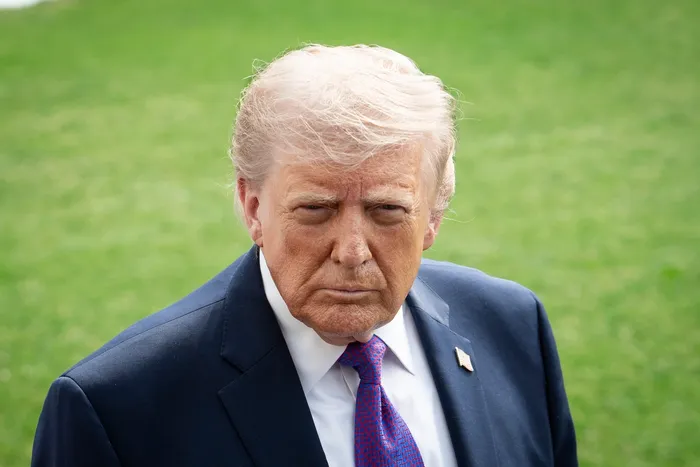
Donald Trump isn't mincing words about who should be footing the bill for security in the Middle East. As the conflict with Iran continues to choke the world's most vital energy artery, the President has made a blunt demand. He wants seven nations to stop leaning on the U.S. Navy and start sending their own warships to the Strait of Hormuz. His logic is simple, if a bit jarring for traditional diplomats: "I’m demanding that these countries come in and protect their own territory because it is their own territory."
The "territory" he's talking about isn't literal land, of course. It's the economic lifeline that keeps these countries running. Trump's argument centers on a massive imbalance in who uses the oil and who pays to protect it. While the U.S. has reached a point of energy independence where it only gets about 1% of its oil from the region, other global powers are almost entirely dependent on it. Read more on a connected subject: this related article.
The Seven Nation Question
Trump hasn't officially published a final list of the seven, but he’s already name-checked the heavy hitters on Truth Social and in scuffles with reporters on Air Force One. We're talking about China, the UK, France, Japan, and South Korea. These are the nations with the most to lose if the Strait stays a no-go zone.
Take China as the prime example. They get nearly 90% of their oil through that narrow passage. Trump's take? It’s time for Beijing to stop being a "free rider" on American security. He’s essentially told them that if they want their lights to stay on, they need to put some skin in the game. Further reporting by The Guardian delves into comparable perspectives on this issue.
It's a classic Trump move. He’s shifting the burden of "policing the world" back onto the people who actually benefit from the police work. Honestly, from a purely transactional standpoint, he isn't wrong. Why should American taxpayers and sailors risk everything for oil that's destined for Shanghai or Tokyo?
A Muted Response from Allies
So far, the global reaction has been a lot of foot-shuffling and "we'll get back to you."
- Japan: Defence Minister Shinjiro Koizumi was quick to tell parliament that Tokyo isn't considering a naval deployment right now. They're worried about the legal hurdles and the risk of getting sucked into a shooting war.
- The UK: Prime Minister Keir Starmer has been in talks with Trump, but the word from Whitehall is that they’re looking at "options" like minesweeping drones instead of sending a full carrier strike group into a hornet's nest.
- Australia: They’ve flat-out said no for the time being. Transport Minister Catherine King was pretty clear that sending a ship isn't on the cards.
The tension here is obvious. These countries are terrified that sending warships will escalate a situation that’s already on a knife-edge. Iran has already been using sea mines and fast-attack boats to harass tankers. Adding more foreign warships to the mix could turn a blockade into a full-scale naval graveyard.
Why This Matters to Your Wallet
You don't have to be a geopolitics nerd to feel the impact of this standoff. If you’ve filled up your tank lately, you know exactly what’s happening. Oil prices have blasted past $100 a barrel since the U.S. and Israel launched strikes on February 28. In the U.S., petrol prices are up over 70 cents a gallon in just two weeks.
The Strait of Hormuz handles about 20% of the world's oil exports. It's a chokepoint in the truest sense of the word. Iran knows this is their only real leverage. They can’t win a conventional war against the U.S., but they can make the global economy scream by dropping a few mines in the water.
Trump’s gamble is that by forcing other nations to join a coalition, he spreads the risk and the cost. He’s betting that if China or Japan have ships on the line, Iran might think twice about attacking a tanker. It’s a high-stakes game of chicken where the prize is preventing a global economic meltdown.
The Military Reality on the Ground
Trump claims the U.S. has "essentially defeated" Iran’s conventional capabilities. He’s pointed to the destruction of their air defenses and the hits on Kharg Island as proof that Tehran is gasping for air. But a "defeated" nation can still be dangerous in a narrow waterway.
- Sea Mines: They’re cheap, hard to find, and they don't care how advanced your destroyer is.
- Drone Swarms: Iran’s manufacturing might be hit, but they still have enough "suicide" drones to make life miserable for commercial shipping.
- Asymmetric Tactics: Using small, fast boats to harass giant, slow-moving tankers is a strategy that’s worked for them for decades.
What Happens if They Say No?
Trump hasn't been shy about the consequences for nations that refuse to help. "We will remember," he warned. This isn't just about ships; it’s about the future of alliances. He’s already signaled that NATO’s future looks "very bad" if allies don't step up here.
We’re likely to see some intense arm-twisting this week. Japan’s Prime Minister Sanae Takaichi is headed to the White House on Thursday. You can bet your bottom dollar that "Hormuz" will be the only word on the agenda. Trump wants a coalition announcement by the end of the week, whether the allies are ready for it or not.
If you’re watching this from the sidelines, keep an eye on the oil markets. If a coalition forms and starts escorting tankers, prices might stabilize. If the allies stay home and the U.S. has to go it alone, expect more volatility and potentially more aggressive strikes on Iranian infrastructure to "finish the job" as Trump puts it.
Don't wait for the evening news to tell you where this is going. Watch the ship tracking data in the Gulf. If you see the flags of seven different nations gathered near the Musandam Peninsula, you’ll know Trump got exactly what he demanded. In the meantime, maybe hold off on that long road trip until we see if the "policing" actually starts.