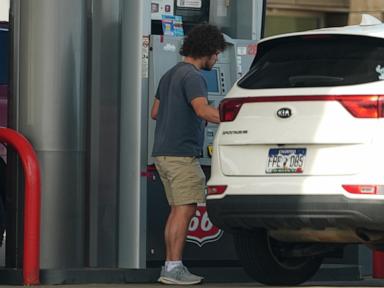
If you’re staring at a gas pump screen watching the dollar signs climb faster than the gallons, a gas tax suspension sounds like a lifeline. It’s the ultimate political "quick fix" that crops up every time oil prices spike. Politicians love it because it’s a visible way to say they’re doing something. But here’s the reality. Suspending the US gas tax is often a drop in the bucket that helps oil companies more than it helps your bank account.
Most people think a 18.4-cent cut in federal taxes means 18.4 cents off the price at the pump. It rarely works that way. Markets are messy. Supply chains are stubborn. Prices are sticky. When you look at the math and the history of these "holidays," the relief is usually fleeting, and the long-term cost is higher than you’d think.
How much do you actually pay in gas taxes
To understand why a suspension is complicated, you have to know what you’re paying now. The federal government has held the tax at 18.4 cents per gallon for gasoline and 24.4 cents per gallon for diesel since 1993. That money doesn't just disappear into a black hole. It goes into the Highway Trust Fund. This fund pays for almost everything that keeps your commute from becoming a gravel-pitted nightmare—interstate repairs, bridge inspections, and public transit projects.
Then you have state taxes. These vary wildly. If you live in Pennsylvania or California, you’re paying a massive chunk on top of the federal rate. If you’re in Alaska, it’s significantly lower. When people talk about a "gas tax holiday," they’re usually talking about the federal portion. If the feds cut their 18.4 cents, you’d expect the price to drop from $3.50 to $3.31 immediately.
It almost never happens.
Why retailers don’t always pass on the savings
Gas station owners operate on razor-thin margins. Most of their profit doesn't come from the fuel—it comes from the overpriced beef jerky and energy drinks you buy inside. When a tax is suspended, the wholesale price might drop, but the station owner has a choice. They can lower the price to stay competitive, or they can keep the price slightly higher to recoup costs from when oil prices were rising and they were losing money.
Economists call this "price stickiness." Prices go up like a rocket and fall like a feather. In 2022, when several states like Maryland and Georgia suspended their state-level gas taxes, researchers found that consumers only saw about 50% to 70% of that tax cut reflected in the final pump price. The rest was absorbed by the supply chain. Basically, you’re subsidizing the profit margins of distributors and retailers while hoping for a few bucks back at the end of the month.
The supply and demand trap
High prices suck. Nobody likes them. But high prices also do something important—they signal to people to drive less. If the government artificially lowers the price of gas through a tax holiday, demand stays high. If demand stays high while supply is tight, the market price naturally wants to drift back up.
Think about it this way. If everyone suddenly feels gas is "cheaper" and decides to take that summer road trip, the increased demand puts pressure on the limited supply. The market responds by raising the base price of the fuel itself, effectively wiping out the 18-cent tax savings. You end up paying the same price you were before, but now the Highway Trust Fund is broke and the oil companies are moving more volume.
The massive hole in the Highway Trust Fund
The biggest danger of a gas tax suspension isn't the pump price. It's the infrastructure. Our roads are already in rough shape. The American Society of Civil Engineers (ASCE) consistently gives US infrastructure mediocre grades, often in the "D" range.
If we stop collecting the federal gas tax for six months, we lose billions in revenue. That’s money that was earmarked for:
- Fixing bridges that are structurally deficient.
- Expanding lanes to reduce the traffic jams you hate.
- Funding bus and rail systems that take cars off the road.
When the fund runs dry, the money has to come from somewhere. Usually, that means "borrowing" from the general fund, which adds to the national deficit. Or, more likely, projects just get delayed. You save $5 a week at the pump today, but you pay $500 for a new rim next year because a pothole didn't get filled. It’s a bad trade.
Who really wins during a tax holiday
If you drive a massive SUV or a heavy-duty truck, you see the most "benefit" because you buy the most fuel. But even then, the numbers are underwhelming. If you drive 12,000 miles a year in a vehicle that gets 20 MPG, you use 600 gallons of gas. A full-year federal tax holiday saves you exactly $110.40.
That’s less than $10 a month.
For the average household, $10 isn't nothing, but it isn't life-changing either. It won't offset the rising cost of groceries or rent. Meanwhile, the administrative cost for the government to implement, monitor, and eventually restart the tax is massive. It’s a lot of bureaucratic theater for a very small curtain call.
The political angle
Politicians love the gas tax holiday because it’s "clean." It doesn't require complex negotiations with OPEC+ or drilling permits in the Arctic. It’s a button they can push. But it’s a short-term play for votes. They know that once the holiday ends and the tax is "re-applied," they’ll be blamed for the price jump. It creates a cycle of bad policy where we starve our roads to give people the illusion of a bargain.
Better ways to handle high fuel costs
If the goal is actually helping people get to work without going broke, there are better levers to pull than messing with the gas tax.
- Targeted Rebates: Instead of a blanket tax cut that helps the guy idling his luxury SUV, the government could issue direct rebates to low-and-middle-income households. This keeps the infrastructure fund intact while putting money where it’s actually needed.
- Public Transit Investment: Making it cheaper and easier to take a train or bus is the only long-term way to reduce gas demand.
- Incentivizing Efficiency: Long-term shifts toward EVs or more fuel-efficient hybrids do more for your wallet than any 18-cent tax cut ever could.
What you should do instead of waiting for a tax cut
Don't wait for Washington to save you 18 cents. You have more control over your fuel costs than the IRS does. Stop checking the news for tax holiday updates and start looking at your own habits.
Check your tire pressure today. Seriously. Under-inflated tires can drop your fuel economy by 3%. Use an app like GasBuddy to find the cheapest station on your route rather than pulling into the first one you see. Most importantly, drive like there’s an egg under your gas pedal. Aggressive accelerating and braking wastes more money than the federal gas tax even costs you.
The gas tax holiday is a shiny object designed to distract you from the fact that global oil markets are out of our control. Focus on the variables you can actually change.