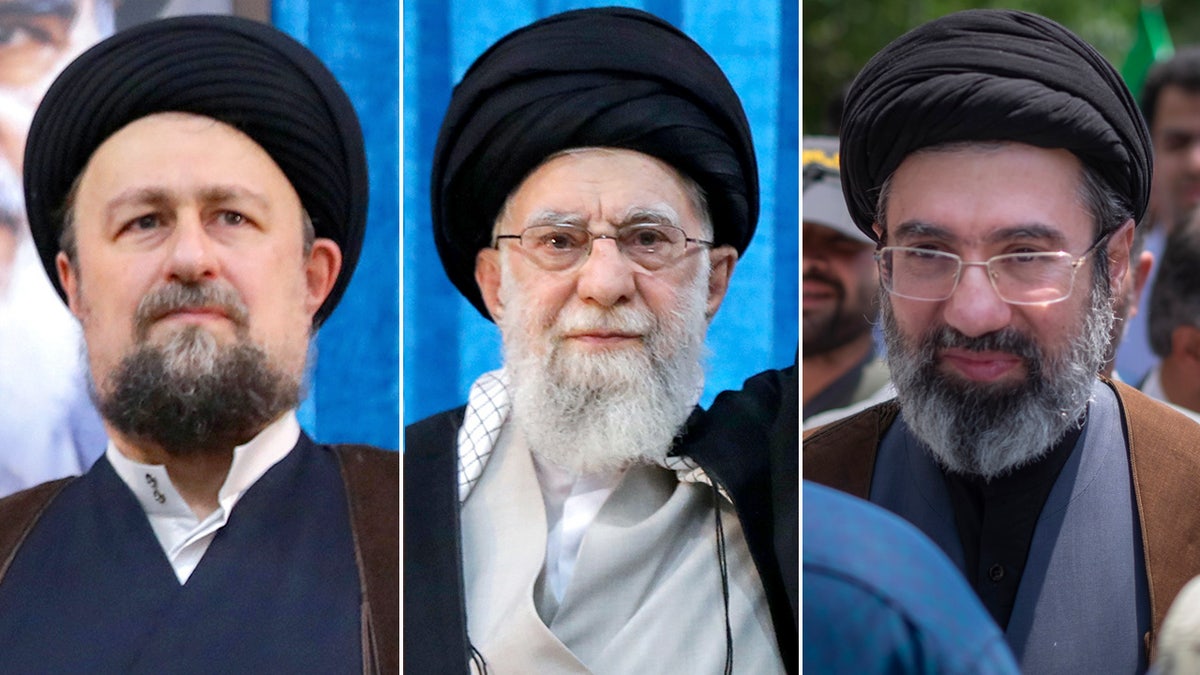
Iran is notoriously tight-lipped about the health of its ruling elite. When reports surfaced that Mojtaba Khamenei, the second son of Supreme Leader Ayatollah Ali Khamenei, was whisked away to Russia for emergency surgery, the Middle Eastern geopolitical rumor mill went into overdrive. Some sources even claimed he lost a leg. This isn't just about a medical procedure. It’s about the future of one of the most volatile regions on Earth.
If Mojtaba is indeed incapacitated, the carefully laid plans for a smooth succession in Tehran just hit a massive wall. You have to look at the timing and the location to understand why this matters. Why Russia? Why now? For a deeper dive into similar topics, we recommend: this related article.
Why the Kremlin is the Supreme Leader's Surgeon of Choice
Tehran has some of the best doctors in the region, but they don't have the security of a Russian military hospital. When you’re the heir apparent to a theocracy, you don't just check into a local clinic. You go where the prying eyes of Western intelligence and internal rivals can't reach.
Recent reports from outlets like WION and various Persian-language activists suggest that Mojtaba was flown to Moscow under a cloud of extreme secrecy. The "lost a leg" narrative sounds like something out of a spy novel, but in the world of Iranian politics, the truth is often stranger than fiction. If he suffered a severe injury or a debilitating vascular issue, it changes his standing in the eyes of the Assembly of Experts. They want a leader who projects strength. To get more background on the matter, in-depth reporting can also be found on The New York Times.
Russia provides a safe haven. Putin and Khamenei have grown closer than ever, trading drones for diplomatic cover. Sending Mojtaba to Russia isn't just a medical choice. It’s a political signal. It says that the House of Khamenei trusts Moscow more than its own shadows in Tehran.
The Succession Crisis Is No Longer Theoretical
For years, Mojtaba Khamenei has been the man behind the curtain. He’s been running the office of the Supreme Leader, influencing the Basij militia, and reportedly directing parts of the security apparatus. He isn't officially the successor, but everyone knows he’s the frontrunner.
Then Ebrahim Raisi died in a helicopter crash. That changed everything.
Raisi was the buffer. With him gone, the spotlight moved directly onto Mojtaba. Many Iranians hate the idea of "hereditary" rule in a system that was supposed to replace a monarchy. If Mojtaba is now dealing with a life-altering medical condition, his rivals within the Islamic Revolutionary Guard Corps (IRGC) will smell blood.
Who stands to gain if Mojtaba is out
- The Traditionalists: Older clerics who believe the leadership should stay with the most learned scholars, not the son of the current guy.
- IRGC Hardliners: They want a puppet or one of their own generals in charge. A weak or recovering Mojtaba is easier to manipulate or bypass entirely.
- The Reformist Ghost: While mostly sidelined, any chaos at the top gives the underground opposition a tiny window of hope.
Breaking Down the Russia Connection
The logistical reality of a secret flight to Moscow involves multiple layers of deception. We’re talking about "dark" flights—transponders off, fake flight plans, and landing at restricted military airfields like Chkalovsky.
Russian medical expertise in certain fields, particularly trauma and complex surgeries, is world-class. But the real draw is the silence. In Moscow, the FSB ensures no nurses are leaking photos to Instagram. For the Iranian leadership, that silence is worth more than any state-of-the-art MRI.
If the reports about a limb amputation are true, the optics are devastating for a regime that prizes "Physical Perfection" in its leadership imagery. We’ve seen this before with North Korea or the late-stage Soviet Union. The leader disappears, the rumors fly, and then a heavily edited video appears three weeks later to prove "all is well."
What This Means for Global Oil and Security
Don't think for a second this is just an internal Iranian drama. If the succession plan is in tatters, the regime might lash out to project strength.
Israel and the US are watching these medical reports more closely than any hospital staff. A power vacuum in Tehran usually leads to increased aggression from proxies like Hezbollah or the Houthis. It’s a classic diversion tactic. When the king is sick, the generals start a fire elsewhere to keep the citizens from looking at the palace.
The Iranian Rial is already in the basement. News of a medical crisis at the top only fuels the fire of domestic unrest. People don't want to die for a leader who is hiding in a Russian hospital while the country starves under sanctions.
The IRGC Factor
The Revolutionary Guard is the real power broker here. They've spent decades building a business empire. They won't let a "sick" successor ruin their bottom line. If Mojtaba can't perform his duties, expect the IRGC to move toward a council-based leadership model. This would effectively turn Iran into a military junta with a thin religious veil.
Basically, the era of the "all-powerful" Ayatollah might be ending, replaced by a committee of generals who care more about missile ranges and oil black markets than theology.
Reality Check on the Rumors
You have to take "secret report" claims with a grain of salt. Information is a weapon. The "lost a leg" story could be a plant by an internal rival to make Mojtaba look weak. Or, it could be 100% accurate.
Wait for the public appearances. If Mojtaba remains a ghost for the next six months, the surgery was either a failure or far more serious than "routine." In Tehran, absence isn't just about being busy. It's usually about being incapacitated.
Watch the official state media. If they start overcompensating with "health and fitness" propaganda about the leadership, you know they're hiding a wheelchair.
Monitor the flight paths between Tehran and Moscow. Look for non-commercial Il-76 or Tu-154 aircraft. These are the workhorses of the elite. When those planes move, power moves with them. Stay skeptical but stay alert. The next few months will decide if the Islamic Republic stays as it is or fractures into something even more unpredictable.