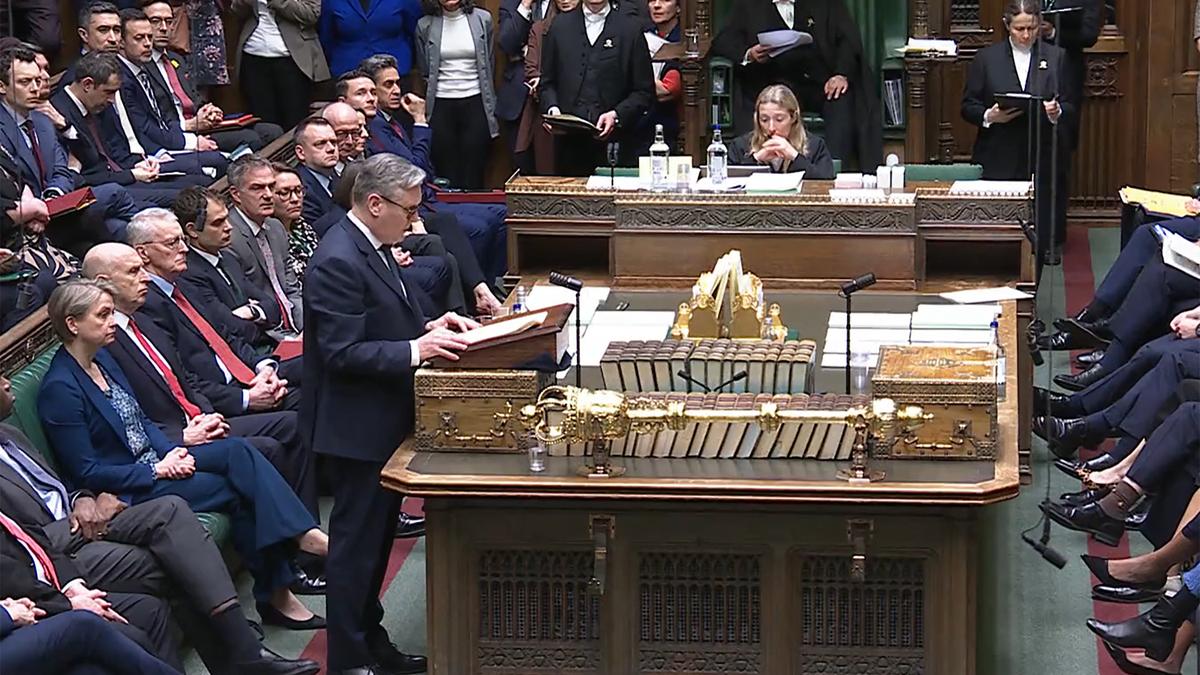
Keir Starmer isn't budging. Despite a public lashing from Donald Trump, the British Prime Minister is holding a firm line on the conflict in the Middle East. He's refusing to join "offensive" strikes against Iran, even after the US and Israel launched a massive campaign that decapitated the Iranian leadership. If you're wondering why the UK is suddenly playing the role of the hesitant partner, it isn't because they've gone soft on Tehran. It's because the ghost of Iraq still haunts the corridors of Westminster, and the British government isn't about to sign a blank check for regime change.
The rift between London and Washington
The special relationship is looking a bit frayed this week. On March 2, 2026, Starmer stood up in the House of Commons and basically told Trump to mind his own business—in the most polite, parliamentary way possible. This comes after Trump told the Daily Telegraph he was "very disappointed" with the UK's refusal to use its bases at the start of the war.
Trump's frustration is clear. He thinks the UK took "far too much time" to grant access to Diego Garcia and RAF Fairford. He even hinted that the Prime Minister was overly worried about the "legality" of the whole thing. In the Trump world, when you've got the most powerful military, you use it. When you're trying to dismantle a regime that's been a thorn in your side for decades, you don't wait for a legal brief.
But for Starmer, the legality isn't just a footnote. It's the whole point. He’s making a deliberate choice to differentiate Britain from the American "regime change from the skies" approach. He’s telling the world—and his own voters—that the UK won't be a junior partner in an open-ended war without a clear, lawful plan for what comes after.
Why the UK shifted its stance on Sunday
If the UK isn't joining the offensive, why did it suddenly allow the US to use its bases on March 1? It’s a nuance that's getting lost in the headlines. Initially, Starmer said no to any involvement. But then Iran started lashing out across the region.
Tehran’s retaliation wasn't just directed at the US and Israel. They launched missiles and drones at the UAE, Saudi Arabia, Kuwait, and Qatar. They even hit RAF Akrotiri in Cyprus with a drone—though the UK claims that strike was launched before any of its decisions were announced.
The turning point for the UK was the threat to its own people and interests. There are roughly 300,000 British citizens in the region right now. Many are sheltering in place as airports close and the skies fill with missiles. When Iran started targeting countries that weren't even part of the initial strikes, the UK's "defensive" threshold was crossed.
- Defensive vs Offensive: The UK is now allowing the US to use bases like Diego Garcia for "specific and limited defensive purposes." This means targeting the launchers and storage silos that Iran is using to strike the region.
- No regime change: Starmer has explicitly ruled out participating in any mission aimed at toppling the Iranian government. He’s sticking to the idea that Iran’s future belongs to the Iranian people, not Western bombers.
The ghost of Iraq is still in the room
You can’t understand the UK's current hesitation without looking back at 2003. The Iraq war remains a scar on the British political psyche. Starmer isn't just a Prime Minister; he’s a former human rights lawyer. He knows that once you start a war for regime change, you own the aftermath.
"We all remember the mistakes of Iraq," he told MPs on Monday. "Any UK actions must always have a lawful basis and a viable, thought-through plan."
It’s a direct swipe at the current US strategy. While Trump is talking about a five-week campaign that could last longer, Starmer is looking for an exit strategy that hasn't even been written yet. The UK government is betting that a negotiated settlement is still the only way to deal with Iran's nuclear ambitions in the long run.
The situation on the ground in Iran
The war has moved incredibly fast. On February 28, the opening wave of strikes reportedly killed Supreme Leader Ali Khamenei and several top IRGC commanders. In a decapitation strike like that, most regimes would crumble or at least pause. But the Iranian regime isn't most regimes.
Reports from within Iran suggest that while the leadership has been hit hard, the security forces are still loyal to the interim leadership. Internet access is a mess, and while there were massive protests in January, the regime is still using every tool it has to stay in control.
This is exactly why the UK is being so careful. If the regime doesn't collapse, and instead becomes more "reckless and dangerous"—as Starmer warned it is already doing—then an open-ended offensive strike could lead to a decade of chaos. The UK isn't interested in being the ones to manage that chaos.
Navigating the fallout at home
It’s not just Trump that Starmer has to worry about. He's getting squeezed from both sides in Westminster.
Kemi Badenoch, the Tory leader, is accusing the government of "dithering delay." She argues that Labour is putting partisan politics and the fear of alienating certain voters ahead of the British national interest. She wants the UK to stand shoulder-to-shoulder with its closest ally without the legal hair-splitting.
On the other side, the Liberal Democrats and even some Labour backbenchers are demanding a vote in Parliament before any further military involvement. They’re worried that the "defensive" missions will slowly bleed into "offensive" ones. They’ve seen this mission creep before, and they don’t trust that it will stay "limited."
What you need to know if you're in the region
If you have family or friends in the Middle East right now, the advice from the Foreign Office is pretty clear. Don't wait for things to get worse.
- Register your presence: The FCDO needs to know exactly where you are to provide any kind of support or evacuation.
- Shelter in place: With airspace closed across much of the region, trying to get to an airport might be more dangerous than staying put.
- Follow local authorities: This isn't just about the war; it's about the civil unrest and emergency measures being taken by host countries.
The UK is deploying rapid-response teams to help citizens, but with 300,000 people to look after, it’s a massive undertaking. The situation is incredibly volatile, and the Prime Minister’s "limited" involvement is an attempt to protect those people without making them even bigger targets.
A calculated gamble on the special relationship
Starmer is taking a huge risk. He’s betting that he can maintain the alliance with the US while publicly disagreeing with its most important military operation in decades. He’s also betting that he can help "knock the arrow out of the sky" by destroying Iranian launchers without becoming a full participant in the war.
The reality is that once the missiles start flying, those distinctions often disappear. Iran has already shown it’s willing to strike British bases in response to what it sees as UK participation. Whether the UK likes it or not, it’s already in the middle of this.
If you're tracking the UK's next moves, keep an eye on the joint US-UK targeting boards. These are the groups that will decide which Iranian sites get hit from British bases. If those targets start looking more like "regime targets" and less like "launch sites," then Starmer’s "defensive" stance will be impossible to maintain.
Keep your travel documents ready if you're in the Gulf, and stay tuned to the FCDO's live updates. This conflict is far from over, and the UK’s role is likely to get even more complicated as the US campaign enters its second week.


