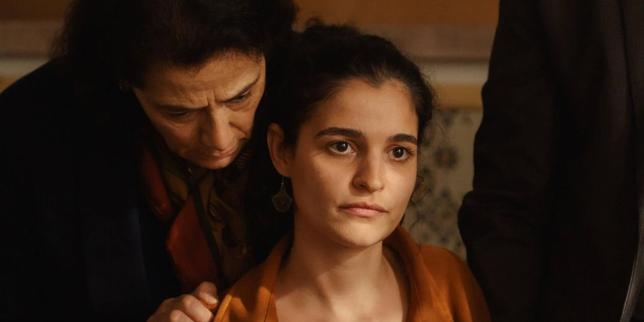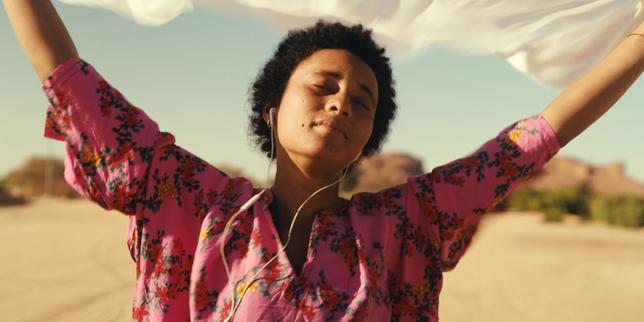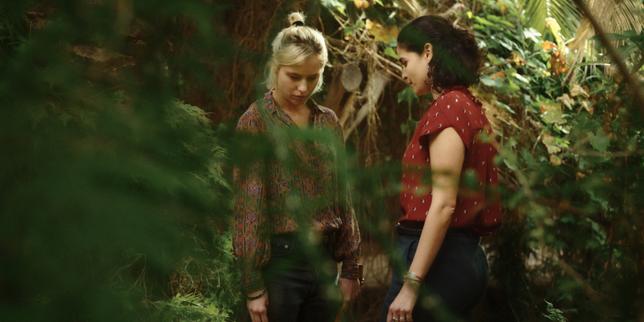
Radhouane El Meddeb didn’t set out to make a comfortable movie. If you’ve seen A voix basse (Whispering), you know it’s a slow-burn exploration of everything Tunisians usually hide behind closed doors. It’s not just about a forbidden romance. It’s a surgical look at a society caught between a revolutionary past and a rigid, conservative present. I’ve watched how North African cinema struggles to balance political messaging with raw human emotion, and El Meddeb nails it by leaning into the silence.
Most critics focus on the "forbidden" aspect of the love story. They’re missing the point. The film isn’t revolutionary because people are falling in love with the "wrong" partners. It’s revolutionary because it forces the audience to sit with the crushing weight of what remains unsaid in Tunisian households. Meanwhile, you can read similar events here: Madonna Missing Coachella Outfits Is The Best Marketing She Never Paid For.
The Reality of Silence in Tunis
The film centers on Malik and Myriam. Their relationship isn't just a secret; it’s an impossibility within the framework of their environment. When you walk through the streets of Tunis today, there’s an energy that feels liberated on the surface. You see the cafes, the street art, and the political debates. But step inside a family apartment in the suburbs, and the atmosphere changes.
A voix basse captures this suffocating transition. El Meddeb uses long, static shots. He makes you wait. He makes you feel the discomfort of a dinner table where no one mentions the elephant in the room. This isn't just artistic fluff. It's a reflection of a generation that fought for political freedom only to realize that social freedom is a much harder battle. To explore the full picture, check out the excellent analysis by GQ.
I think the most striking thing about the cinematography is the use of light. It’s dim. It’s grainy. It feels like the characters are constantly trying to blend into the shadows to avoid being judged by their neighbors. In Tunisia, "Hshouma" (shame) is a currency. You spend your whole life trying not to lose it.
Breaking Down the Taboos
We need to talk about why this specific story matters in 2026. Tunisian cinema has a long history of pushing boundaries—think of Moufida Tlatli’s The Silences of the Palace. El Meddeb is clearly nodding to that legacy, but he’s updating it for a post-revolution context.
The film addresses three major layers of repression:
- Class expectations: How wealth doesn't actually buy you freedom from tradition.
- Religious undertones: The quiet, persistent pressure to conform to "morality."
- Gender roles: The specific way women are expected to be the keepers of family secrets.
Myriam’s character is particularly heartbreaking. She isn't a victim in the traditional sense. She’s smart, she’s modern, and she’s aware. That makes her "imprisonment" even worse because she knows exactly what she’s giving up. When she speaks, it’s rarely above a whisper. Hence the title. If she raises her voice, the whole fragile structure of her life collapses. It’s a high-stakes game of emotional Jenga.
Why This Isn't Just Another Sad Romance
I’ve seen plenty of movies about star-crossed lovers. Usually, they’re melodramatic. They have swelling orchestras and big rainy scenes. A voix basse rejects all of that. It’s dry. It’s almost clinical.
The chemistry between the leads isn't about grand gestures. It’s about the way they look at each other when no one else is in the room. It’s about the frantic, whispered conversations in the back of a taxi. El Meddeb understands that in a repressive society, the smallest gesture becomes a massive act of rebellion. Holding hands in a dark cinema becomes a political statement.
Some viewers find the pacing too slow. I disagree. The slowness is the point. It mimics the stagnation of the characters' lives. They’re stuck. If the movie moved faster, it would betray the reality of the situation. You can't rush a life that’s being lived in slow motion to avoid detection.
The Political Subtext You Might Have Missed
While the film feels personal, it’s deeply political. Tunisia is often hailed as the "success story" of the Arab Spring. But if you talk to people on the ground, the sentiment is more complex. There’s a sense that while the government changed, the social fabric stayed the same—or even tightened.
The film suggests that true revolution doesn't happen in the Kasbah; it happens in the bedroom and the kitchen. If you can't love who you want, did you actually win any freedom? It’s a gut-punch of a question. El Meddeb doesn't provide an easy answer. He just leaves you with the discomfort.
Directing through Movement
Coming from a background in dance and choreography, El Meddeb brings a unique physicality to the screen. Pay attention to how the characters move through space. They’re often cramped. They navigate furniture and narrow hallways as if they’re navigating landmines.
There’s a scene halfway through where the silence is finally broken, and the result isn't catharsis. It’s chaos. It proves that the "whisper" wasn't just a choice; it was a survival mechanism. Once the volume goes up, the safety net disappears.
What to Watch For
If you’re planning to see A voix basse or you’re reflecting on it, look at the background characters. The mothers, the aunts, the shopkeepers. They are the "chorus" of the film. They don't need to say anything to exert pressure. Their presence alone is a reminder of the rules.
The film ends on a note that I won't spoil, but it’s not what you’d expect from a Hollywood production. There’s no "happily ever after" and there’s no tragic death. There’s just... more life. More silence. It’s haunting because it’s realistic.
Stop looking for a clear-cut hero or villain here. The villain is the collective expectation of a society that hasn't learned how to let its children breathe. If you want to understand the modern Tunisian psyche, skip the news reports for a night and watch this instead.
Get a copy of the soundtrack if you can. The sound design is incredible. Every floorboard creak and distant car horn feels intentional. It builds a world that is sonically rich but emotionally starved. Watch it with someone you don't mind sitting in silence with for two hours. You’re going to need the time to process it afterward.
To really get the most out of this film, research the "Sidi Bouzid" era of Tunisian cinema. Seeing how filmmakers used to hide messages from censors helps you appreciate how El Meddeb is now hiding messages from us, the viewers, to make us work for the truth. Check out the archives at the Cinémathèque Tunisienne if you’re ever in the capital. It puts the entire "whisper" movement into perspective.