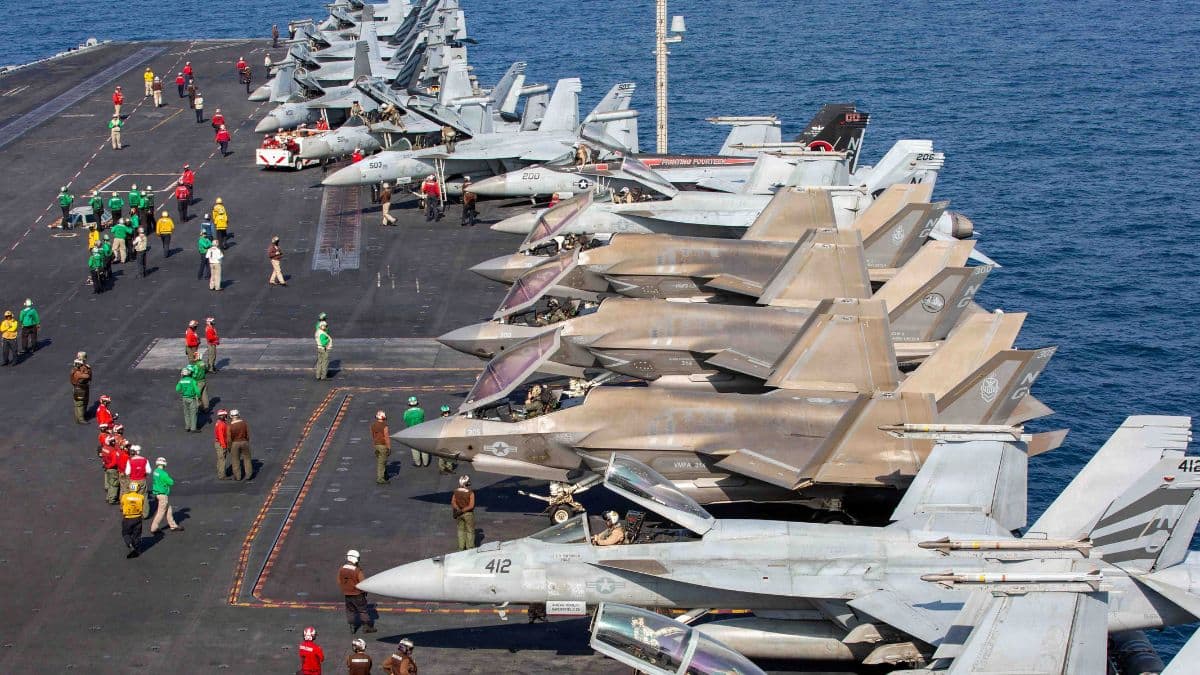
The headlines are screaming about a regional conflagration. Oil is spiking, bonds are bleeding, and the equity markets are twitching like a nervous deer in the headlights. The narrative is simple, digestible, and entirely wrong. The mainstream financial press wants you to believe that a "drawn-out Iran war" is the existential threat to your wealth.
It isn't.
The real threat is the structural decay of the Western monetary system that the war is merely masking. If you are selling stocks because of a drone strike in the Strait of Hormuz, you are playing a game designed to make you lose. You are reacting to the smoke while the foundation of the house is being eaten by termites.
The Crude Oil Fallacy
The "lazy consensus" dictates that conflict in the Middle East equals an oil supply shock that kills global growth. This is 1970s thinking applied to a 2026 reality.
Back then, the world was hostage to a few valves in the desert. Today, the energy map is unrecognizable. Between US shale production, which has proven it can turn on a dime, and the massive strategic reserves held by non-OPEC nations, the "supply crunch" narrative is more psychological than physical.
When tankers get diverted, the price of Brent jumps. This is a logistics tax, not a resource scarcity event. Speculators pile into long positions, driving the paper price up, while the physical market remains relatively balanced. If you’re panic-buying energy stocks now, you’re the liquidity for the professionals who bought them six months ago when things were quiet.
History shows that geopolitical risk premiums in oil are notoriously short-lived. The moment the first missile is fired, the "uncertainty" is priced in. The moment the first diplomatic backchannel opens, the premium evaporates. Betting on sustained high oil prices during a conflict is betting that humanity has forgotten how to find workarounds. We haven't.
The Bond Market is Not Afraid of Iran
You see the 10-year Treasury yield climbing and the pundits tell you it's "war-induced inflation fears."
They are lying to you. Or worse, they don't understand the math.
The bond market is sellling off because the US Treasury is currently flooding the market with more debt than the world wants to buy. We are running a $2 trillion deficit in a period of "growth." The war is just a convenient scapegoat for a sovereign debt crisis that has been brewing for a decade.
When the government needs to fund a military build-up on top of an already bloated social safety net, it prints. That printing devalues the currency. Bondholders aren't running from Iranian missiles; they are running from the inevitable debasement of the Dollar.
If you want to understand why your portfolio is shrinking, stop looking at the map of the Middle East and start looking at the Treasury’s issuance schedule. The "flight to safety" into the Dollar and Treasuries—the classic war move—is failing because the "safety" itself is the hazard.
The Myth of the "Drawn-Out" War
The competitor article warns of a "drawn-out" conflict. This ignores the modern reality of warfare and economic exhaustion.
No one can afford a long war anymore. Not Iran, not the US, and certainly not the global banking system. Modern warfare is a high-frequency, high-cost endeavor. It burns through precision munitions and political capital at a rate that makes the World Wars look like a slow burn.
The most likely scenario isn't a 10-year trench war. It’s a series of sharp, violent escalations followed by a desperate return to the status quo because the alternative is total economic collapse for all participants.
Investors fear the "Great Unknown," but the "Great Known" is that every major power involved is broke. Financial gravity will force a stalemate long before the "total war" fantasies of the cable news talking heads come to fruition.
Stop Looking for "Hedges"
I’ve seen traders blow through millions trying to "hedge" against geopolitical volatility. They buy gold at the peak of the fear cycle. They buy volatility indices (VIX) right before the mean reversion. They buy defense stocks after the contracts are already priced into the shares.
This is amateur hour.
The only real hedge against the current volatility is liquidity and duration.
If you have a 20-year horizon, a war in the Middle East is a footnote. If you have a 2-week horizon, you’re gambling, not investing. The "status quo" of the market is permanent crisis. If it’s not Iran, it’s a banking failure in Europe or a housing bubble in Asia.
The Institutional Smoke Screen
Why does the media push the war narrative so hard? Because it’s an external factor. It’s "nobody’s fault."
If the markets crash because of a war, the central banks can justify more intervention. They can lower rates, restart quantitative easing, and "save" the economy from the "unforeseen" shock.
But if the markets crash because of systemic insolvency, the finger-pointing starts at the institutions themselves. The war narrative provides the perfect cover for the next round of monetary expansion. It allows the architects of our current inflation to play the heroes.
The Contrarian Playbook
Instead of following the herd over the cliff, consider these uncomfortable truths:
- Tech is the new Gold: In a high-inflation, high-conflict world, companies with zero physical supply chains and massive pricing power are the real safe havens. A software company doesn't care if the Strait of Hormuz is closed.
- Cash is a Weapon: Most people see cash as a "losing" asset because of inflation. In a market panic, cash is the ability to buy blood in the streets. Being 20% liquid isn't "missing out"; it’s being the only person in the room with a loaded gun when everyone else is out of ammo.
- Ignore the "Energy Transition" Noise: During a war, no one cares about ESG scores. They care about BTUs. The irony is that the same "war-fearing" investors will be the ones screaming for more coal and gas the moment their heating bills double.
The Premise is Flawed
People ask: "How do I protect my 401k from a Middle East war?"
The question assumes the war is the variable. It’s not. The variable is your own reaction to the noise.
I’ve spent twenty years watching markets react to "existential" threats. The 2008 crash, the 2011 debt ceiling, the 2020 lockdowns. In every single case, the people who stayed the course—or better yet, did the exact opposite of what the headlines suggested—came out ahead.
The current panic over Iran is a gift. It is creating a disconnect between the intrinsic value of high-quality assets and their market price. The "fear" is a discount.
The Brutal Reality of Risk
Is there a risk that things go sideways? Of course. But the risk isn't a falling stock market. The risk is being out of the market when the inevitable "peace rally" happens.
Markets don't bottom on good news. They bottom on the cessation of bad news. By the time you feel "safe" enough to buy back in, the 15% recovery has already happened. You’ve missed the meat of the move because you were waiting for a headline that wasn't scary.
The competitor’s piece suggests you should be cautious. I suggest you should be predatory.
Stop reading the news and start reading the balance sheets. The war is a distraction. The debt is the reality. If you can’t tell the difference, you shouldn't be managing your own money.
Turn off the TV. Close the news tabs. Look at the data.
The world is not ending, but the era of easy, "low-volatility" investing is. If you’re waiting for things to "get back to normal," you’re already obsolete. The volatility isn't a bug; it's the new operating system.
Stop trying to survive the storm and start figuring out how to own the wind.