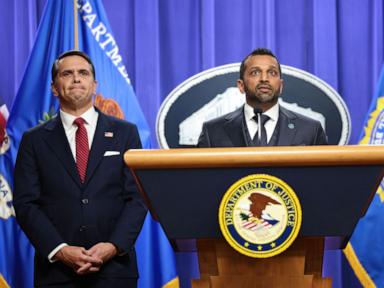
The Department of Justice just indicted James Comey for a photo of seashells. If you aren't laughing, you aren't paying attention—or worse, you’ve bought into the "lazy consensus" that this is just another standard application of federal threat statutes.
It isn't. It is a masterclass in the selective weaponization of intent, and it signals a shift where the "reasonable person" standard is being replaced by the "aggrieved executive" standard.
The competitor narrative is simple: Compare Comey to other defendants charged under 18 U.S.C. § 871 to see if he's being treated fairly. That is the wrong question. The real question is how the DOJ managed to skip over the "true threat" requirement entirely to prosecute a math pun.
The Myth of the Objective Threat
Mainstream legal analysts love to point to the "reasonable person" test. They argue that if a reasonable observer could interpret "86 47" as a call for assassination, the indictment holds water.
This is a legal fantasy.
In any other context, "86" is restaurant slang for "cancel an order" or "remove from the menu." In a political context, it’s a standard call for removal from office. The DOJ is reaching for the most obscure, violent definition possible to bridge the gap between a grumpy Instagram post and a felony.
I’ve seen federal prosecutors spend years building RICO cases with less theater than this. To treat a deleted seashell photo as a "true threat" (as defined in Watts v. United States) requires a level of interpretive gymnastics that would disqualify any junior analyst.
The Intent Gap
The DOJ claims they will prove intent through "witnesses and documents." This is code for "we have nothing."
- The Act: Posting a photo of shells.
- The Retraction: Comey deleted it and explicitly denounced violence.
- The Law: Elonis v. United States established that the defendant must have a subjective intent to threaten.
By charging Comey, the DOJ is effectively arguing that "intent" is whatever the target of the speech feels it is. This doesn't just disrupt the legal status quo; it incinerates it.
Selective Prosecution as a Feature, Not a Bug
The "lazy consensus" suggests this is a routine application of law. Let’s look at the data the DOJ won't show you.
Thousands of people post "86 [Politician]" every single day. According to ISD Global data, violent rhetoric against public officials is at an all-time high, with hundreds of thousands of explicit threats circulating online. The DOJ ignores 99.9% of them because they lack the "true threat" threshold of imminence and specificity.
So why Comey?
Because the "86 47" case isn't about protecting the President from a man with a bucket of shells. It’s about the administrative state using the legal system as a high-speed vanity press for retribution.
The Digital Paper Trail Trap
The acting Attorney General mentioned the need to seize Comey’s devices. This is the real "nuance" the competitors missed. The threat charge is a Trojan horse.
- Step One: File a flimsy threat charge based on a public post.
- Step Two: Use that charge to secure a warrant for all encrypted communications.
- Step Three: Fish for unrelated "obstruction" or "false statement" charges.
This isn't a threat case. It’s a discovery expedition. By framing this as a "comparison to other defendants," we ignore that most defendants don't have their entire digital lives vacuumed up because they liked a beach photo.
The Dangerous Precedent of "Coded Speech"
If the DOJ wins this, the First Amendment is effectively dead for anyone with a large platform.
Imagine a scenario where a critic posts a picture of a sunset with the caption "The end is near." Under the Comey Precedent, if the incumbent President decides that is a "threat" to their life rather than a comment on the workday, a grand jury in a friendly district can return an indictment.
We are moving away from textual law and toward contextual vibes.
Why the "Seashell Defense" Actually Matters
Comey’s defense isn't just "it was a joke." It’s an assertion that the government cannot own the definition of a number.
- 86 = Slang for eject/remove.
- 47 = The current President’s number.
If "Remove 47" is a felony, then every "Impeach [X]" bumper sticker is a latent indictment. The DOJ is betting that the public is too distracted by the political theater to notice they are narrowing the window of protected speech to the size of a seashell.
Stop Comparing and Start Resisting
The competitor article asks you to look at the "sentencing guidelines." Who cares? The sentence isn't the point; the process is the punishment.
The DOJ is banking on the fact that you’ll see "James Comey" and "Indictment" and assume there must be fire where there’s smoke. But in this case, the smoke is coming from a smoke machine operated by the prosecution.
This isn't about law and order. It’s about the total subversion of the Department of Justice into a personal grievance bureau. If you think this ends with Comey, you haven't been paying attention to how power works. Once a tool is forged, it is used on everyone.
The "threat" isn't a photo of shells on a North Carolina beach. The threat is a legal system that treats a metaphor as a murder plot.