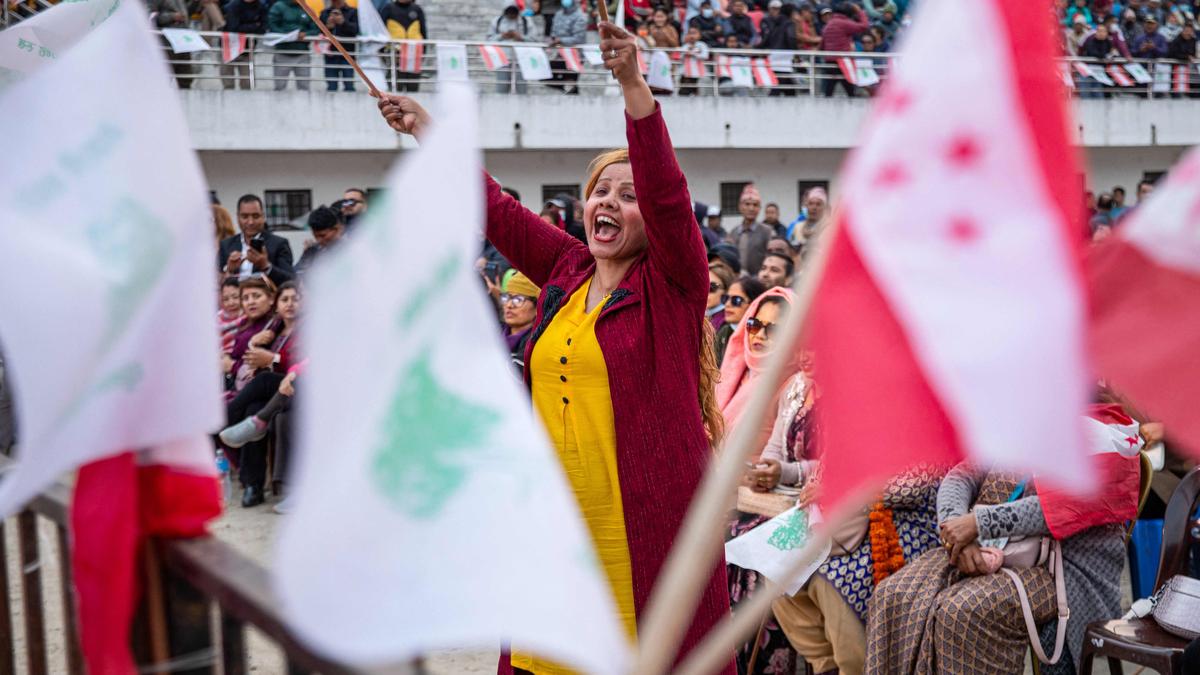
The ink stays on your cuticle for days. It is a deep, stubborn purple, a chemical reminder that you performed your most basic duty as a citizen. In the tea shops of Kathmandu and the terraced farms of the Kosi province, men and women hold up their stained thumbs like small trophies. But this year, the pride is shadowed by a weary, gnawing question: Does the ink actually change the script?
Nepal is a land defined by verticality. Everything is an uphill climb. For decades, the political story has been a tug-of-war between three aging giants. On one side, the Nepali Congress, the old guard of democratic socialism. On the other, two variations of Communist ideology—the CPN-UML and the Maoist Center. These parties are led by men who have spent thirty years swapping chairs in a game of musical power. They are the "Lords of the Status Quo." They fought a monarchy, survived a civil war, and drafted a constitution. They have the scars of history, but they also have the rust of it. If you found value in this piece, you might want to check out: this related article.
The Ghost in the Ballot Box
Consider a man named Biraj. He lives in a small concrete house in the outskirts of Lalitpur. He is thirty-two, an engineer by training, but he spends his days coordinating logistics for a trekking agency. Biraj was a child during the Maoist insurgency. He remembers the strikes, the fear, and then the hope of the 2006 peace accord. He believed that once the King was gone and the guns were silent, the roads would be paved. He believed the electricity would stay on. He believed he wouldn't have to watch his younger brother board a plane for Qatar to work on a construction site because there were no jobs at home.
For Biraj, the "old parties" are like a familiar, failing weather system. You know when the rain is coming, and you know it will leak through the roof, but you’ve forgotten how to fix the tiles. For another angle on this story, check out the recent update from BBC News.
The veterans of Nepali politics rely on "Gaddi," the seat of power. They speak in the language of the 1990s. They talk about "stability" while presiding over coalitions that collapse faster than a mountain scree slope. They have deep networks, patronage systems that reach into every village, and a fierce, defensive loyalty to the revolutionary identities they forged decades ago. To them, the upcoming election is a siege. They are digging in, reinforcing their barricades with alliances that make little ideological sense but great mathematical sense.
The Sound of New Feet
But then, something shifted in the local elections. A crack appeared in the monolith. It started with Balen Shah, a structural engineer and rapper who donned dark sunglasses and claimed the mayor’s seat in Kathmandu as an independent. He didn't have a revolutionary pedigree. He had a plan for garbage collection and a digital savvy that bypassed the old party gatekeepers.
His victory was a signal fire. Now, as the national polls approach, a wave of "new parties" and independent candidates is surging. The Rastriya Swatantra Party (RSP), led by a former television host, is capturing the imagination of people like Biraj. They don't talk about Marx or the history of democratic struggles in the 1950s. They talk about the "brain drain." They talk about the fact that Nepal’s greatest export isn't tea or pashmina, but its own youth.
The tension is no longer just between left and right. It is between the past and the possible.
The old guard looks at these newcomers and sees "populists" and "opportunists." They argue that governing a complex, federal republic requires the muscle of an established machine. They warn of instability. If you hire a pilot who has never flown a plane, they say, don't be surprised when you hit the mountainside.
The newcomers counter with a different reality: the experienced pilots have been circling the same airport for twenty years while the fuel runs dry.
The Arithmetic of Survival
In the villages of the Terai plains, the stakes are less about "innovation" and more about the price of fertilizer. Here, the old parties still hold the keys. The machinery of the Nepali Congress and the UML is vast. They own the unions. They influence the local cooperatives. For a farmer in the south, voting for a flashy new independent candidate from Kathmandu feels like a luxury he cannot afford. He needs a representative who can call the ministry and get a budget for an irrigation ditch.
This is the invisible wall the new parties must climb. It is the "Patronage Tax."
To win, the establishment is doing something once unthinkable. Archenemies are shaking hands. The Maoists, who once fought a bloody war against the state, are now in a tight embrace with the Nepali Congress. It is a marriage of convenience designed to ensure that neither side loses its grip. They are "seat-sharing," carving up the map of Nepal like a birthday cake, ensuring they don't split the vote against the rising tide of independents.
It is a strategy of survival. But to the voter, it looks like a cartel.
The Silent Exit
While the politicians argue over seats, the TIA airport in Kathmandu tells the real story. Every single day, over 2,000 young Nepalis pass through the departures gate. They are heading to the Gulf, to Malaysia, to Australia. They are the lifeblood of the economy, sending back the remittances that keep the country afloat.
These people cannot vote from abroad.
Their absence is a silent protest. They have voted with their feet. The "New Parties" are tapping into the anger of the families left behind—the mothers waiting for a WhatsApp call, the fathers raising grandchildren. They are framing the election as a "Last Chance." If the needle doesn't move now, if the same three men continue to rotate the Prime Minister's office, the exodus will become a total evacuation.
There is a specific kind of exhaustion in Nepal. It’s the fatigue of being told that "transition" is a permanent state of being. The old parties offer the comfort of the known, the security of the machine, and the weight of history. The new parties offer a gamble, a messy burst of energy, and the promise of a different conversation.
The Choice in the Dark
On election day, the power might go out. It often does. Voters will stand in the cold morning air, clutching their citizenship cards. They will look at the symbols on the ballot—the tree, the sun, the hammer and sickle, and the new, unfamiliar icons of the challengers.
The old parties have dug their trenches deep. They have the money, the history, and the muscle. They believe the mountain is theirs because they have lived on it the longest.
But mountains are subject to erosion. Sometimes, it happens slowly, grain by grain. Other times, a single tremor changes the entire landscape.
As Biraj walks toward the polling station, he looks at his thumb. He thinks of his brother in Qatar. He thinks of the trash on the streets and the silence of the factories. He isn't looking for a hero anymore. He is looking for a mechanic. Someone to fix the tiles. Someone to stop the leak.
The ink will dry. The results will be tallied in the high-ceilinged rooms of the Election Commission. The old men will likely retain their seats through their clever math and their tangled alliances. But for the first time in a generation, they aren't just fighting each other. They are fighting the clock.
The weight of that single purple thumbsprint has never felt heavier, not because it guarantees a new world, but because it is the only weapon left against the old one. The mountain is watching. And the mountain does not care about alliances; it only knows who has the strength to keep climbing.


