Oil markets are currently pricing in a fragile peace that doesn’t exist. While the ticker shows crude hovering near $87, the structural foundations of the global energy supply are fracturing under the weight of a potential Iranian escalation. This isn't just about a temporary spike or a nervous week on the trading floor. Qatar’s recent warnings suggest a fundamental repricing of risk that could propel Brent crude toward $150 a barrel in a matter of days, not months.
The math is brutal and indifferent to political optics. If the Strait of Hormuz faces even a partial blockade, the world loses access to roughly 20% of its daily oil consumption. There is no "Plan B" for a loss of that magnitude.
The Hormuz Chokepoint Fallacy
Western analysts often talk about strategic reserves as if they are a magic wand. They aren't. Drawing down the Strategic Petroleum Reserve (SPR) in the United States provides a temporary cushion, but it cannot replace the 20 million barrels of oil that flow through the Strait of Hormuz every day. Qatar’s warning stems from a deep understanding of regional logistics that many in New York or London choose to ignore.
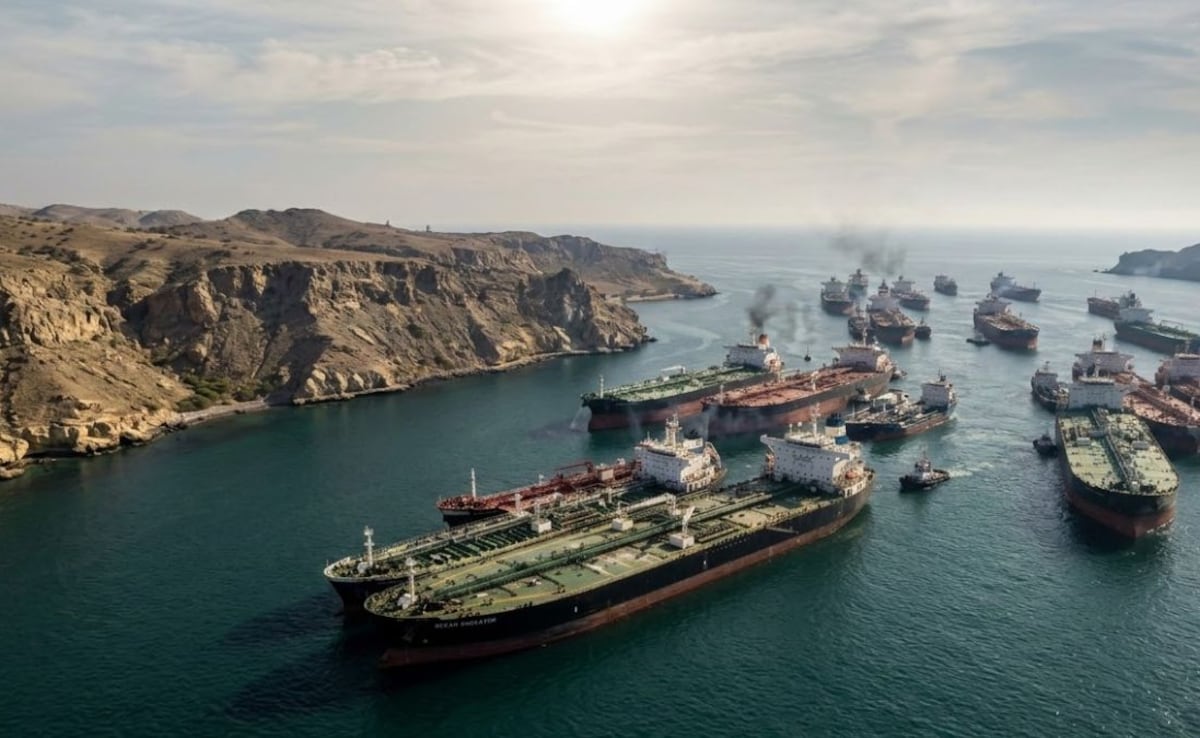
When Iran threatens to shutter the Strait, the market reacts to the physical impossibility of rerouting that volume. Pipelines across Saudi Arabia and the UAE exist, but their capacity is a drop in the bucket compared to the maritime traffic currently at risk. We are looking at a scenario where the world’s spare capacity—the industry’s only real safety net—evaporates instantly.
Why $150 Is the Floor Not the Ceiling
The jump from $87 to $150 sounds like hyperbole until you look at the inelasticity of oil demand. People still need to drive to work. Ships still need to move freight. Power plants in developing nations still need to burn fuel. In the short term, demand doesn't drop just because the price doubles; instead, buyers panic.
The "Fear Premium" usually adds $5 or $10 to a barrel. In a hot war scenario involving Iran, that premium becomes the primary driver of the price. Refiners will scramble to secure any available physical grade of crude, outbidding each other in a desperate attempt to keep their plants running. This creates a feedback loop. As the price climbs, hoarding begins, which further constricts supply and pushes the price toward that $150 mark.
Qatar's Strategic Silence and Sudden Vocalization
For years, Qatar has maintained a delicate balancing act, acting as a diplomatic bridge between Tehran and Washington. When a state that prides itself on quiet mediation starts shouting about triple-digit oil, the world should listen. They aren't just speculating; they are observing the movement of hardware and the hardening of rhetoric on the ground.
The Qatari warning implies that the diplomatic off-ramps are disappearing. If Iran feels backed into a corner by economic sanctions or direct military threats, their most effective counter-move is the global economy's jugular vein. By signaling a $150 price target, Qatar is effectively telling the West that the cost of conflict is no longer manageable.
The Domino Effect on Global Inflation
Central banks have spent the last two years trying to kill inflation with high interest rates. A move to $150 oil would undo all of that progress in a single fiscal quarter. Energy is the "master resource" because it sits at the base of every other supply chain.
- Agriculture: Fertilizer production and tractor fuel costs would skyrocket, leading to a second wave of food inflation.
- Manufacturing: Factories in Europe and Asia, already struggling with high power costs, would face a choice between insolvency or passing massive price hikes to consumers.
- Transportation: Airlines and trucking firms would see their margins erased, leading to a sharp spike in shipping surcharges.
This isn't just about the price at the pump. It’s about the total erosion of purchasing power across the globe.
The Myth of Non-OPEC Salvation
Some argue that American shale or increased production from Guyana can offset a Middle Eastern crisis. This is a dangerous misunderstanding of scale. US shale production is maturing; the days of 10% annual growth are over. Investors are demanding dividends and buybacks rather than aggressive drilling campaigns. Even if every rig in Texas started turning tomorrow, it would take six to nine months to bring meaningful new supply to market.
Iran and its neighbors control the "heavy" crude that many complex refineries require. You cannot simply swap light Texan crude for the heavy grades coming out of the Persian Gulf without significant technical friction. The mismatch in crude quality means that even if the total volume of global oil stayed the same—which it wouldn't—the price of specific refined products like diesel and jet fuel would still explode.
Invisible Risks in the Derivatives Market
Behind the physical barrels lies a massive web of paper contracts. Most airlines and shipping companies hedge their fuel costs months in advance. However, these hedges are built on the assumption of "normal" volatility. A sudden move to $150 would trigger massive margin calls across the financial sector.
We saw a preview of this during the early days of the Ukraine conflict, but the scale of an Iranian crisis would be vastly larger. If major energy traders or hedge funds cannot meet their margin requirements, the liquidity in the oil market could dry up exactly when it is needed most. This "liquidity black hole" is what actually drives prices to $150. It’s not just that oil is scarce; it’s that the mechanism for pricing it has broken down.
The Geopolitical Realignment
If oil hits $150, the geopolitical map of the world changes overnight. Russia, despite sanctions, would see its revenues surge, providing a fresh lifeline for its own regional ambitions. Meanwhile, China—the world’s largest oil importer—would face a choice between economic stagnation or intervening to secure its own energy interests, potentially at odds with US policy.
The stability of the last several decades has been built on the premise of cheap, accessible energy. Qatar is essentially warning that this era is over. The transition to green energy, while necessary, is not fast enough to mitigate a supply shock of this magnitude. We are stuck in a hydrocarbon reality, and that reality is currently being guarded by some of the most volatile regimes on earth.
Tactical Realities for Investors
The smart money isn't looking at the $150 headline as a trading target; they are looking at it as a systemic risk. Traditional portfolios are not weighted to handle a 70% increase in energy costs in a three-week window. Hedging through energy equities is one path, but even those companies struggle when the broader economy enters a forced recession due to high costs.
The focus should be on the spread between different crude grades and the regional availability of tankers. If the Strait closes, the "freight rate" for the remaining available tankers will go parabolic. Owning the oil is one thing; being able to move it is another entirely.
The Inevitability of the Pivot
Governments will respond with price caps, export bans, and emergency subsidies. These measures almost always make the problem worse by distorting the market and discouraging the very production needed to lower prices. If we hit $150, the political pressure to "do something" will result in a flurry of bad policy that extends the duration of the crisis.
The warning from Doha isn't a suggestion. It is a mathematical projection based on the current trajectory of regional tensions. We have spent years underinvesting in conventional oil while simultaneously increasing our reliance on a handful of high-risk geographic zones. This is the bill coming due.
Check the shipping insurance rates for the Persian Gulf tonight. When those start to climb, the $150 barrel is no longer a forecast; it's a countdown.