In the glass-walled boardrooms of Dubai, where the skyline pierces the clouds and the desert heat is a distant memory kept at bay by industrial cooling, silence is the ultimate currency. To be a billionaire in the United Arab Emirates is to navigate a delicate geometry of influence. You are a bridge between the West’s voracious capital and the East’s ancient, guarded traditions. One wrong step, one stray word, and the bridge begins to tremble.
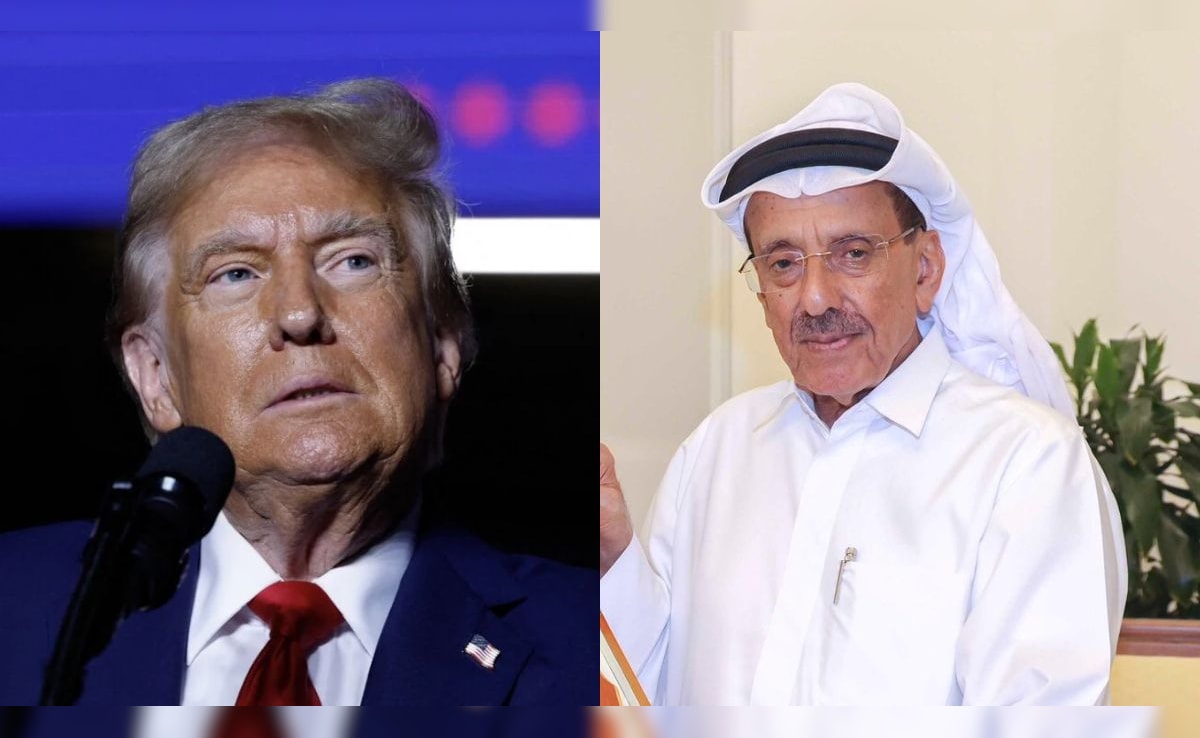
Hussain Sajwani, the founder of DAMAC Properties, knows this geometry better than most. He is a man built on the tangible—marble, steel, and high-end real estate. Yet, a few days ago, he stepped into the intangible, volatile world of digital discourse. He posted a message about Donald Trump. Then, with the clinical precision of a demolition crew, he took it down.
The internet does not forget, but it often fails to understand. We see a deleted post and assume regret or fear. We rarely consider the chess board that sits behind the screen.
The Weight of a Digital Ghost
Consider the moment the thumb hovers over the 'Post' button. For Sajwani, this wasn't just a social media update. It was a signal fire. His relationship with Donald Trump isn’t a matter of casual political interest; it is a multi-million-dollar partnership etched into the very soil of Dubai. The Trump International Golf Club stands as a testament to a pre-presidency era where a brand name was simply a gold-plated promise of luxury.
When Sajwani posted a congratulatory or supportive message following a major political development involving Trump, he was acting as a businessman acknowledging a partner. But the digital world is no longer a place for simple business. It is a minefield of geopolitical sensitivity.
The post went live. The likes accumulated. The screenshots were taken. And then, the void.
Why does a man who commands an empire of skyscrapers decide that a few lines of text are too dangerous to exist? The answer isn't found in a PR handbook. It’s found in the friction between personal loyalty and the cold, hard requirements of sovereign diplomacy.
The Silent Stakes of the Peninsula
To understand the deletion, you have to understand the pressure of the environment. The UAE is a masterclass in the art of the "middle ground." It maintains deep security ties with Washington while building infrastructure with Beijing and hosting the elite of Moscow. It is a sanctuary of stability in a region that often feels like a tinderbox.
When a high-profile figure like Sajwani speaks on American politics, his voice carries the echo of his nation. In the hyper-reactive theater of modern diplomacy, a post isn't just a post. It is interpreted as an endorsement, a shift in policy, or a breach of neutrality.
Imagine a hypothetical diplomat, let’s call him Omar, sitting in a quiet office in Abu Dhabi. He sees the post. He knows that within minutes, analysts in Washington will be dissecting it for clues about the UAE’s stance on the upcoming American election cycle. He knows that if the post stays up, it becomes a permanent fixture in a narrative he is trying to keep fluid. He doesn't need to send a formal command. The air in the room simply changes.
Sajwani explained later that his decision to delete was rooted in a desire to avoid being "misinterpreted" or "politicized." It is a classic corporate defense, but beneath it lies a profound vulnerability. Even the most powerful men in the world are often just passengers on the ship of state.
The Architecture of a Reversal
The mechanics of the reversal are where the human element becomes most visible. There is a specific kind of vertigo that comes with realizing you have accidentally stepped into a spotlight you didn't mean to trigger.
Sajwani’s explanation focused on the idea that DAMAC is a global brand. It belongs to the shareholders, the residents of its towers, and the thousands of employees who keep the lights on. A brand that gets tangled in the thorns of American partisan politics risks alienating half its potential market.
- Logic dictated the post. (Loyalty to a partner)
- Strategy dictated the deletion. (Protection of the brand)
- Reality dictated the explanation. (Damage control)
The billionaire isn't a monolith; he is a man constantly balancing his personal history with his public responsibility. He built a golf course with Trump when Trump was a reality TV star and a real estate mogul. He maintained that tie when Trump moved into the Oval Office. He held onto it through the storms that followed. But the digital age has shortened the fuse on every controversy.
The Myth of the Private Opinion
We live in an era where the concept of a "private opinion" for a public figure has effectively died. Every word is a data point. For a tycoon in the Middle East, the stakes of a single Instagram caption can involve trade agreements, visa policies, and sovereign wealth fund allocations.
The deletion wasn't an act of cowardice. It was an act of calibration.
When Sajwani spoke to reporters to clarify his stance, he wasn't just talking to the press. He was talking to the markets. He was reassuring the nervous investor in London and the cautious regulator in New York that DAMAC remains a neutral vessel for capital. He was stripping away the personality to save the property.
But the ghost of the post remains. It serves as a reminder that in the modern world, power is not just about what you can build, but what you are willing to hide. We crave authenticity from our leaders and our icons, yet we have created a digital ecosystem that punishes it with terrifying efficiency.
The Desert and the Screen
If you stand at the edge of the desert at dusk, you can see the lights of the DAMAC towers flickering on. They are solid. They are certain. They represent a legacy that can be touched and measured in square footage.
Then you look at your phone.
A screen is a thin, fragile thing. It is a place of shadows and fleeting impressions. Sajwani tried to bridge these two worlds—the world of stone and the world of pixels—and found that the bridge was made of glass.
The lesson isn't that billionaires should stay silent. The lesson is that the world has become too small for the luxury of a stray thought. Every word is now a brick, and if you aren't careful where you lay it, the whole house might just come down.
He walked back into the silence of the boardroom, leaving the rest of us to stare at the empty space where a post used to be, wondering what else is being deleted in the name of stability. The desert wind blows over the dunes, erasing tracks in the sand, just as the refresh button erases the slips of the powerful. In the end, only the towers remain.