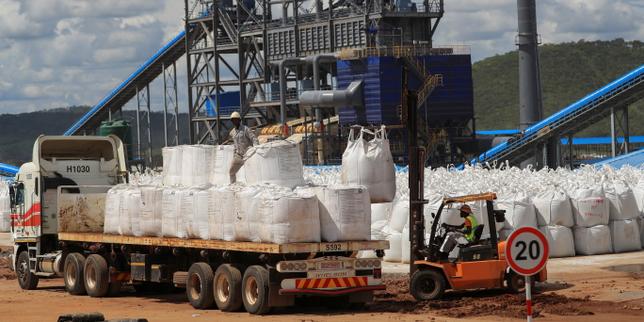
The global lithium market just got slapped with a reality check it didn't see coming until 2027. On February 25, 2026, Zimbabwe didn't just tweak its trade policy; it slammed the door shut on lithium concentrate exports with immediate effect. If you're looking for the reason why battery-grade lithium carbonate prices are suddenly twitching upward after a brutal two-year slump, this is it.
Harare isn't playing the long game anymore. They've moved the goalposts.
For years, the script was simple. Zimbabwe, holding Africa’s largest lithium reserves, would ship spodumene concentrate to China. Chinese refineries would turn that "gray gold" into high-purity chemicals, and the world would get its EVs. But Zimbabwe’s Minister of Mines, Polite Kambamura, just tore up that script. By banning the export of unbeneficiated concentrates today—rather than in 2027 as originally promised—the government is forcing a "process here or leave it in the ground" ultimatum.
The Immediate Shock to the System
Don't let the "overcapacity" headlines fool you. While there's plenty of low-grade lithium floating around, the sudden removal of Zimbabwe’s 180,000 tonnes of annual Lithium Carbonate Equivalent (LCE) capacity is a surgical strike on specific supply chains. We’re talking about roughly 8% of the global supply vanishing overnight.
Specifically, this hits the medium-sized Chinese refineries that don't have their own mines and rely on buying spot concentrates from African traders. The ban even covers minerals already in transit. Imagine being a refiner in Jiangxi with a shipment stuck at a port because the rules changed while the ship was at sea. That’s the level of disruption we’re seeing.
- Short-term spike: Expect a "pulse" in prices. We’ve already seen a 10% jump in lithium carbonate futures since the announcement.
- The Hoarding Factor: When supply gets tight and unpredictable, people panic-buy. Traders are already pulling spot units off the market, betting that prices will climb further.
- Inventory Buffers: Most refineries have about 45 to 60 days of stock. If this ban holds past May 2026, the "inventory drawdown" begins, and that's when the real price volatility kicks in.
Why This Isn't Just Another Export Ban
Zimbabwe has been edging toward this for years. They banned raw ore in 2022. Then they taxed concentrates. Now, they’ve banned the concentrates themselves. The goal? Forcing companies to produce lithium sulfate or lithium carbonate on Zimbabwean soil.
Honestly, it’s a ballsy move. Zimbabwe's lithium export revenues actually dropped 10% in 2025 despite production going up. The government saw the value being sucked out by middlemen and decided they’d rather have no exports than "cheap" exports that don't build local industry.
The Chinese Connection
Chinese giants like Huayou Cobalt and Sinomine have already sunk billions into the country. They aren't going to walk away from $1.4 billion in investments.
- Huayou Cobalt recently commissioned a lithium sulfate plant.
- Sinomine is fast-tracking a $500 million facility at the Bikita mine.
The ban essentially gives these first-movers a massive advantage while crushing smaller players who haven't built processing plants yet. It’s a forced consolidation of the industry, orchestrated by the Zimbabwean state.
What This Means for Your EV Battery
If you’re waiting for EV prices to drop, this is a headwind. While the massive price bubble of 2022 probably won't repeat—mostly because Australia is ramping up its own production to fill the gap—the "floor" for lithium prices just moved up. Analysts were predicting prices would bottom out at $10,000 per tonne; now, we're looking at a support level closer to $15,000 or $17,000.
It’s a classic case of resource nationalism. Zimbabwe is tired of being the "world’s quarry." They want the factories, the jobs, and the tax revenue that comes with high-value chemicals.
Stop Ignoring the Geopolitical Risk
Most investors focus on the chemistry of the battery. They should be focusing on the politics of the dirt. This ban proves that "stable supply" is a myth in the critical minerals space. If a country feels it’s being short-changed, it will change the rules in an afternoon.
If you’re a buyer or an investor, you need to look at who actually has "beneficiation" plants operational inside Zimbabwe. Those are the only companies that will be shipping product by the end of 2026. Everyone else is just holding a very expensive pile of rocks they can't sell.
Check your supply chain exposure immediately. If your lithium source relies on third-party traders or unrefined concentrates from Southern Africa, your 2026 margins are officially in the danger zone.