The energy security of Asia is currently being held hostage by a geography it cannot control. Following recent military exchanges between the United States, Israel, and Iran, the structural fragility of the Eastern economy has been laid bare. While Western markets often focus on the immediate price at the pump, the real story is a massive, systemic vulnerability in the East. China, India, Japan, and South Korea together account for the lion’s share of global oil demand growth, yet they remain tethered to the Persian Gulf by a thin, easily severed maritime thread. If the Strait of Hormuz closes or even experiences a significant slowdown, the industrial engines of the world’s most populous continent will begin to seize within weeks.
Morgan Stanley’s recent analysis highlights a grim reality that many policymakers in Beijing and New Delhi have tried to ignore through strategic reserves. Those reserves are a band-aid on a gunshot wound. The fundamental problem is that Asia’s "economic miracle" was built on the assumption of cheap, uninterrupted fossil fuel flows from a region that is currently a tinderbox. We are no longer looking at a simple price spike; we are looking at a potential physical shortage that could redefine the global power balance.
The Hormuz Chokepoint Fallacy
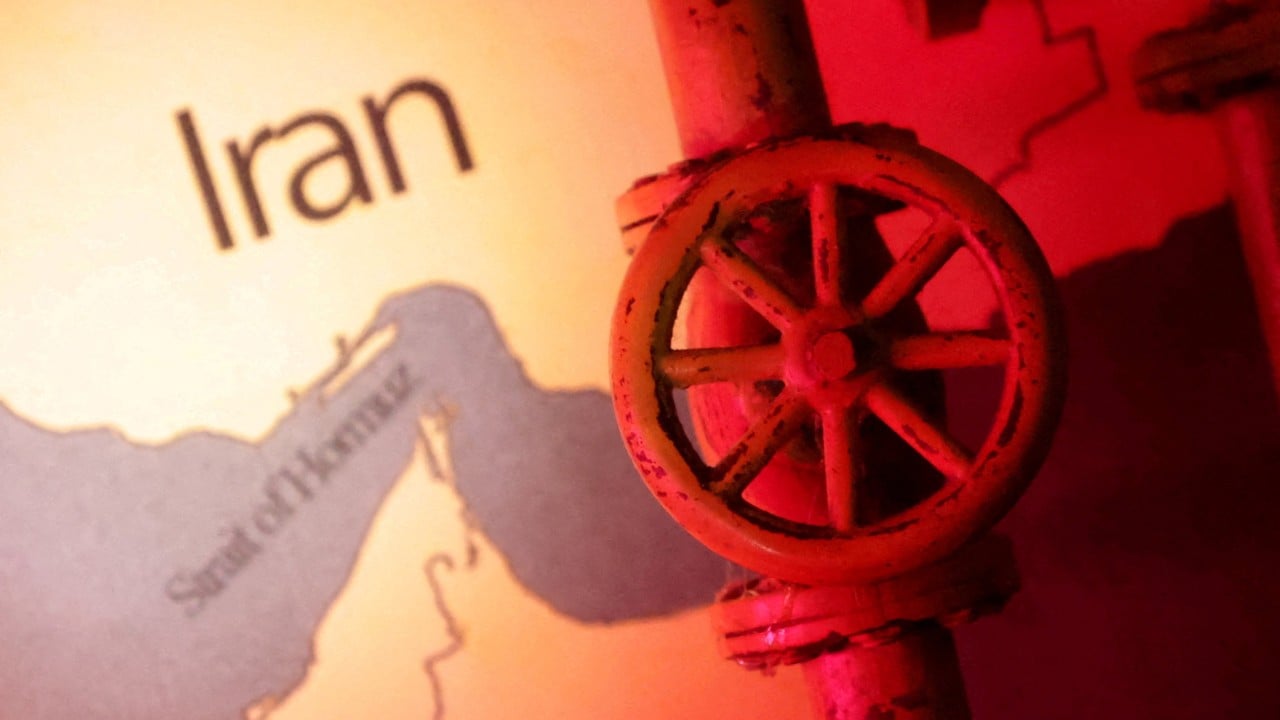
Every time tensions flare in the Middle East, analysts point to the Strait of Hormuz. It is a cliché for a reason. Approximately 20% of the world's total oil consumption passes through this narrow waterway. For Asian nations, that percentage is significantly higher. Japan and South Korea, for instance, rely on the Middle East for over 70% of their crude imports.
The fallacy lies in the belief that "diversification" has fixed this. While China has spent billions on pipelines from Russia and Central Asia, these overland routes cannot replace the sheer volume of VLCCs (Very Large Crude Carriers) that arrive at its eastern ports daily. A pipeline is a static target; a tanker fleet is a flexible but vulnerable supply chain. If Iran decides to weaponize its position at the mouth of the Gulf, or if Israeli strikes target Iranian export terminals like Kharg Island, the resulting vacuum in the market cannot be filled by US shale or North Sea Brent. Those grades are often the wrong "flavor" for Asian refineries, which are finely tuned to process the sour, heavy crudes of the Middle East.
The Refining Crisis No One Mentions
Refineries are not modular. You cannot simply swap one type of oil for another without a massive loss in efficiency or a total shutdown for reconfiguration. This is the technical bottleneck that makes Asia’s dependence so dangerous.
When the US-Israel-Iran triangle turns violent, the market doesn't just lose "oil." It loses the specific feedstock that powers the massive industrial zones of Gujarat, Guangdong, and Ulsan. If Asian refiners are forced to scramble for Atlantic Basin light sweet crude, they face two massive hurdles:
- Shipping Costs: The freight rates for hauling oil from the US Gulf Coast or West Africa to Asia are astronomical compared to the short hop from the Persian Gulf.
- Yield Mismatch: Using the wrong crude produces less diesel and jet fuel—the two liquids that actually keep the Asian economy moving.
This creates a hidden inflation. Even if the headline price of crude stays at $80 or $90, the "crack spread"—the difference between the cost of crude and the price of the finished product—will skyrocket. The end consumer in Manila or Bangkok doesn't pay for "crude oil." They pay for diesel. And that diesel is about to get much more expensive than the Brent or WTI ticker on CNBC suggests.
India and China’s Dangerous Balancing Act
India and China have spent the last two years gorging on discounted Russian oil, leading some to believe they have decoupled from Middle Eastern volatility. This is a dangerous misconception. Russian oil is currently arriving via the "shadow fleet"—a ragtag collection of aging tankers with questionable insurance and safety standards.
In a hot war scenario in the Middle East, the US and its allies are likely to tighten the screws on this shadow fleet to dry up Moscow’s war chest. India, in particular, finds itself in a precarious spot. It has tried to maintain a "strategic autonomy" by playing all sides, but it remains the world’s third-largest oil consumer with a domestic production rate that is essentially a rounding error.
New Delhi’s Strategic Petroleum Reserves (SPR) are reportedly enough to cover roughly 9.5 days of net imports. Compare that to the US, which, despite recent drawdowns, maintains a cushion that lasts for months. If the tankers stop moving through Hormuz, India’s economy doesn't just slow down; it hits a wall.
The Military Reality of Energy Security
We must address the elephant in the room: the US Navy. For decades, the Seventh Fleet has effectively subsidized the energy security of Asia by keeping sea lanes open. However, as the US pivots toward a more isolationist stance—or at least one focused more on the Pacific than the Persian Gulf—the guarantee of "freedom of navigation" is thinning.
China knows this. Its aggressive expansion in the South China Sea and its "string of pearls" naval strategy are direct responses to its "Malacca Dilemma." Most of its oil must pass through the Malacca Strait after leaving the Middle East. If a conflict breaks out, a single blockade at this chokepoint could starve the Chinese military and its civilian economy simultaneously.
The US-Israel strikes on Iran serve as a reminder that the "off switch" for the Asian economy is located thousands of miles away from Beijing. This is why we see China brokering deals between Iran and Saudi Arabia. It isn't about peace; it’s about making sure the gas station doesn't burn down.
The Illusion of the Green Transition
There is a popular narrative that the "energy transition" will solve this. It won't—not for a long time. While China leads the world in EV adoption, its industrial base and heavy transport sectors remain firmly addicted to oil and coal. You cannot run a fleet of trans-oceanic container ships or a massive petrochemical plant on solar panels.
Furthermore, the transition itself requires massive amounts of energy. To build the wind turbines, solar panels, and batteries needed to "de-carbonize," you need the very oil and gas that is currently under threat. We are in a transition paradox where the exit ramp from fossil fuels is paved with fossil fuels.
Financial Contagion and the Dollar
The fallout of a prolonged Middle East conflict on Asian markets goes beyond the physical commodity. Most oil is still priced in US Dollars. When oil prices spike, the demand for dollars increases, putting downward pressure on Asian currencies like the Yen, the Rupee, and the Won.
A weaker currency makes oil even more expensive in local terms. It is a feedback loop of economic pain. Central banks in Tokyo and Seoul are then forced to choose between burning through their own foreign exchange reserves to prop up their currencies or raising interest rates into a slowing economy to fight "imported inflation." Neither choice is good. Both lead to a recessionary environment that could last years.
The Strategy of Forced Adaptation
Asian nations are now being forced into a "fortress" mentality. We should expect to see:
- Rapid SPR Expansion: Massive investments in underground storage and "floating" reserves.
- Aggressive Nuclear Re-adoption: Japan and South Korea are already reversing their anti-nuclear stances because it is the only way to provide base-load power without relying on imported LNG or oil.
- Mercantilist Energy Diplomacy: Expect more long-term, state-to-state contracts that bypass the open market, further fragmenting global trade.
The era of the "global oil market" is ending. We are entering an era of "secured supply chains," where the price is secondary to the guarantee of delivery. The recent strikes on Iran aren't just a military headline; they are the starting gun for a frantic, expensive, and potentially violent scramble for energy sovereignty across the Asian continent.
The vulnerability is baked into the geography. You cannot move the Persian Gulf, and you cannot move the Chinese coastline. Until Asia finds a way to power itself without crossing the most volatile waters on Earth, its prosperity will remain a guest at the table of Middle Eastern geopolitics, subject to the whims of players who do not have Asia’s best interests at heart.
Direct your attention away from the price charts and toward the tanker tracking maps. The movement—or lack thereof—at the mouth of the Gulf will tell you more about the future of the S&P 500 and the Hang Seng than any central bank announcement ever could.
Check your exposure to the regional refiners who lack diversified crude sources before the next escalation makes that choice for you.