Energy Secretary Jennifer Granholm’s recent directive to oil companies to "restore operations" off the coast of California is a masterclass in political theater. It assumes that an oil platform is a kitchen faucet you can simply twist back to the "on" position because the polls look bad or the price at the pump is twitching.
I’ve spent two decades in the trenches of energy infrastructure and asset management. I’ve seen the inside of these platforms. They aren’t dormant gold mines waiting for a government pep talk. They are complex, aging biological and mechanical ecosystems currently undergoing expensive, irreversible decay. When a politician orders a private entity to "restore" a facility that has been cold-shuttered for years, they aren’t talking about energy independence. They are talking about a ghost story.
The consensus narrative is that big oil is "sitting" on permits or idling rigs to spite the consumer. The reality is far more brutal: the math for California offshore drilling no longer exists, and no amount of federal hand-wringing can resurrect a dead CAPEX model.
The Infrastructure Decay Trap
You cannot "restore" what has been eaten by salt and neglect. Most of the platforms in question, particularly those in federal waters off the Santa Barbara coast, were designed for a 30-year lifespan. Many are pushing 40 or 50. When an operator moves to "shut-in" a well, it isn’t just a pause button.
In a high-salinity environment, internal corrosion begins the moment fluid stops flowing. The chemistry of the wellbore changes. Paraffin waxes settle. Scale builds up. Without constant heat and pressure, the very veins of the platform harden. To "restore" these operations, we aren’t talking about a maintenance crew with some WD-40. We are talking about a top-to-bottom re-certification of pressure vessels, a complete overhaul of subsea pipelines that may have shifted or corroded, and a massive re-hiring of specialized labor that fled to the Permian Basin years ago.
The Department of Energy (DOE) treats this like a logistics problem. It’s actually a forensic engineering problem. If a company spends $200 million to bring a platform back online, and the regulatory environment in California promises a lawsuit for every barrel produced, the internal rate of return (IRR) is negative. No CEO is going to commit suicide for a press release.
The Myth of the "Idle Permit"
Critics love to point at the thousands of approved permits that aren’t currently producing. They ask, "If you have the permission, why aren't you drilling?"
This question is fundamentally flawed because it ignores the Subsurface Uncertainty Principle. Having a permit to drill is like having a permit to build a skyscraper; it doesn’t mean the ground won’t liquefy underneath you.
- Permit ≠ Infrastructure: A permit for a wellbore is useless if the connecting pipeline has been decommissioned or blocked by state-level environmental litigation.
- Geological Degradation: Oil reservoirs aren't static tanks. In older fields like those off California, the pressure has dropped. Bringing them back often requires secondary or tertiary recovery methods (like water flooding or steam injection) that require massive energy inputs.
- The Litigious Wall: Even with federal backing, any attempt to restart these rigs faces a firing squad of state agencies—the California Coastal Commission, the State Lands Commission, and a dozen NGOs.
Imagine a scenario where an oil company actually obeys Granholm. They dump half a billion into a restart. Within three weeks, a local judge issues an injunction based on a decade-old environmental impact report that is suddenly deemed "insufficient." The company is left holding the bag. The Secretary knows this. The oil companies know this. The only person who doesn't know it is the voter.
Energy Density vs. Political Optics
We are told that domestic production is the "bridge" to a green future. But the DOE is trying to bridge a gap using a rusted-out span.
The energy density and ease of extraction in the Permian (Texas/New Mexico) or the Bakken (North Dakota) make California offshore look like a joke. Onshore fracking delivers faster returns with a fraction of the regulatory headache. Why would any rational board of directors fight the California legal machine for 10,000 barrels a day when they can tap 50,000 barrels in West Texas with a handshake and a few trucks?
By directing these companies to "restore" California operations, the government is essentially asking them to engage in Subsidized Inefficiency. They want the optics of "doing something" about energy prices without addressing the fact that California has spent the last thirty years making itself an island of high-cost energy.
The Real Cost of Restarting
Let's talk about the physics of the restart. $P = F/A$. Pressure equals force over area.
In a dormant offshore well, the hydrostatic head of the fluid in the wellbore must be managed perfectly to avoid a blowout during a restart.
$$P_{bh} = 0.052 \times MW \times TVD$$
Where $P_{bh}$ is the bottom-hole pressure, $MW$ is the mud weight, and $TVD$ is the true vertical depth. When a well has been sitting, the "mud" or kill-fluid often settles out. Re-establishing control requires precision that an aging rig might not be able to handle safely.
The Deepwater Horizon disaster wasn't just a failure of a blowout preventer; it was a failure of pressure management. Now, the government is asking companies to perform high-pressure restarts on 40-year-old equipment. It’s a recipe for an environmental catastrophe that would make the 1969 Santa Barbara spill look like a leaked faucet.
Stop Asking for More Oil (Start Asking for More Reality)
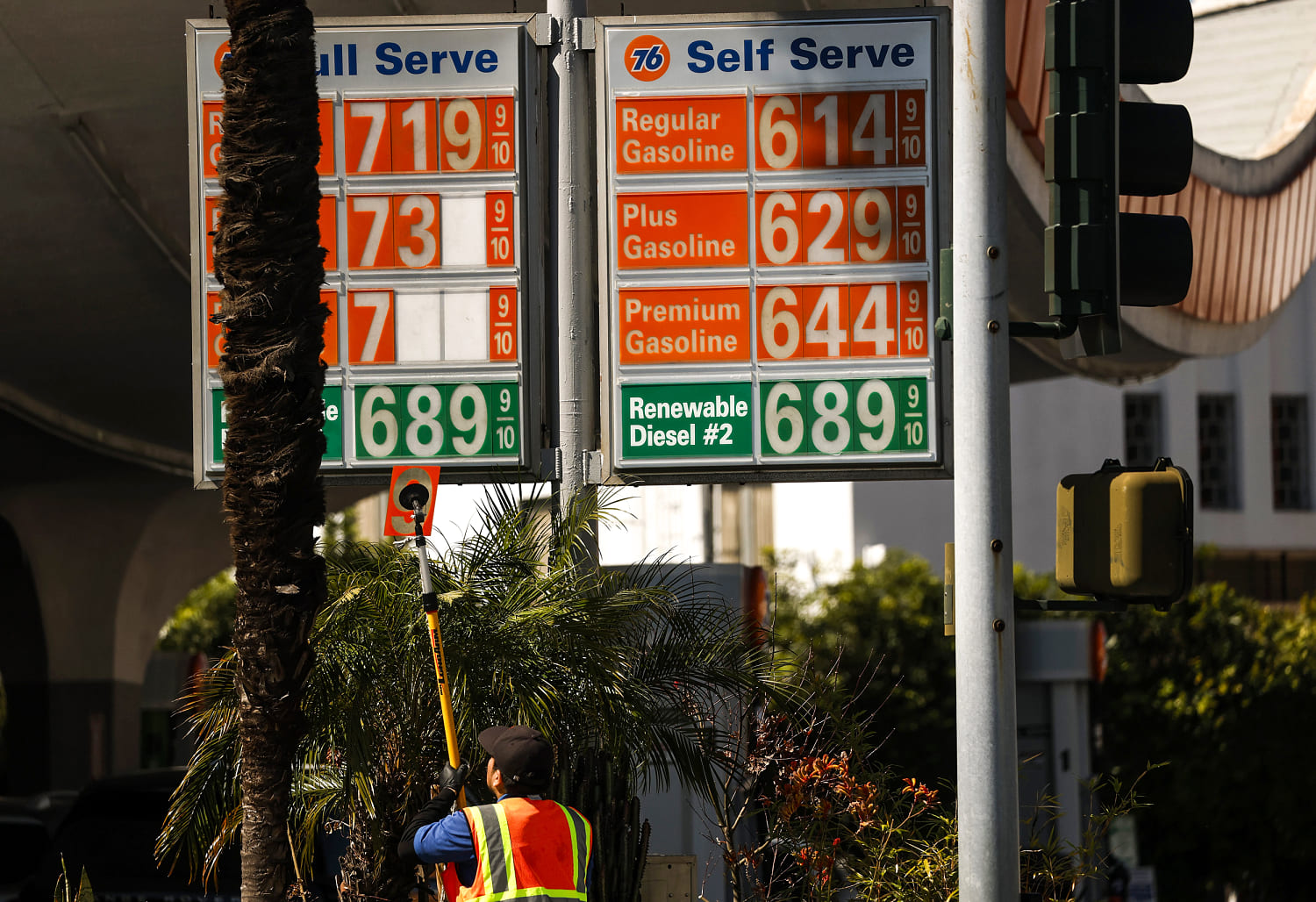
The "People Also Ask" section of your brain probably wants to know: Will this lower my gas prices? No. Not by a cent.
Oil is a global commodity. Even if every offshore rig in California hit maximum capacity tomorrow, the total volume wouldn't be enough to move the needle on the global Brent or WTI benchmarks. California’s high prices aren't caused by a lack of offshore drilling; they are caused by isolationist refining requirements, carbon taxes, and the fact that the state has decoupled itself from the national energy grid's economics.
If the Secretary wanted to fix energy prices, she wouldn't be looking at the ocean. She would be looking at the refining bottlenecks and the Jones Act, which makes it prohibitively expensive to ship American oil between American ports.
The Logistics of the Impossible
To get these rigs running, you need:
- Jack-up rigs or Drillships: Currently booked out for years in the Gulf of Mexico or Guyana.
- Specialized Divers: Deep-sea saturation divers are in short supply. They go where the money is—and it isn't in a dying field off Goleta.
- Refinery Compatibility: Many California refineries have been converted to process "renewable diesel" or have been shut down entirely. If you pump the oil, where does it go?
The Secretary's directive is a demand for a ghost to get back to work. It ignores the capital expenditure cycles that run in decades, not election cycles. It ignores the physical reality of metal fatigue and the chemical reality of reservoir depletion.
The Only Honest Move
If the federal government were serious about energy, they would stop trying to revive the dead and start streamlining the new. But they won't. It’s easier to point a finger at a "greedy" oil company and tell them to fix a rig that is more rust than steel.
The companies will nod, they will file "feasibility studies" that take eighteen months to write, and they will wait for the next administration to change the subject. Meanwhile, the platforms will continue to sink slowly into the Pacific, serving as nothing more than expensive bird perches and monuments to an era of engineering that California has already decided it wants to forget—until it needs its gas tanks filled.
Stop looking for a "restart." There is no switch. There is only the slow, grinding reality of a state that has regulated its way into a corner and a federal department trying to pretend it still has the power to order the tide to turn.
The platforms aren't coming back because the math says they shouldn't. And in the oil business, the math always wins.