The headlines are predictable. They scream about "covert plans" and "arming Kurdish forces" as if we are still living in 1974. The lazy consensus among geopolitical analysts is that the CIA is playing a high-stakes game of chess to trigger a regime-changing uprising from the periphery. They see a shipment of rifles or a clandestine meeting in Erbil and assume the goal is a revolution led by ethnic minorities.
They are wrong.
Arming the Kurds to topple Tehran is a tactical fossil. It’s the equivalent of trying to hack a quantum computer with a hammer. If you think the CIA’s primary strategy for destabilizing Iran is handing out AK-47s to mountain insurgents, you haven't been paying attention to how modern power actually dissolves.
The Myth of the Ethnic Powderkeg
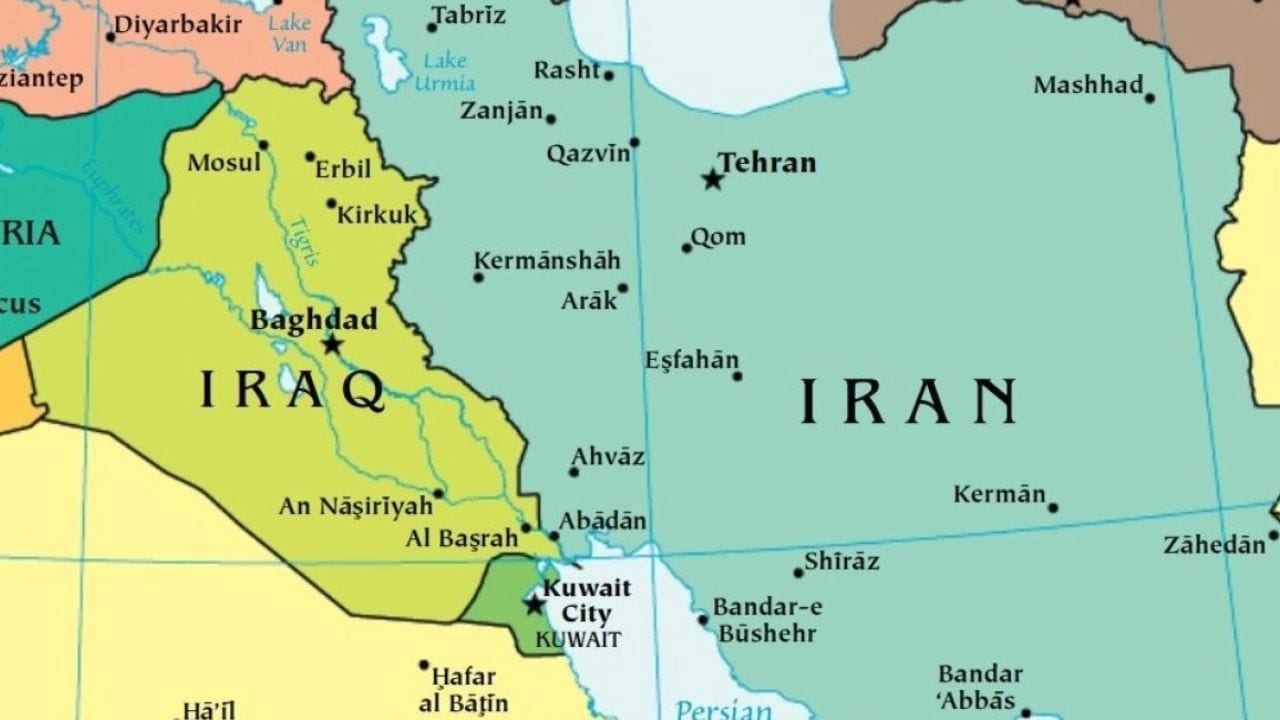
Most observers focus on the "Balkanization" of Iran. They point to the Kurds in the northwest, the Baluchis in the southeast, and the Arabs in Khuzestan. The narrative suggests that if you just light a match in Mahabad, the whole "Persian Empire" goes up in smoke.
I’ve sat in rooms where "experts" map out these fault lines with the confidence of a Victorian cartographer. But here is the reality they ignore: Tehran knows this playbook better than Langley does. For forty years, the Islamic Revolutionary Guard Corps (IRGC) has structured its entire internal security apparatus specifically to crush peripheral ethnic insurgencies.
The IRGC doesn't view a Kurdish uprising as a threat to its existence; it views it as a convenient excuse to implement martial law and consolidate nationalist sentiment. When you arm the Kurds, you don't spark a national revolution. You spark a rally-around-the-flag effect among the urban middle class in Tehran and Isfahan who, despite hating the mullahs, fear the disintegration of the Iranian state even more.
Kinetic Warfare is a Budget Sink
The competitor reports obsess over the logistics of "arming" these groups. They talk about supply lines through Northern Iraq and the technicalities of man-portable air-defense systems (MANPADS). This is 20th-century thinking.
In a world of $1,000 FPV drones and systemic cyber-economic warfare, sending crates of small arms to the Zagros Mountains is a rounding error in a budget. If the CIA is indeed increasing its footprint with Kurdish factions, it isn't to "spark an uprising." It’s to create a sensor network.
- Intelligence over Infantry: A Kurdish shepherd with a high-bandwidth satellite uplink is a thousand times more valuable than a Kurdish squad with a rocket launcher.
- The Buffer Trap: These groups serve as "early warning systems" for Iranian domestic troop movements, not as an invasion force.
- The Deniability Tax: Kinetic support is messy. It leaves shells and serial numbers. The real "covert" work happening right now is the systematic degradation of Iran’s financial connectivity and its internal surveillance grid.
If you’re looking at the border, you’re missing the server rooms.
The Sovereignty of the Switch
The real uprising in Iran won't be triggered by an ethnic minority seizing a provincial capital. It will be triggered by the collapse of the "Halal Internet"—Iran's attempt to build a closed-loop digital ecosystem.
Tehran’s greatest vulnerability isn't its border; it’s its bandwidth. The regime survives by controlling the flow of information and the mechanics of commerce. When the CIA or any other intelligence agency wants to actually hurt the regime, they don't send bullets. They send Starlink terminals and bypass protocols for the Central Bank’s internal ledger.
The "Kurdish Plan" is a distraction. It’s the shiny object held up to keep the IRGC looking toward the mountains while the digital infrastructure of the state is hollowed out from within. We’ve seen this before in corporate espionage: you don’t rob the vault; you make the vault’s software so unreliable that the owners stop using it.
The Cost of the "Freedom Fighter" Delusion
Let’s be brutally honest about the track record here. The United States has a history of using Kurdish aspirations as a disposable tool for regional containment. From the 1975 Algiers Agreement to the betrayal in Rojava, the Kurds are the geopolitical equivalent of a "temp worker."
When analysts claim that arming the Kurds is a "pivotal" step toward a democratic Iran, they are lying to you—and probably to themselves.
- Fragmentation is not Democracy: A fragmented Iran is a playground for ISIS and various sectarian militias.
- The Blowback Loop: Arming regional proxies always results in those weapons being used against the next "ally" in three to five years.
- The Legitimacy Vacuum: An uprising perceived as CIA-funded is dead on arrival. The "Woman, Life, Freedom" movement had power because it was organic. Injecting foreign-funded paramilitaries into the mix is the fastest way to kill a legitimate domestic protest movement.
Stop Asking if it Will Work
The question isn't "Will arming the Kurds spark an uprising?"
The question is "Why is the intelligence community still leaking this specific narrative?"
In the world of high-level intelligence, a leak is a tool, not a mistake. If we are reading reports about Kurdish arms shipments, it’s because someone wants Tehran to move assets to the border. It’s a feint.
While the IRGC moves its heavy divisions toward the Kurdistan province, they are leaving the critical infrastructure of the interior—the power plants, the water management systems, and the data centers—exposed to the types of attacks that actually bring a government to its knees.
The "Kurdish uprising" is the noise. The silence in the Iranian banking system is the signal.
The Professional’s Take on Instability
I have seen intelligence agencies dump tens of millions into "proxy development" only to see the entire network rolled up in a weekend because someone used an unencrypted cell phone. The idea that a ragtag group of mountain fighters can dismantle a sophisticated, multi-layered security state like Iran is a fantasy sold to Congressional committees to justify black-budget line items.
If you want to understand the threat to the Iranian regime, stop looking at the Kurds and start looking at the price of bread and the availability of VPNs. The regime doesn't fear the man with the gun; they fear the 20-year-old in a Tehran basement who can bypass their firewall and show the rest of the country that the "mighty" IRGC can't even keep the lights on.
The revolution will not be televised via a Kurdish guerrilla broadcast. It will happen when the digital and economic friction of daily life becomes higher than the cost of facing a firing squad.
Stop buying the romanticized 1970s insurgent narrative. The CIA isn't trying to start a war in the mountains; they are trying to exhaust a regime that is already suffocating under its own obsolescence.
The Kurds are the decoy. The technology is the weapon. The collapse will be internal, urban, and completely unrelated to the "covert plans" you see in the news.
Watch the routers, not the rifles.