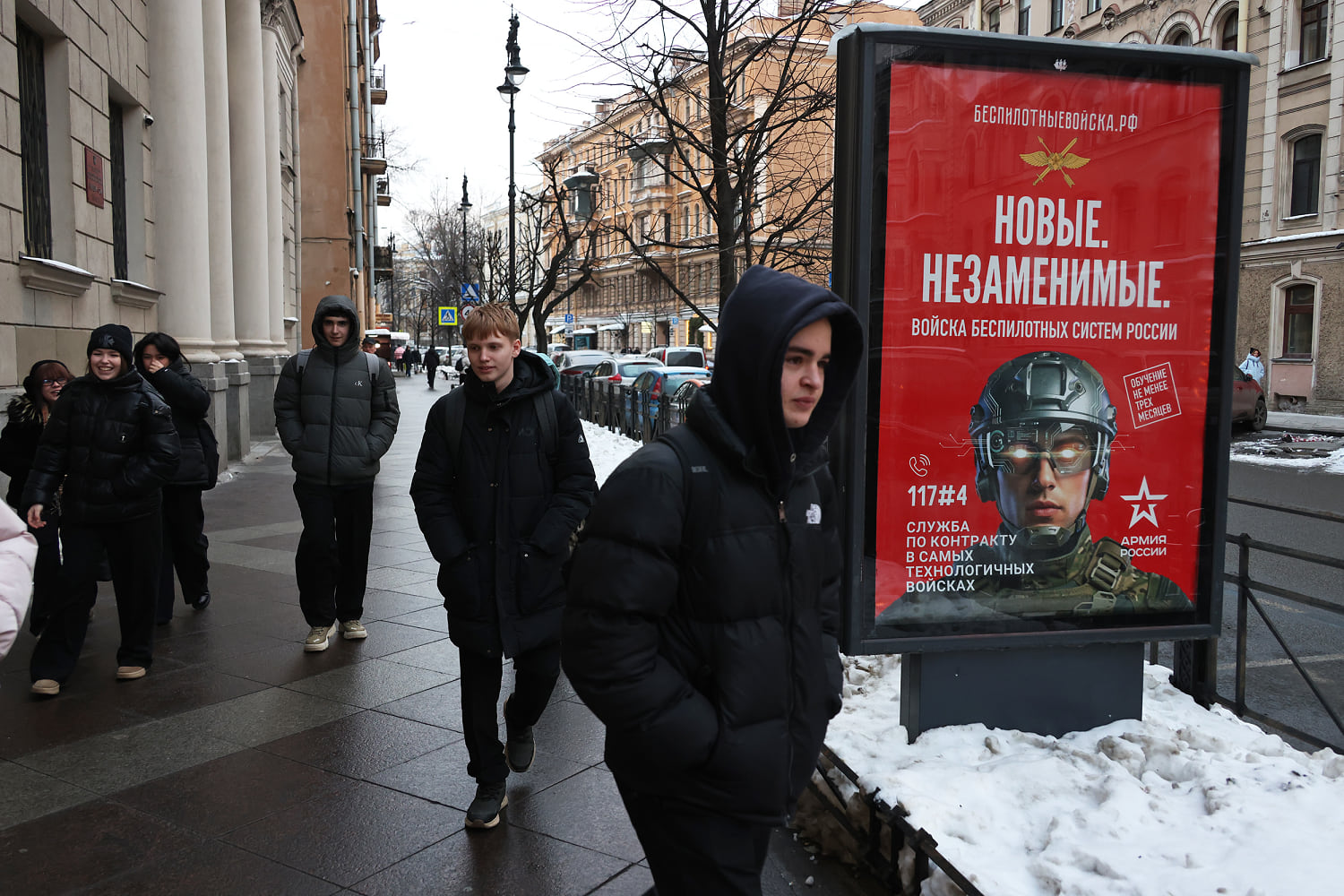
A standard vocational college in a quiet Russian province should smell of sawdust, motor oil, and floor wax. It should be a place where nineteen-year-olds learn to fix a tractor or wire a house. But walk through the doors of some of these institutions today, and the air carries the faint, high-pitched whine of lithium-polymer batteries and the frantic clicking of plastic joysticks.
Dmitry—a composite of the thousands of teenagers currently enrolled in these programs—doesn't spend his mornings studying civil engineering anymore. He sits in a darkened room, eyes locked onto a screen, his thumbs twitching with a precision that used to be reserved for weekend gaming. He is part of a massive, quiet shift in the Russian educational system. The state is no longer just looking for soldiers; it is looking for pilots who can navigate the digital architecture of modern warfare from the safety of a desk. Until they can’t.
The transition from student to operator is remarkably thin. It’s a rebranding of the future. In dozens of technical schools across the country, particularly in places like the Alabuga Special Economic Zone in Tatarstan, the curriculum has been rewritten. They call it "Drone Technology" or "Unmanned Systems Management." It sounds prestigious. It sounds like a career in the "new economy."
But the "new economy" in this context is the production and deployment of the Shahed-136, the loitering munition that has become a staple of the conflict in Ukraine.
The shift wasn't a sudden explosion. It was a gradual erosion of traditional vocational training. Russia faced a math problem: a shortage of specialized labor and a desperate need to scale up domestic production of Iranian-designed hardware. The solution was to turn the classroom into an assembly line.
In Alabuga, the scale is staggering. Hundreds of students, some as young as fifteen or sixteen, are reportedly being funneled into these programs. They aren't just learning the theory of flight. They are on the factory floor, soldering circuit boards and attaching fiberglass wings. They are paid wages that, to a teenager in a depressed regional economy, feel like a fortune.
Money. It is the loudest voice in the room. When a government offers a "stipend" that triples your father’s salary, the moral weight of what you are building starts to feel lighter. The cognitive dissonance is smoothed over by a layer of patriotic rhetoric. These students are told they are the "digital shield" of the nation. They are the "sovereign tech leaders" of tomorrow.
Yet, the reality of the work is grueling. Reports have emerged of punishing schedules—starts at 5:00 AM, twelve-hour shifts, and a lack of proper safety equipment for handling the toxic chemicals used in drone airframes. The students are cogs in a machine designed for one specific output: a high-volume, low-cost weapon that can overwhelm air defenses.
The technical side of this recruitment is equally calculated. The Russian Ministry of Education hasn't just added a few classes; they have integrated First-Person View (FPV) drone racing into the national sports curriculum. It is a brilliant, terrifying piece of social engineering. By turning drone operation into a competitive sport, the state gamifies the very skills required to steer a three-pound explosive into the open hatch of a tank.
The muscle memory is the same. The adrenaline spike is the same. The detachment from the target is the same.
Consider the "operator’s view." Through the goggles, the world is a grainy, static-filled video feed. It feels like a simulation. When Dmitry hits a target in a training exercise, it’s a "win." The psychological barrier to killing is lowered because the interface is identical to the games he played in his bedroom three years ago. The state is essentially harvesting the latent talents of the "PlayStation generation" and weaponizing their reflexes.
This isn't just about the frontline, though. It’s about the long-term restructuring of Russian society. When you pivot an entire generation of technical students toward a single, military-industrial output, you create a massive intellectual debt.
Who will fix the civilian infrastructure in ten years? Who will innovate in medical technology or sustainable energy? When the "best and brightest" are channeled into perfecting the flight path of a suicide drone, the civilian economy bleeds out. It is a predatory form of recruitment that trades the country's future for a momentary tactical advantage.
The pressure isn't just financial. It’s social. In many of these colleges, the line between "student" and "volunteer" is nonexistent. Refusal to participate in the drone programs can lead to expulsion or, worse, the loss of state subsidies for the family. It is a choice made under the heavy shadow of the state.
But there is a darker undercurrent. The recruitment of female students is also on the rise. Traditionally, the Russian military has been a male-dominated sphere, but the drone factory is different. It’s seen as "clean" work—assembly, programming, logistics. This allows the state to tap into a previously untouched demographic, doubling the potential workforce for its drone initiatives.
The invisible stakes are found in the eyes of the parents. They see their children getting "tech jobs." They see the uniform, the paycheck, and the promise of a secure future. They don't see the long-term trauma of a teenager who realizes, too late, that his "high-score" resulted in the deaths of people he will never meet. They don't see the chemical burns from the resin or the exhaustion of a sixteen-year-old working the night shift to meet a production quota.
The story being told to these students is one of empowerment. They are told they are the masters of the sky. In reality, they are being tethered to a conflict that will define—and perhaps haunt—them for the rest of their lives.
The classroom used to be a place of possibilities. Now, for many, it is a narrow corridor leading to a single point.
Imagine Dmitry at the end of his shift. His hands are steady, his eyes are tired, and he has just completed the assembly of his fiftieth wing flap. He walks out into the cool evening air, the sound of the factory still humming in his ears. He feels like he is part of something big. He is. But he is also a child holding a remote control for a weapon he doesn't fully understand, standing on a foundation built of shifted priorities and redirected dreams.
The whine of the motor starts again. The screen flickers to life. The target is locked. And the bell for the next class is about to ring.