The prestigious American degree was once the ultimate gold medal for the French elite. For decades, a Master’s from Columbia or an MBA from Harvard served as an indisputable passport to the upper echelons of the CAC 40 or the high-pressure world of international finance. But the math has changed. French students are increasingly waking up to a reality where the return on investment for a United States education no longer balances against the staggering debt required to obtain it.
The traditional "American Dream" for French youth is hitting a wall constructed of hyper-inflationary tuition, a hostile visa landscape, and a domestic French job market that has stopped giving a blank check to US-educated candidates. While the prestige remains, the pragmatism has vanished.
The Brutal Math of a Private Degree
In France, the concept of paying $80,000 a year for an education is culturally and economically alien. Even the top-tier Grandes Écoles like HEC Paris or Sciences Po, while expensive by European standards, are heavily subsidized or capped in ways that seem like a rounding error compared to the Ivy League. When a French student looks at the cost of a four-year undergraduate program in the US, they aren't just looking at a degree. They are looking at a mortgage without a house.
The currency exchange provides the first layer of friction. The Euro’s fluctuating strength against the Dollar often eats into family savings before the first semester even begins. Unlike American students who have been groomed to accept the "student loan lifestyle" from birth, French families typically view massive debt with deep suspicion. There is a growing realization that spending a quarter-million dollars on a degree only makes sense if you stay in the US to earn a US salary.
The problem? Staying has never been harder.
The H-1B Lottery Trap
For a French student, the post-graduation plan used to be simple: work for a few years in New York or San Francisco, pay off a chunk of the debt, and return to Europe with a formidable resume. That bridge is crumbling. The H-1B visa system, the primary route for international graduates to remain in the US, is a statistical nightmare. It is a lottery, not a meritocracy.
A student can do everything right. They can graduate at the top of their class at MIT. They can secure a high-paying offer from a tech giant. But if their name isn't pulled in the random lottery, they have roughly sixty days to pack their life into a suitcase and leave. For a French graduate carrying six figures of debt, being forced back to a French entry-level salary—which is often half or a third of a US starting wage—is a financial catastrophe.
This risk is driving the brightest minds toward Montreal, London, or even Singapore, where the immigration pathways are clearer and the costs are manageable.
The Prestige Deficit at Home
There was a time when a US degree allowed you to skip the line in Paris. That era is ending. French recruiters are becoming more provincial, not less. The rigid hierarchy of the Grandes Écoles system still dominates the French corporate world. A hiring manager at a top French firm often prefers a graduate from a school they attended—ESSEC or Polytechnique—over someone who went to a "second-tier" Ivy like Brown or Cornell.
The disconnect is real. French companies often do not know how to rank American universities beyond the top three names. They see a massive price tag and a candidate who has been away from the French networking circuit for four years. The "returnee" often finds that their American degree is treated as an expensive curiosity rather than a superior qualification.
The Quality of Life Paradox
We must also look at the shifting values of Gen Z in France. The "work-to-live" philosophy is reclaiming ground over the "live-to-work" American model. French students are watching from across the Atlantic as their American peers struggle with healthcare costs, lack of paid vacation, and an increasingly polarized social climate.
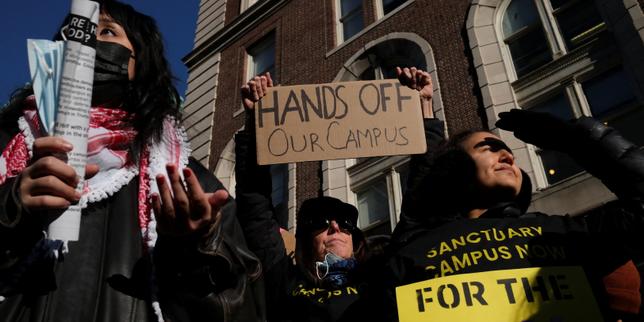
The campus experience itself has lost some of its luster. What was once viewed as a vibrant hub of intellectual freedom is now often perceived through the lens of social media as a place of extreme political tension and safety concerns. For a student from a country where university is a right and the streets are generally safe, the "walled garden" of an American campus feels less like a playground and more like a gilded cage.
The Rise of the European Alternative
Why fly across an ocean when the best of the US is moving to Europe? The proliferation of English-taught programs across the EU has gutted the primary selling point of the American education. Universities in the Netherlands, Germany, and even the "international" arms of French schools offer the same global networking and English-language fluency at a fraction of the cost.
Furthermore, the Erasmus program remains a powerful tool that the US cannot match. The ability to study in three different European capitals for the price of a single semester in Boston is an easy choice for a generation that prizes mobility over brand names.
The Broken Pipeline
The fallout of this shift will be felt in the coming decade. The "French-American axis" in business and diplomacy relies on a steady stream of young people who understand both cultures. As the cost barrier becomes insurmountable for all but the ultra-wealthy, the diversity of the French diaspora in the US is evaporating. We are moving toward a future where only the children of billionaires can afford to bridge the gap between Paris and New York.
This isn't just a loss for the students; it's a loss for the American university system, which thrives on international talent to fund its research and diversify its classrooms. When the French stop coming, it’s a sign that the American educational export—once the country's most successful soft-power tool—is broken.
If you are a French student considering the leap, stop looking at the brochures and start looking at a spreadsheet. Map out the ten-year cost of the debt versus the actual starting salaries in the 8th Arrondissement. If the numbers don't move you, the visa wait times should. The smartest move in 2026 isn't to buy into an aging dream; it’s to build a new one where the currency isn't weighted against your future.