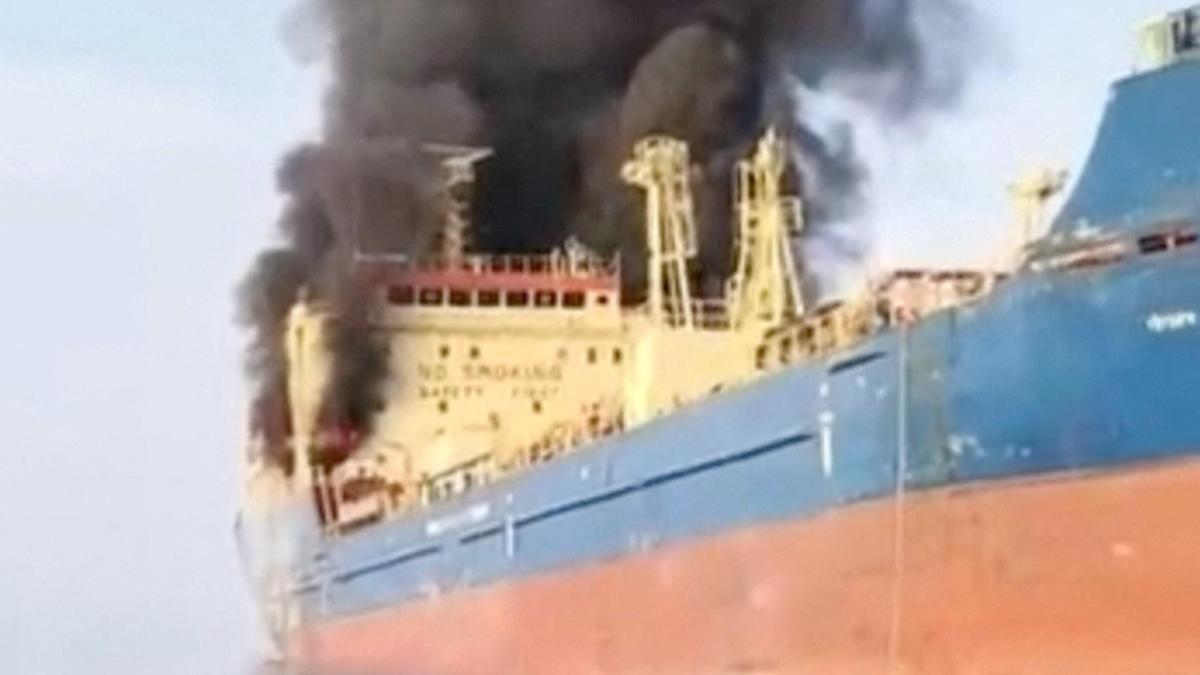
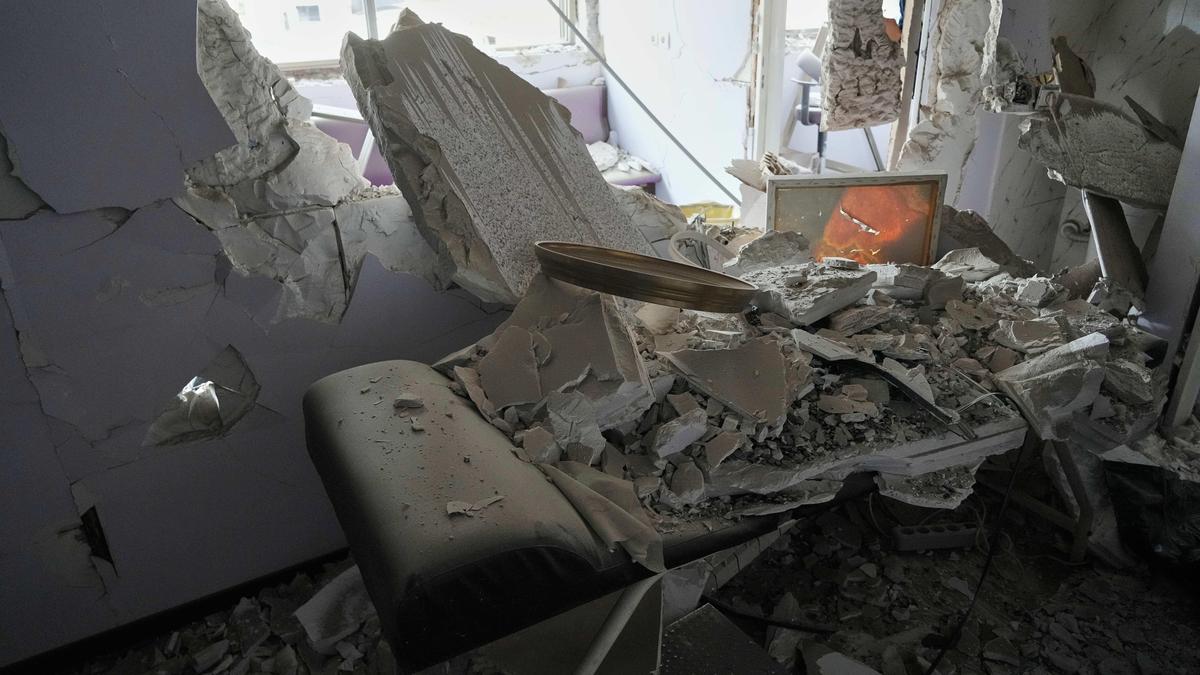
The myth of the neutral Gulf intermediary died over the Persian Gulf on Monday. When Qatari air defenses locked onto and destroyed two Iranian Su-24 Fencer attack jets, the kinetic reality of Middle Eastern warfare finally stripped away decades of diplomatic shielding. For years, Doha positioned itself as the indispensable bridge between Washington and Tehran, but the smoke rising from the wreckage of Soviet-era bombers suggests that the bridge has finally buckled.
This was not a skirmish born of a misunderstanding. It was the predictable result of a region-wide escalation that followed a massive U.S.-Israeli strike on Iranian soil over the weekend. With the death of Supreme Leader Ayatollah Ali Khamenei confirmed in the aftermath of those strikes, Iran’s command structure has pivoted from calculated shadow warfare to a desperate, uncoordinated lashing out. Qatar, home to the massive Al Udeid Air Base and the forward headquarters of U.S. Central Command, was no longer a neighbor; it was a target.
The Failure of the Fencer
The Su-24 is a relic of the Cold War, a variable-sweep wing aircraft designed for low-level penetration and surgical strikes. It is heavy, complex, and maintenance-intensive. Against a modern integrated air defense system (IADS), it is essentially a flying coffin. Iran’s decision to send these aging airframes into Qatari airspace—supported by a wave of seven ballistic missiles and five suicide drones—points to a thinning of the Islamic Republic of Iran Air Force (IRIAF) inventory.
Qatar’s response was clinical. Utilizing a sophisticated network likely anchored by U.S.-sourced Patriot PAC-3 batteries and potentially the THAAD (Terminal High Altitude Area Defense) system, the Qatar Emiri Air Force neutralized the threat before it reached its intended coordinates. The technical disparity was staggering. While the Su-24 relies on 1970s-era electronics and physical maneuvering to evade detection, the Qatari defense grid operates on digital sensor fusion. The moment those jets crossed the median line in the Gulf, they were already dead.
The interception did more than just protect the Qatari capital. It verified that the multi-billion dollar investment in high-altitude defense is functional under "saturated" conditions—where missiles, drones, and manned aircraft attack simultaneously to overwhelm radar processors.
Energy as a Battlefield
While the military victory belongs to Doha, the economic fallout is a global concern. Following the attempted strikes on the Ras Laffan and Mesaieed industrial complexes, QatarEnergy took the unprecedented step of halting all liquefied natural gas (LNG) production.
- Ras Laffan: The world’s largest single LNG facility.
- Mesaieed: A critical node for domestic power and water desalination.
- The Global Impact: Qatar provides roughly 20% of the world's LNG.
The halt was described by industry analysts as "precautionary," but the message to the European and Asian markets is chilling. If Iran cannot export its own energy due to sanctions or infrastructure damage, it has clearly decided that no one else in the Gulf will either. The closure of the Strait of Hormuz, effectively enforced by IRGC naval warnings, means that even if the taps are turned back on, the tankers have nowhere to go.
The irony is bitter. Qatar shares the world’s largest gas field, the North Field/South Pars, with Iran. The two nations are literally extracting wealth from the same geological structure. By targeting Qatari processing plants, Tehran is burning the very bridge that has historically kept its own energy interests somewhat insulated from total Western isolation.
The Crumbling Neutrality Policy
For thirty years, Qatar’s foreign policy was a masterclass in hedging. It hosted the Taliban’s political office, maintained ties with Hamas, and kept a direct line to the IRGC, all while providing the primary launchpad for American airpower in the region. That balancing act is no longer sustainable.
The downing of the Su-24s marks the first time a Gulf Arab state has engaged manned Iranian warplanes in this conflict cycle. It signals to Tehran that the "security umbrella" provided by the U.S. presence is now an active shield, not just a deterrent. It also puts Doha in an impossible position. If they continue to shoot down Iranian assets, they risk a permanent state of war with a neighbor that has a significantly larger, if aging, military. If they don't, they risk the destruction of the energy infrastructure that provides 70% of their government revenue.
Defensive Success and Regional Chaos
The Qatari success was not an isolated event on Monday, but rather a rare bright spot in a day of regional military failures. In neighboring Kuwait, the chaos of the "fog of war" led to a catastrophic blue-on-blue incident where three U.S. F-15E Strike Eagles were reportedly downed by "friendly" air defenses.
This contrast highlights the extreme difficulty of managing an IADS when the sky is filled with hundreds of disparate threats. The Qatari military's ability to distinguish between Iranian Su-24s and the American jets operating out of Al Udeid suggests a level of tactical discipline and hardware integration that its neighbors currently lack.
However, tactical success is not a strategy. Qatar has proven it can defend its skies, but it cannot defend the global economy from the shockwaves of a closed Strait of Hormuz. The "hard-hitting" truth is that Doha’s advanced radars and interceptors can stop a missile, but they cannot restart the flow of global commerce once the regional order has been set on fire.
The pilots of the Su-24s have not been accounted for, and Iran has remained uncharacteristically silent about the loss. This silence is likely a byproduct of the leadership vacuum in Tehran. Without a Supreme Leader to dictate the narrative, the IRGC is operating on autopilot, following standing orders to strike "hostile" infrastructure without regard for the diplomatic consequences. Qatar has officially chosen its side, not through a press release, but through the roar of its surface-to-air missiles.
Would you like me to analyze the specific radar footprints and electronic warfare suites used by the Su-24 that made them vulnerable to the Qatari Patriot systems?