The hum of a hospital at night is a specific, fragile lullaby. It is the rhythmic clicking of IV pumps, the soft squeak of rubber soles on linoleum, and the low, pressurized hiss of oxygen flowing into lungs that have forgotten how to breathe on their own. At Tehran’s Gandhi Hospital, this was the sound of safety. Until the air outside began to taste like burning plastic.
Disaster doesn't always announce itself with a roar. Sometimes, it starts with a flicker of confusion in a nurse’s eyes.
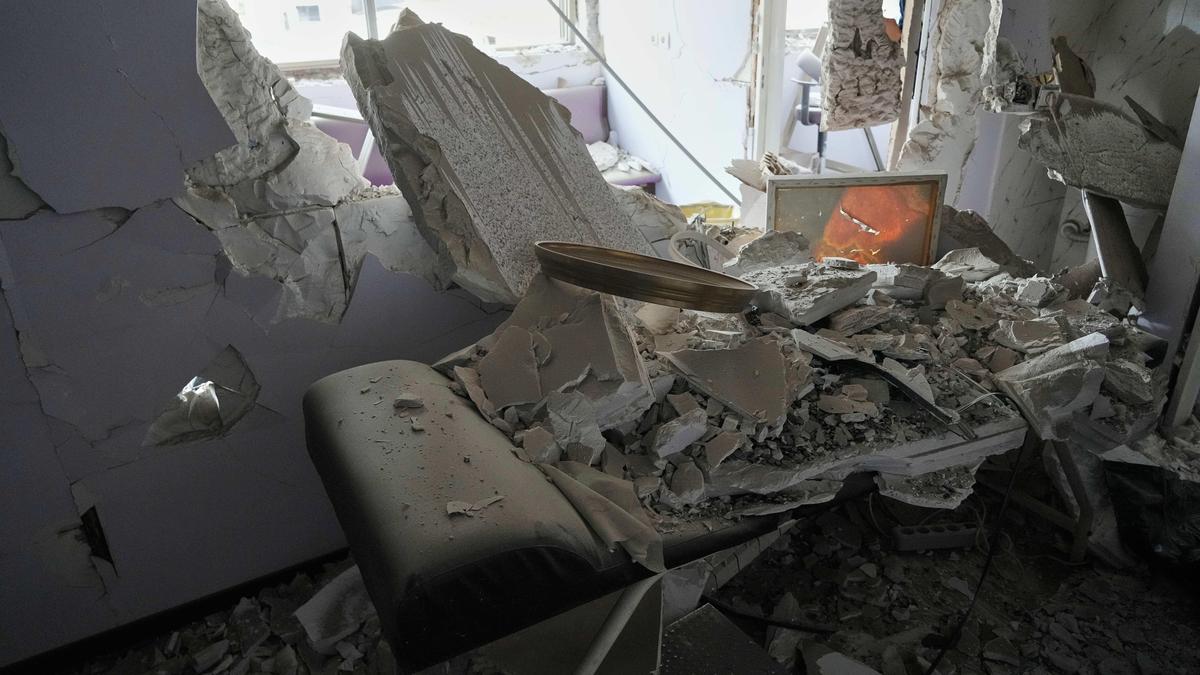
On a Thursday that should have been routine, the World Health Organization (WHO) confirmed what many in the Arshia district already feared: the sanctuary was compromised. Explosions nearby—sharp, jagged sounds that tore through the evening—turned a place of healing into a cage of glass and concrete. When the blasts hit, the "human element" wasn't a statistic in a report. It was a father named Reza, gripping the metal rail of his daughter’s bed, wondering if the smoke in the hallway was deadlier than the illness that brought them there.
The Calculus of Chaos
When a hospital evacuates, the math is cruel. You cannot simply walk out the door. You are tethered. To monitors. To bags of saline. To life-support systems that require a steady pulse of electricity to keep the darkness at bay.
The Gandhi Hospital is not just a building; it is a vertical village of the vulnerable. When the order came to empty the wards, the staff faced a logistical nightmare that defies standard emergency protocols. Moving a healthy person out of a burning building is a race. Moving a patient in the middle of a delicate post-operative recovery is a choreographed terror.
Consider the "invisible stakes" of a single floor. In one room, a patient is stabilized after a cardiac event. In another, a newborn rests in a pressurized incubator. Each one represents a thread that, if pulled too hard or too fast, snaps. The reports tell us "patients were moved." They don't tell us about the hands that shook while unhooking ventilators, or the whispered prayers of paramedics who had to navigate ambulances through streets choked with debris and panic.
A System Under Siege
We often view hospitals as fortresses. We assume they are the final line of defense, immovable and permanent. But this event exposes the terrifying translucency of modern healthcare in conflict-adjacent zones. When an explosion occurs nearby, the shockwave does more than shatter windows. It shatters the infrastructure of trust.
The WHO’s involvement isn't just a matter of record-keeping. It is a signal of a systemic failure. When international health bodies have to oversee the evacuation of a private hospital in a major capital city, the "landscape"—to use a word I usually avoid, but here it fits the literal charred ground—has shifted.
Safety is a ghost.
It haunts the hallways long after the beds are wheeled away. For those evacuated, the trauma isn't just the noise of the blast. It is the realization that the one place where they were supposed to be untouchable was, in fact, incredibly easy to reach. The smoke that billowed near the Gandhi Hospital didn't just carry soot; it carried the scent of vulnerability.
The Weight of the Gurney
I remember the feeling of a hospital evacuation from a different time, a different crisis. It’s the weight. Not just the physical weight of the patient, but the weight of the responsibility. Every bump in the pavement feels like a personal failure. Every siren in the distance feels like a clock ticking down to zero.
In Tehran, the first responders weren't just fighting fire or clearing rubble. They were fighting the clock. They were lifting grandmothers into the backs of transport vans. They were carrying children down stairwells because elevators are death traps in a fire. This isn't "robust logistics." This is raw, desperate human willpower.
The factual reality is that the fire began on the exterior—the composite facade that has become a recurring villain in modern urban disasters. It climbed the building with a hunger that seemed personal. Within minutes, what was a state-of-the-art facility became a chimney.
But why does this matter to someone sitting thousands of miles away?
Because the Gandhi Hospital is a mirror. It reflects the fragility of our collective safety nets. We build these towering monuments to medicine, filling them with the most expensive technology Earth can offer, yet they can be rendered useless by a single spark or a misplaced shell. We are only as healthy as our surroundings are stable.
The Silence After the Siren
Eventually, the flames are extinguished. The "news cycle" moves to the next explosion, the next catastrophe, the next set of numbers. But for the people of Tehran, the silence that follows is louder than the blast.
A hospital is a promise. It’s a social contract written in white coats and sterile bandages: Come here, and we will protect you. When that contract is burned, how do you rewrite it? The patients scattered across other city hospitals are safe for now, but they are displaced souls. They are refugees of a different kind—medical refugees. They have been robbed of their continuity of care, their familiar doctors, and their sense of peace.
The WHO reports can give us the "how" and the "where." They can give us the timeline of the explosions and the number of ambulances deployed. But they cannot capture the look on a surgeon's face when he has to drop his scalpel and pick up a fire extinguisher. They cannot measure the spike in cortisol of a woman in labor who hears a blast and wonders if the world her child is entering is already on fire.
The real story of Gandhi Hospital isn't about the fire. It’s about the oxygen. Not the stuff in the tanks, but the metaphorical air we all breathe—the belief that there are still some places on this planet that are sacred, some zones that are off-limits to the violence of the world.
When the smoke clears, we are left with a skeleton of a building and a very heavy question. If the hospital isn't safe, where is?
The charred ribs of the Gandhi Hospital stand against the Tehran skyline as a reminder that our most advanced systems are still subject to the oldest elements: fire, fear, and the sudden, violent end of a quiet night. The machines have been unplugged. The hallways are empty. The only thing left is the lingering smell of what happens when the world’s chaos finally breaks through the front door of the one place it was never supposed to enter.
Somewhere in a different ward across the city, Reza’s daughter is finally asleep. But Reza is still awake, listening to the hum of a new IV pump, waiting for the sound of the next breath.