The breach of the $100 per barrel threshold for Brent crude is not a reflection of a sudden collapse in global oil reserves, but rather the market’s aggressive pricing of a "security of transit" deficit. When Iranian-backed disruptions target critical maritime chokepoints, the cost of oil ceases to be a function of extraction and begins to function as a derivative of regional stability. This price action represents the convergence of three distinct pressures: the physical displacement of prompt barrels, the exhaustion of the global "buffer" (spare capacity), and the sudden escalation of insurance and freight premiums that effectively act as a regressive tax on every gallon of crude moving through the Middle East.
The Mechanics of the Strait of Hormuz and Bab el-Mandeb
To understand why Brent is reacting with such volatility, one must analyze the specific geography of the current conflict. The Strait of Hormuz and the Bab el-Mandeb are not merely points on a map; they are the high-pressure valves of the global energy system. Approximately 20% of the world’s daily petroleum consumption passes through the Strait of Hormuz. When threats to shipping intensify, the market applies a "risk overlay" to the base price of oil. You might also find this similar story insightful: Why Trump is Right About Tech Power Bills but Wrong About Why.
The primary mechanism of this price spike is the Insecurity of Supply Chain (ISC) Premium. Unlike a physical shortage—where the oil literally does not exist—an ISC premium reflects the increased cost of getting existing oil to its destination. This includes:
- War Risk Insurance Surcharges: Insurers have raised premiums for vessels transiting the Red Sea by over 900% in some instances, costs which are immediately passed to the consumer.
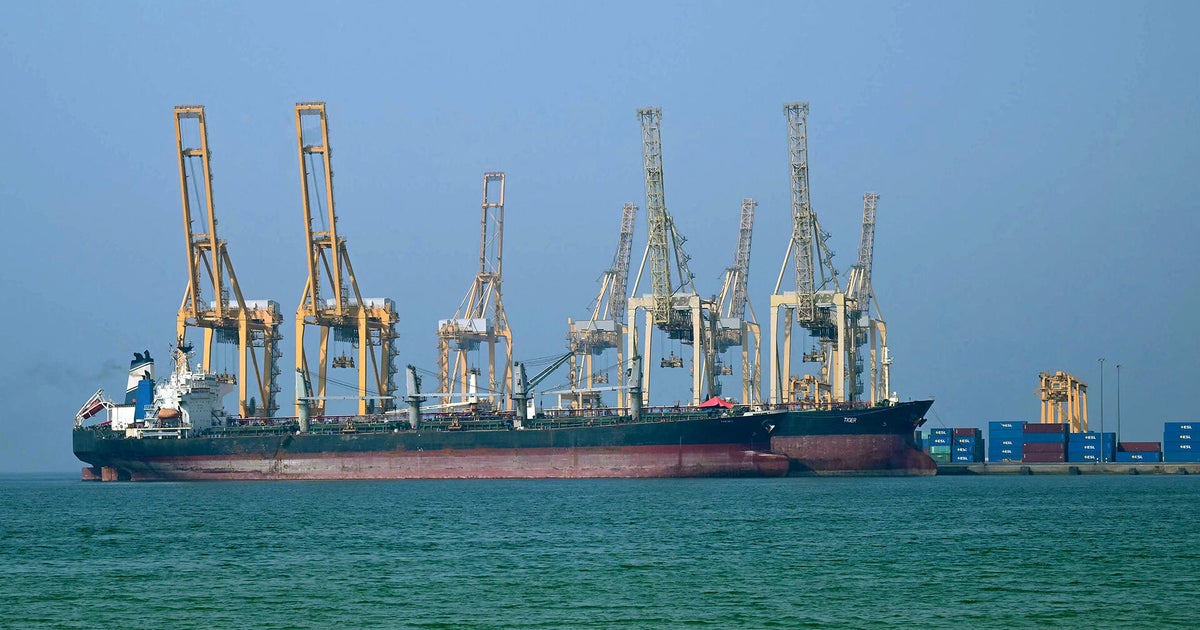
- Rerouting Logistics: Avoiding the Bab el-Mandeb forces tankers to circumnavigate the Cape of Good Hope. This adds 10 to 14 days to a voyage from the Persian Gulf to Europe, effectively "locking up" millions of barrels of oil in transit, reducing the immediate supply available at refineries.
- The Tanker Tightness Factor: Longer voyages require more ships to move the same amount of oil. This absorbs the global surplus of Very Large Crude Carriers (VLCCs), driving up daily charter rates and further inflating the landed cost of a Brent barrel.
The Resilience of Demand vs. The Fragility of Just-in-Time Delivery
The global energy market operates on a just-in-time delivery model with razor-thin margins for error. While critics point to the transition to renewable energy as a reason for lower sensitivity, the industrial backbone of the global economy—aviation, heavy shipping, and petrochemical manufacturing—remains tethered to high-density hydrocarbons. As discussed in recent coverage by The Wall Street Journal, the results are worth noting.
When Iran-backed entities target tankers, they are attacking the velocity of supply. If the velocity slows, the "prompt month" futures contract (the price for oil delivered next month) surges because refineries cannot wait an extra two weeks for their feedstocks. This creates a state of backwardation, where the current price is significantly higher than the price for delivery in the future. Backwardation discourages the holding of inventories, meaning that if a true supply shock occurs, there are no private stockpiles to cushion the blow.
The Strategic Failure of Spare Capacity
A critical component of the $100 oil thesis is the lack of a credible "swing producer" intervention. Historically, Saudi Arabia and the UAE have maintained spare capacity to stabilize the market during geopolitical flare-ups. However, the current strategy within OPEC+ has shifted toward price defense rather than volume stability.
The market has realized that even if the physical supply from Iran is not fully removed, the capacity of other nations to replace it is hampered by technical and political constraints. Many OPEC+ members are currently producing below their quotas due to aging infrastructure and lack of investment. This creates a Structural Supply Ceiling. When the ceiling is hit, any threat to the remaining flow—such as a drone strike or a boarding of a vessel—causes an exponential rather than linear price response.
The Correlation Between Shipping Rates and Inflationary Cascades
The $100 barrel is a psychological trigger for broader economic contagion. The relationship between energy costs and core inflation is not a simple 1:1 ratio; it is a multi-stage process of cost-push inflation.
- Primary Stage: Direct fuel costs for transportation (diesel and jet fuel) rise instantly.
- Secondary Stage: The "Energy Intensity of Goods" increases. Manufacturing a ton of steel or a batch of plastics becomes more expensive.
- Tertiary Stage: Agriculture feels the impact through fertilizer costs (derived from natural gas) and harvesting fuel.
When shipping lanes are threatened, the cost of the transportation itself rivals the cost of the commodity. If a tanker carrying 2 million barrels of oil must pay an additional $1 million in insurance and $2 million in fuel for a longer route, that adds $1.50 to the cost of every barrel before it even reaches a refinery. These "frictional costs" are often stickier than the price of crude itself, meaning that even if the geopolitical tension eases, the cost to the consumer may remain elevated for months.
Quantitative Analysis of the Geopolitical Floor
Financial analysts often look for the "Geopolitical Floor"—the price level below which oil will not fall as long as a specific conflict persists. With Brent at $100, the floor has likely moved to $85. This $15 delta is the market's current valuation of the Iranian threat.
The volatility we are seeing is the result of Gamma Squeezes in the options market. As oil approaches $100, traders who sold "call options" (bets that oil would stay below a certain price) are forced to buy oil futures to hedge their positions. This creates a feedback loop: the price rises, forcing more buying, which pushes the price higher. This technical phenomenon explains why the jump from $95 to $100 happened with such velocity despite no change in the fundamental volume of oil being pumped.
The Strategic Recommendation for Energy Exposed Entities
In an environment where Brent crude remains above $100 due to transit insecurity, firms must shift from a "lowest cost" procurement strategy to a "guaranteed delivery" model.
First, industrial consumers should prioritize Layered Hedging. This involves using a mix of fixed-price swaps to cover 50% of anticipated needs and "call options" to provide protection against extreme spikes toward $120. This structure acknowledges the volatility while protecting against the catastrophic scenario of a total closure of the Strait of Hormuz.
Second, logistics and supply chain managers must re-evaluate Inventory Buffers. The cost of carrying inventory is now lower than the potential cost of a "stock-out" caused by a two-week shipping delay around Africa. Increasing on-site storage capacity from a 15-day supply to a 30-day supply provides the necessary operational breathing room to weather temporary maritime blockades.
Finally, the focus must shift to Origin Diversification. Barrels sourced from the Atlantic Basin (US Permian, Brazil, Guyana, and the North Sea) are currently trading at a premium because they bypass the Middle Eastern chokepoints. While the "paper" price of Brent is the global benchmark, the "physical" premium for safe-transit oil will likely continue to widen. Securing long-term contracts for Atlantic-origin crude, even at a slight premium to the benchmark, is the most effective way to decouple an operation from the instability of the Persian Gulf.
Would you like me to analyze the specific impact of the $100 Brent price on the US Permian Basin's drilling economics or evaluate the current state of global Strategic Petroleum Reserves (SPR)?