Oil prices don't just move because of supply and demand. They move because of fear, ego, and the occasional global catastrophe. If you've looked at a gas station sign lately and wondered why the numbers seem to have a mind of their own, you aren't alone. The last twenty-five years have been a non-stop sequence of "once in a lifetime" events that shifted how energy moves across the planet.
From the idealistic fervor of the Arab Spring to the ghostly silence of the 2020 lockdowns, the crude oil market has been the ultimate barometer for human chaos. It’s a messy story. It involves shale billionaires in Texas, royalty in Riyadh, and a microscopic virus that nearly broke the global economy. Don't forget to check out our previous article on this related article.
Understanding this history isn't just a trip down memory lane. It’s about spotting the patterns that will likely dictate your heating bill or your stock portfolio next year. Let’s look at the moments that actually defined this century's energy shifts.
The Era of the Hundred Dollar Barrel
The early 2000s felt like a different world. China was growing at a breakneck pace, devouring raw materials like there was no tomorrow. This massive industrial surge created a "supercycle." By 2008, Brent crude—the global benchmark—hit an all-time high of nearly $147. If you want more about the history here, The Motley Fool provides an in-depth breakdown.
Then the financial crisis hit.
Prices tanked to $33 in months as the world realized the banking system was a house of cards. But that dip didn't last. By 2011, the Middle East was on fire. The Arab Spring started as a push for democracy, but for the oil markets, it was a supply nightmare. Protests in Egypt and civil war in Libya took millions of barrels off the market.
Investors panicked. They saw a region in turmoil and assumed the taps would stay shut. For three straight years, from 2011 to 2014, oil averaged over $100. It felt like the new normal. Energy companies were printing money, and nobody thought the party would end. But while the Middle East was struggling with political stability, a quiet revolution was happening in the American Midwest.
How the Shale Boom Ruined the Party
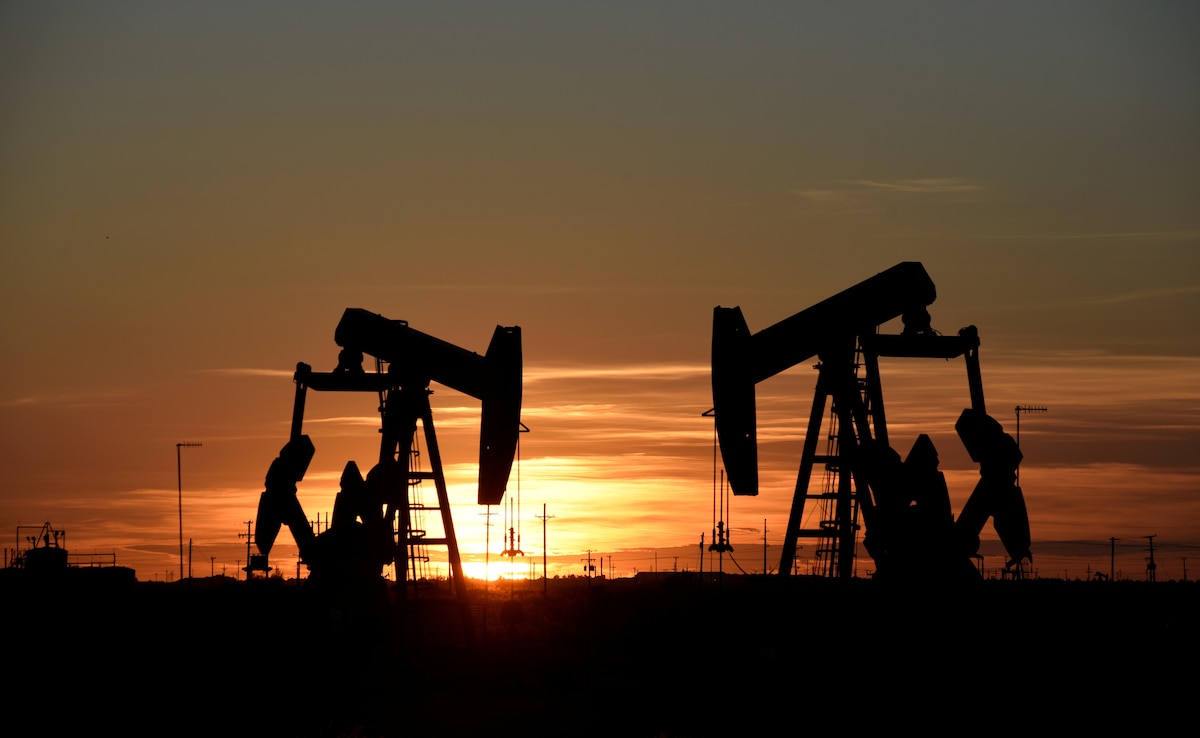
Texas and North Dakota changed everything. While everyone focused on OPEC, American engineers figured out how to crack open rock to get at "tight oil." This process, known as fracking, turned the U.S. into a top-tier producer almost overnight.
By 2014, the world was swimming in oil. The surplus was massive.
Normally, OPEC—led by Saudi Arabia—would cut production to keep prices high. That’s their standard playbook. This time, they did something different. They refused to blink. The Saudis decided to keep production high to crash the price and starve out the expensive American shale drillers.
The price of oil dropped from $115 in June 2014 to under $30 by early 2016. It was a bloodbath. Hundreds of American energy companies went bankrupt. The "lower for longer" era began. People realized that the old days of $100 oil were gone because technology had made it too easy to find more.
The Birth of OPEC Plus
This price crash forced some weird alliances. Russia and Saudi Arabia, usually rivals, realized they couldn't control the market alone anymore. They formed "OPEC+." This new group tried to manage global supply with a series of coordinated cuts. It worked, mostly. Prices stabilized in the $50 to $70 range for a few years. It was a fragile peace that lasted until a global health crisis made everyone stay home.
The Day Oil Prices Went Negative
The year 2020 was a fever dream for commodity traders. When the pandemic hit, the world stopped moving. Planes were grounded. Factories closed. People stayed in their living rooms. Global demand for oil dropped by 20 million barrels a day.
At the same time, a spat between Russia and Saudi Arabia led to a brief price war. They both ramped up production just as demand vanished.
The result was the most bizarre event in financial history. On April 20, 2020, West Texas Intermediate (WTI) futures crashed to negative $37.63. Think about that. People were literally paying others to take the oil off their hands because they had nowhere to store it. Every tank, ship, and pipeline was full.
It was a wake-up call. It showed that the "just-in-time" energy market is incredibly vulnerable to total shutdowns. While prices eventually bounced back as the world reopened, that moment of negative pricing scarred a generation of investors. It’s the reason why, even today, oil companies are hesitant to spend billions on new drilling projects. They remember how fast the floor can drop.
Why the Current Market Is So Twitchy
We’ve moved into a period of extreme volatility. The Russian invasion of Ukraine in 2022 sent prices back above $100 as Europe scrambled to replace Russian gas and oil. Suddenly, energy security became more important than the green transition for many governments.
Sanctions, "shadow fleets" of tankers, and redirected trade routes have made the market much more complex. We aren't just trading oil; we're trading geopolitics.
- Geopolitical Tensions: Any flare-up in the Strait of Hormuz or Eastern Europe sends ripples through the pumps.
- Inventory Levels: Global stocks are lower than they used to be, leaving no cushion for errors.
- Underinvestment: Because of the 2020 crash and the push for renewables, companies aren't building new refineries or rigs at the same rate.
What most people get wrong is thinking oil is dying. It’s not. Even as electric vehicles gain ground, crude is still essential for plastics, shipping, and aviation. We’re in a "tight" market where even a small disruption causes a huge price swing.
If you want to protect yourself from these swings, start paying attention to the weekly inventory reports from the U.S. Energy Information Administration (EIA). These numbers tell you if the world has a surplus or a shortage before it hits the news. Don't just watch the headlines; watch the storage levels in places like Cushing, Oklahoma. That’s where the real story is written. Keep an eye on the rig count too. If companies aren't drilling today, you'll be paying more at the pump in eighteen months. It’s a slow-motion cycle that rewards those who pay attention to the data rather than the drama.