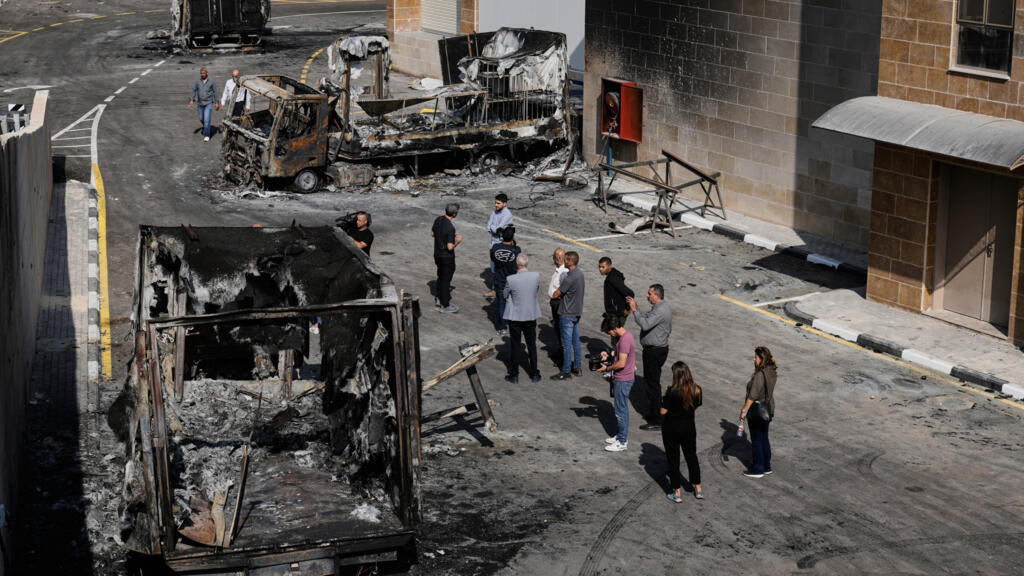
The systemic failure of the Chernihiv power grid following targeted kinetic strikes is not a singular event of destruction but a case study in cascading infrastructure fragility. When an energy node is neutralized, the resulting deficit is not merely a loss of light; it is a rapid-onset entropy that degrades water filtration, thermal regulation, and digital command-edge capabilities. In the Chernihiv region, the transition from a functional utility network to a state of regional paralysis illustrates the "Criticality of Interdependence"—where the loss of the primary power input triggers a multi-sectoral shutdown that cannot be mitigated by localized redundancy.
The Triad of Grid Vulnerability
To understand why the Chernihiv region remains largely dark, one must deconstruct the electrical architecture into three distinct functional layers: Generation, Transmission, and Distribution. The current crisis stems from a failure in the Transmission-Distribution Interface.
- Bulk Power Transfer Impedance: High-voltage substations act as the "gatekeepers" between long-distance transmission lines and regional consumption. When these transformers are damaged, the region is effectively decoupled from the national synchronized grid. Even if generation remains stable elsewhere in Ukraine, the physical path to Chernihiv is severed.
- Frequency Instability: Grids must maintain a precise frequency (50 Hz). A sudden loss of load or a sudden loss of supply creates an imbalance. If the protective relays sense a deviation beyond a narrow tolerance, they trigger automated "islanding" or total shutdowns to prevent permanent hardware melting.
- Black Start Constraints: Restarting a regional grid after a total collapse—a "Black Start"—requires an internal power source capable of generating the initial excitation current. In a region like Chernihiv, where local generation may be offline or integrated into the larger national loop, the absence of an independent start-up source creates a circular dependency: you need power to start the plants that provide power.
The Economic and Kinetic Cost Function
The degradation of the Chernihiv energy sector follows a specific cost function where the "Recovery Time Objective" (RTO) increases exponentially with every successive strike. This is not a linear depletion of assets.
- Logistical Friction: Repairing a 330kV transformer is not a matter of simple maintenance. These units are often custom-built, weigh hundreds of tons, and have lead times that span months or years in a peacetime economy. In a kinetic environment, the logistics of moving heavy machinery through disrupted transit corridors adds a layer of "Operational Drag" that the initial news reports often omit.
- The Replacement Paradox: Replacing a destroyed component with an older, less efficient unit from strategic reserves creates a "sub-optimal equilibrium." The grid becomes more prone to technical failure under load, making it even more vulnerable to the next minor disruption.
Systematic Degradation of Secondary Utilities
The loss of electrical potential in Chernihiv creates a downstream "Dependency Loop." The most immediate and dangerous of these is the Hydraulic-Thermal Link.
The Water-Power Nexus
Modern municipal water systems rely on electric pumps to maintain head pressure. When the grid fails, the pressure in the pipes drops. This does more than stop the flow of water; it creates a vacuum effect that can pull contaminants into the system through micro-leaks, turning a power crisis into a public health crisis. Without power for chlorination and filtration, the "Potability Factor" of the regional water supply nears zero within 12 to 24 hours of grid collapse.
Thermal Inertia and Structural Risk
In a northern climate, the absence of power translates to the loss of central heating pumps. The "Thermal Decay Constant" of a standard apartment block means that once the internal temperature drops below the dew point, moisture begins to accumulate, leading to structural degradation and the freezing of internal plumbing. A frozen pipe is a "terminal failure" for a building’s utility profile, requiring a total gutting of the infrastructure once the thaw occurs.
Digital Blindness and the Command Gap
Information flow is the first casualty of energy scarcity. While cellular towers often have battery backups, these are designed for short-term outages (4–8 hours).
- Backhaul Failure: Even if a mobile phone has a signal, the fiber-optic backhaul and the microwave links that carry data require energized relay stations. As these stations deplete their diesel or battery reserves, the region enters a state of "Digital Balkanization," where communication is only possible within tiny, isolated bubbles.
- The Feedback Loop of Chaos: Without real-time data, emergency services cannot triage calls. This leads to an "Inefficient Resource Allocation" where ambulances or fire crews are dispatched blindly, wasting fuel—a critical and finite resource—on non-critical tasks while high-priority emergencies go unanswered.
Strategic Mitigation and the Decentralization Mandate
The current state of the Chernihiv region proves that Centralized Efficiency is a Liability in a high-threat environment. To move beyond the cycle of strike-and-repair, the structural logic of the grid must shift toward "Distributed Resilience."
- Micro-Grid Implementation: Instead of one massive regional loop, the infrastructure must be partitioned into self-sustaining micro-grids powered by localized renewable or modular gas-fired units. This limits the "Blast Radius" of a single strike; a hit on one node no longer de-energizes the entire province.
- Hardened Redundancy: Moving critical transformers into underground or reinforced concrete bunkers is a high-CAPEX (Capital Expenditure) move, but it is the only way to lower the "Probability of Kill" for essential grid nodes.
The survival of Chernihiv’s social and economic fabric depends on treating energy not as a commodity to be delivered, but as a decentralized system to be defended. The immediate strategic priority must be the deployment of high-capacity energy storage systems (BESS) at the municipal level. These units act as a "buffer," smoothing out the frequency spikes and providing the 48-72 hours of bridge power required to perform emergency repairs on the primary transmission lines without the total collapse of secondary life-support systems.
Deploying modular, mobile substations—mounted on rail or heavy-duty trailers—is the only viable tactical response to the ongoing attrition of the fixed-site transmission architecture.
Would you like me to analyze the specific supply chain bottlenecks for the high-voltage transformers required to stabilize the Ukrainian northern sector?