Sarah had exactly four minutes before the regional quarterly briefing. She stood in a cramped bathroom stall in a Winnipeg office tower, her heart hammering against her ribs, staring at a piece of rough, single-ply toilet paper she had folded into a desperate, makeshift rectangle.
It wouldn't hold. She knew it. You knew it. Anyone who has ever navigated the biology of a menstrual cycle while chained to a desk knows the cold, creeping panic of an unplanned arrival. It is a moment of profound vulnerability disguised as a minor workplace inconvenience. In that stall, Sarah wasn't a Senior Analyst with a master’s degree and a flawless track record. She was a person in a crisis of dignity, weighing the risk of a visible stain against the professional suicide of walking out of a high-stakes meeting to find a drugstore.
This isn't just Sarah’s story. It is the story of roughly half the workforce in Manitoba, and for decades, it has been treated as a private burden rather than a public infrastructure requirement.
The Paper Cut of Inequality
We don't ask employees to bring their own toilet paper to work. We don't expect them to carry a personal supply of hand soap or paper towels in their bags "just in case." These items are recognized as fundamental to a functional, sanitary environment. Yet, for some reason, menstrual products were long categorized as a "luxury" or a "personal choice," a classification that feels increasingly absurd when you’re the one doing the "period waddle" to your car because the office vending machine has been broken since 2014.
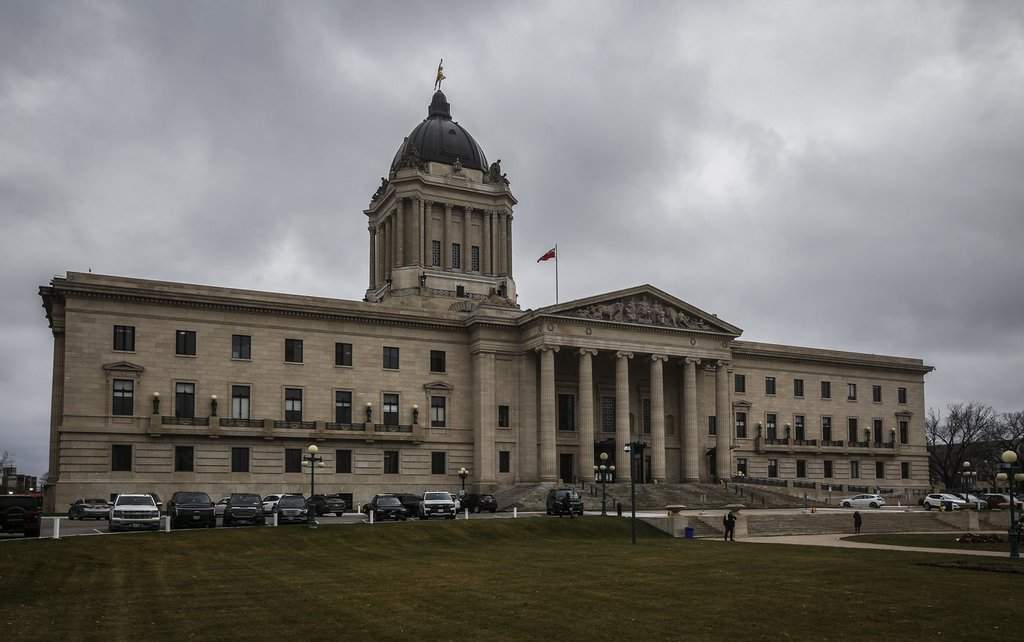
The Manitoba government recently moved to dismantle this absurdity. Under new provincial regulations, employers in Manitoba are now required to provide clean and hygienic menstrual products in the workplace. At no cost. No quarters required. No awkward knocks on a manager’s door.
It sounds like a small change. It is actually a tectonic shift in how we value labor and the bodies that perform it.
Consider the mechanics of the "period tax" on time. When a workplace lacks these essentials, an employee who starts their period unexpectedly doesn't just lose five minutes. They lose the time it takes to scavenge for a product from a colleague—a ritual of hushed whispers and "do you have anything?"—or the thirty minutes it takes to drive to a convenience store, buy a box, and return. Multiply those thirty minutes by thousands of employees across the province. The lost productivity alone is a staggering, invisible leak in the bottom line of the provincial economy.
The Architecture of Belonging
There is a psychological weight to being ignored by the architecture of your workplace. When an office is designed with only the most basic, "neutral" needs in mind, it sends a silent message about who is expected to be there.
By mandating free access to pads and tampons, the province is effectively updating the workplace blueprint. This isn't about "perks" or "benefits" in the way a ping-pong table or a kegerator is a perk. This is about removing a barrier to entry. It is about acknowledging that the human body does not pause its functions simply because it has clocked in.
We see this reflected in the data regarding "period poverty." While the term often conjures images of distant, developing nations, the reality is much closer to home. In Canada, one in four people who menstruate has struggled to afford products. In a world of rising inflation and skyrocketing rent, the choice between a box of tampons and a gallon of milk is a real, agonizing calculation being made in staff rooms across Manitoba.
When an employer provides these products, they aren't just following a law. They are providing a safety net. They are ensuring that a person’s financial status on a Tuesday morning doesn't determine whether they can finish their shift with their dignity intact.
The Logistics of Dignity
Naturally, there will be grumbling. There is always grumbling when the status quo shifts. You can almost hear the whispered concerns in the boardroom: What will it cost? Won't people steal them? Where do we even put the dispensers?
But look at the math. The cost of providing basic menstrual products is a rounding error for most businesses—literally pennies per employee per month. Contrast that with the cost of turnover, disengagement, and lost hours. The ROI on respect is remarkably high.
As for the fear of "theft," the evidence from schools and municipalities that have already implemented these programs is clear: people take what they need. No one is hoarding tampons like they’re gold bullion. When a resource is treated as a standard utility—like soap or lightbulbs—the "scarcity mindset" disappears.
The regulation also mandates that these products be accessible in a way that respects privacy. This means they aren't tucked away in a locked cabinet in HR. They are where they belong: in the restrooms.
Breaking the Silence
There is a historical amnesia we have to overcome here. For decades, menstruation was treated as a "women’s issue," a phrase often used to silo a topic and keep it out of the serious, "universal" conversation of business and policy.
But this isn't a women's issue. It’s a labor issue. It’s a public health issue. It’s an equity issue. By bringing this into the light, Manitoba is participating in a global movement to de-stigmatize a basic biological reality. From Scotland to British Columbia, the tide is turning toward a world where "personal hygiene" actually includes all aspects of hygiene.
We are moving away from a culture of shame and toward a culture of support.
Think back to Sarah. In a world where this regulation is fully realized, she wouldn't be panicking in a bathroom stall. She would simply reach for a small, cardboard box on the wall, handle her business in thirty seconds, and walk into her meeting with her head held high. She would be focused on her data, her presentation, and her contribution to the company, rather than the fear of a red stain on a gray chair.
That is the hidden power of this policy. It isn't just about cotton and plastic. It is about the mental bandwidth we reclaim when we stop asking people to apologize for their biology.
The province is finally acknowledging that the clock shouldn't stop for a cycle. By making these products free and accessible, we aren't just providing a service; we are acknowledging a person's right to exist in the workplace without being penalized for the way they were born.
It is a small box on a bathroom wall. But for the person who needs it, it is a bridge back to the work they were hired to do.
Sarah walks into the meeting. She is three minutes early. She clicks her pen, opens her laptop, and begins to speak. The only thing on her mind is the quarterly growth. As it should be.
The quiet revolution isn't always fought with banners and shouts. Sometimes, it happens one restroom stall at a time, through the simple, radical act of making sure everyone has what they need to stay in the room.
Would you like me to draft a guide for employers on how to select and stock these products to ensure they meet the new provincial standards?