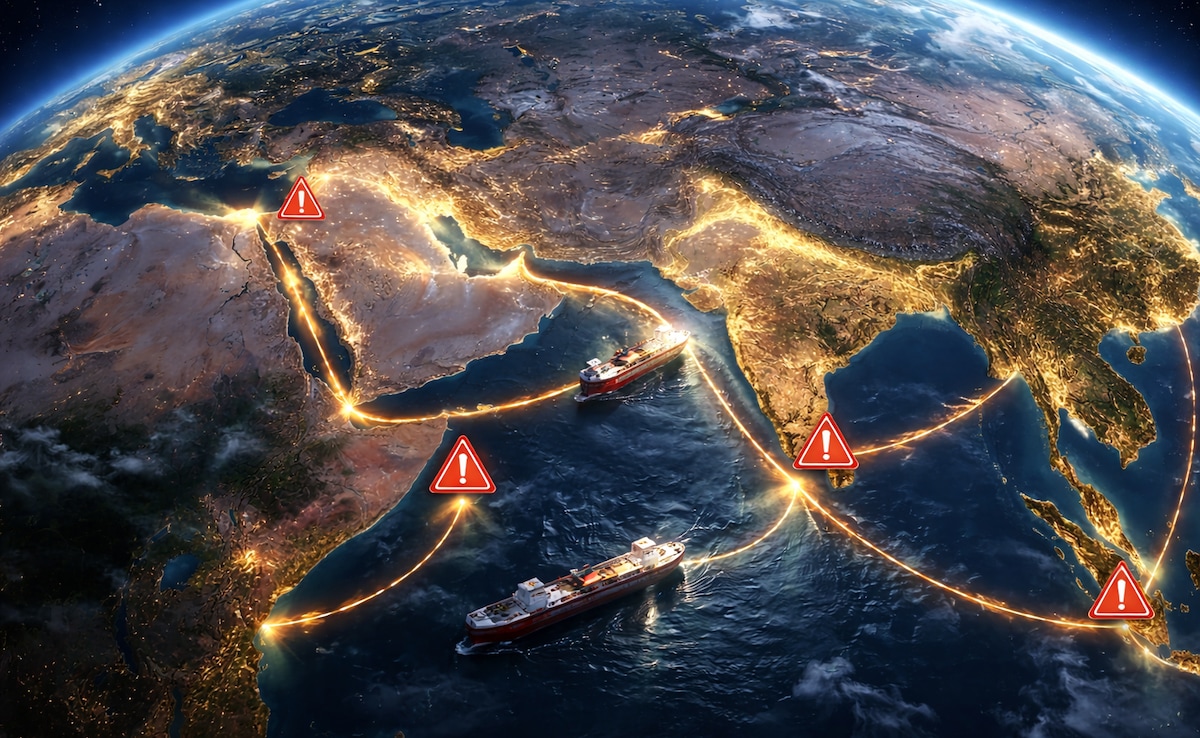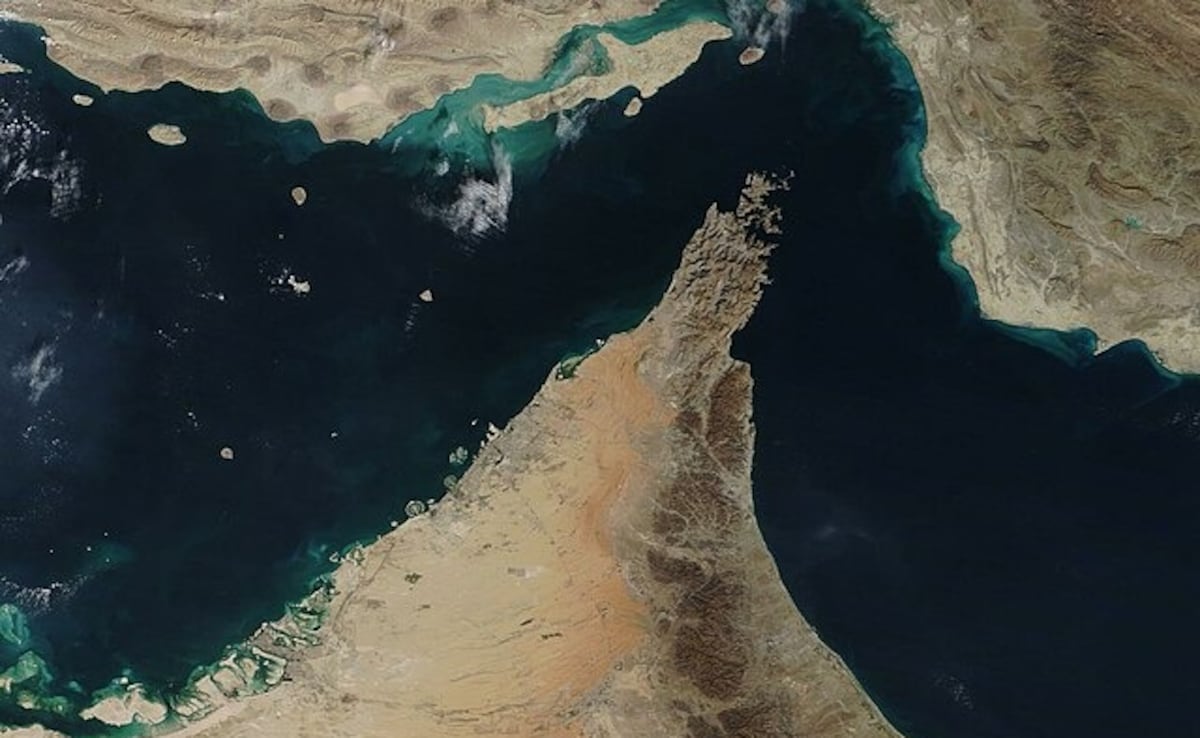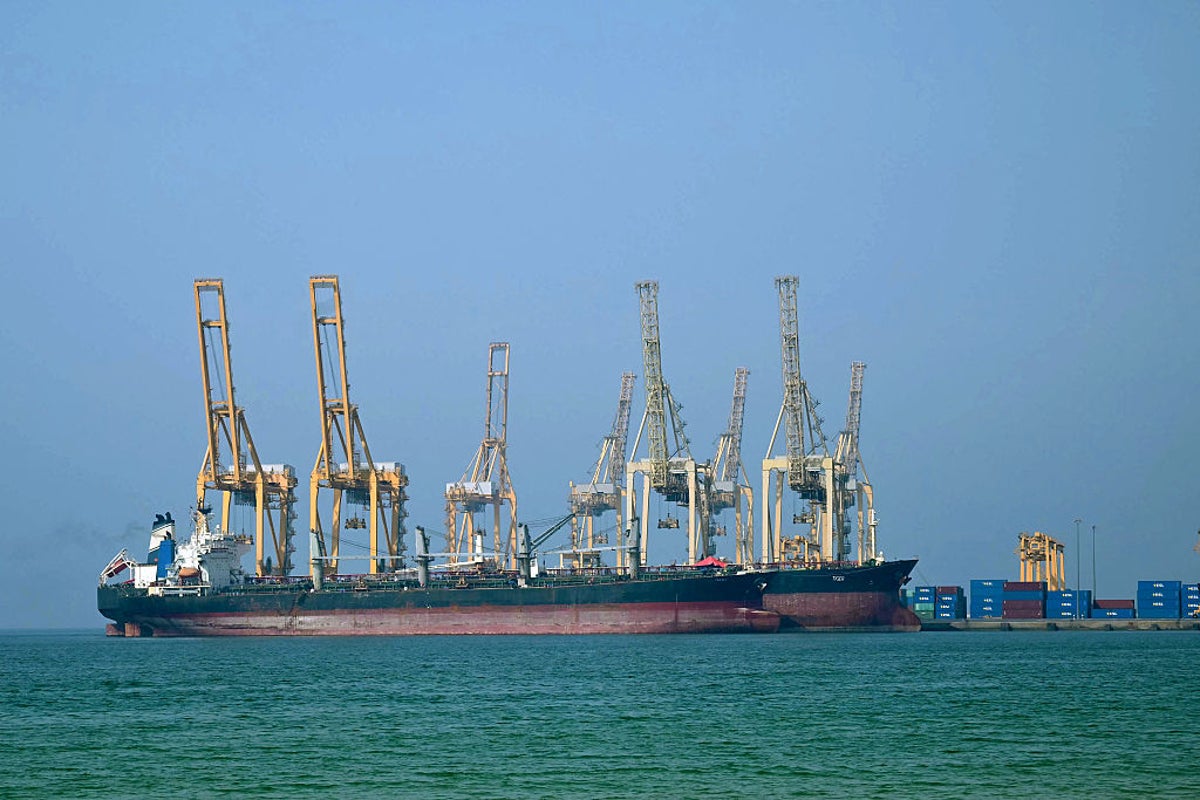
The recent escalation in the Strait of Hormuz has transformed a regional security crisis into a global economic structural failure. With approximately 21 million barrels of crude oil and 20% of global liquefied natural gas (LNG) transiting this 21-mile-wide chokepoint daily, any disruption triggers a nonlinear price response. On March 3, 2026, the Trump administration initiated a two-pronged intervention: military naval escorts and a federal "political risk insurance" program via the US International Development Finance Corporation (DFC). This strategy seeks to solve the "Triple Threat" of maritime transit: physical destruction, prohibitive insurance premiums, and market psychological volatility.
The Chokepoint Physics: Why 21 Miles Controls Global CPI
The Strait of Hormuz is a unique maritime bottleneck where geography dictates global inflation. Unlike the Red Sea, which offers the Cape of Good Hope as a high-cost alternative, the Strait of Hormuz lacks comparable redirection capacity. The U.S. Energy Information Administration (EIA) estimates that only 4.2 million barrels per day (mb/d) can be redirected via pipelines in Saudi Arabia and the UAE, leaving over 16 mb/d—nearly 16% of global demand—entirely dependent on the waterway.
The Price Elasticity of Security
The market currently prices oil using a Geopolitical Risk Premium (GRP). When transit ceases, as it did following the initial "Operation Epic Fury" strikes, the GRP accounts for roughly $14–$20 of the barrel price. The logic of the administration's intervention is to compress this premium through two specific mechanisms:
- Supply Continuity: Direct physical protection to prevent the "zero-flow" scenario.
- Cost Stabilization: Mitigating the "War Risk" surcharge that makes commercial shipping mathematically unviable even if ships are not hit.
Pillar I: The Naval Escort Operational Model
The deployment of the U.S. Navy to escort commercial tankers is not merely a show of force; it is an attempt to lower the Probability of Attrition ($P_a$) for private shippers. In the "Tanker War" of the 1980s and the more recent "Operation Prosperity Guardian" in the Red Sea, the Navy utilized a convoy system to neutralize low-cost asymmetric threats like suicide drones and anti-ship cruise missiles.
The Destroyer-to-Tanker Ratio
Operationalizing this requires a high density of Aegis-equipped destroyers, such as the Arleigh Burke-class, to provide a localized "missile umbrella." The bottleneck here is not just Iranian intent, but the US Navy’s Vertical Launch System (VLS) capacity. If Iran utilizes "saturation attacks"—launching more projectiles than a destroyer has interceptors—the escort strategy shifts from a deterrent to a target.
The Trigger Mechanisms
The Pentagon has not disclosed specific "Rules of Engagement" (ROE), but three triggers define the current escalation:
- VHF Warnings: Iranian naval assets issuing unauthorized "closure" commands to commercial vessels.
- Kinetic Impact: Any strike within 5 nautical miles of the Khasab Port or the "Narrows."
- Market Withdrawal: When major carriers like Hapag-Lloyd or CMA CGM officially suspend bookings, the naval escort becomes the only mechanism to restart the flow.
Pillar II: The DFC Political Risk Insurance Mechanism
The most sophisticated and overlooked component of the administration's plan is the use of the International Development Finance Corporation (DFC) to provide "political risk insurance." In maritime commerce, physical safety is secondary to financial indemnity. When private insurers like Lloyd’s of London designate a zone as "Listed" or "Excluded," premiums can spike to 1–5% of the vessel's value per voyage, effectively making the oil too expensive to sell at the destination.
Addressing the Insurance Market Failure
Private insurers utilize actuarial models that break down when state-on-state conflict occurs. The DFC intervention acts as a Sovereign Backstop. By offering insurance "at a very reasonable price," the US government is essentially absorbing the financial risk that the private sector refuses to price.
- The Mechanism: The DFC provides a guarantee to shipowners that if a vessel is seized or destroyed, the US Treasury—not a private pool of capital—covers the loss.
- The Goal: To prevent "Insurance-Induced Decoupling," where ships stay in port not because they fear the missiles, but because they cannot obtain the paperwork to sail.
The Strategic Cost Function of Intervention
The administration's plan carries significant second-order risks that standard market analysis often ignores. The "Strategic Play" here is to bridge the gap until the conflict de-escalates, but the cost of maintaining this bridge is high.
| Variable | Impact on Oil Price (Brent) | Strategic Risk |
|---|---|---|
| Successful Convoy | -$10 to -$15 (Premium Compression) | High VLS cell depletion; overstretched Navy. |
| Escort Failure (Ship Hit) | +$20 to +$30 (Panic Spike) | Total loss of US maritime credibility. |
| Insurance Payouts | Neutral (Immediate) | Long-term fiscal liability for US taxpayers. |
| Prolonged Closure | >$120/barrel | Global recessionary trigger. |
The "Endgame" Problem
A critical limitation of this strategy is the lack of a defined exit. While President Trump has stated that the US will ensure the "FREE FLOW of ENERGY," the naval and financial resources required to do so are finite. If the conflict lasts longer than four weeks, the Strategic Petroleum Reserve (SPR) must be utilized in tandem with escorts to prevent "Demand Destruction"—the point where high prices permanently reduce economic activity.
Strategic Recommendation
For energy traders and logistics managers, the current signal is one of Artificial Stabilization. The US naval presence and DFC insurance guarantees create a temporary floor for the market, but they do not resolve the underlying kinetic threat from Iranian land-based batteries.
Monitor the "Reinsurance" signal: If major global reinsurers accept the DFC’s backstop and resume their own coverage, the risk premium will collapse. If they remain on the sidelines, the US Navy is effectively the only "shipping lane" left. Position for high volatility in the $85–$95 range until the first escorted convoy successfully transits the Narrows without a kinetic engagement.
Watch the US Navy's VLS replenishment rate at regional bases like Bahrain; this is the true metric of how long the escort "umbrella" can remain operational under high-threat conditions. Would you like me to analyze the specific impact of these naval escorts on the Asian LNG spot markets next?