The sun hasn’t even touched the horizon in a small town outside Des Moines, but Elias is already staring at a flickering spreadsheet on his kitchen table. He’s a logistics manager for a mid-sized trucking firm. For years, his job was a predictable dance of routes and schedules. Now, he’s watching the ticker of global oil prices with the kind of intensity usually reserved for a dying relative’s heart monitor.
Halfway across the world, a drone hums over the Persian Gulf. A single command is issued. A button is pressed.
The explosion is thousands of miles away, but the shockwave travels at the speed of light through the fiber-optic cables of global finance. By the time Elias pours his second cup of coffee, the cost of diesel has jumped six cents. By the end of the week, those pennies will have metastasized into a $210 billion hole in the American economy.
We often talk about war in the language of "strikes," "assets," and "surgical precision." It sounds clean. It sounds like something that happens "over there." But there is no such thing as a localized conflict in a world where your morning toast, your Amazon delivery, and your 401(k) are all tethered to the stability of the Strait of Hormuz.
The Invisible Ledger
When news broke of the latest tensions between the Trump administration and Iran, the headlines focused on the hardware. People wanted to know about missiles and the range of stealth bombers. They missed the real casualty: the American consumer’s purchasing power.
A recent economic assessment laid out the math in cold, hard terms. If the cycle of escalation continues, the United States faces a $210 billion drain. It isn't a bill that comes in the mail. It's a "shadow tax" that bleeds out of the economy through a thousand different cuts.
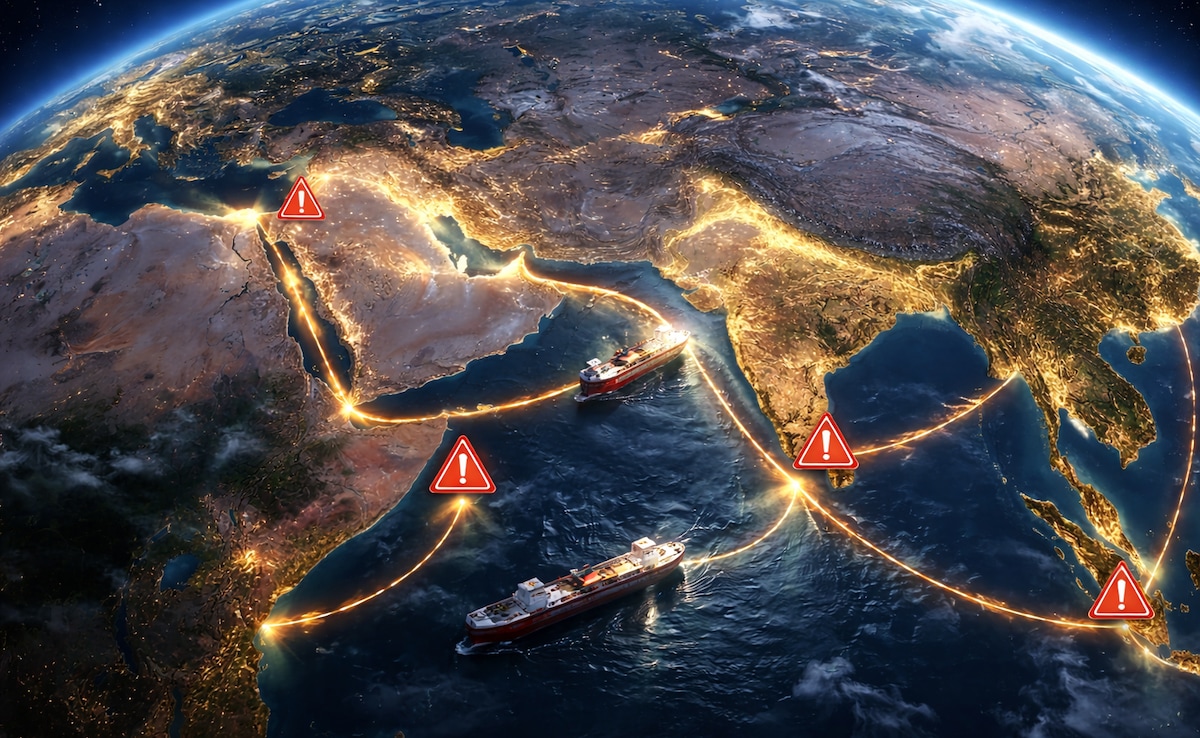
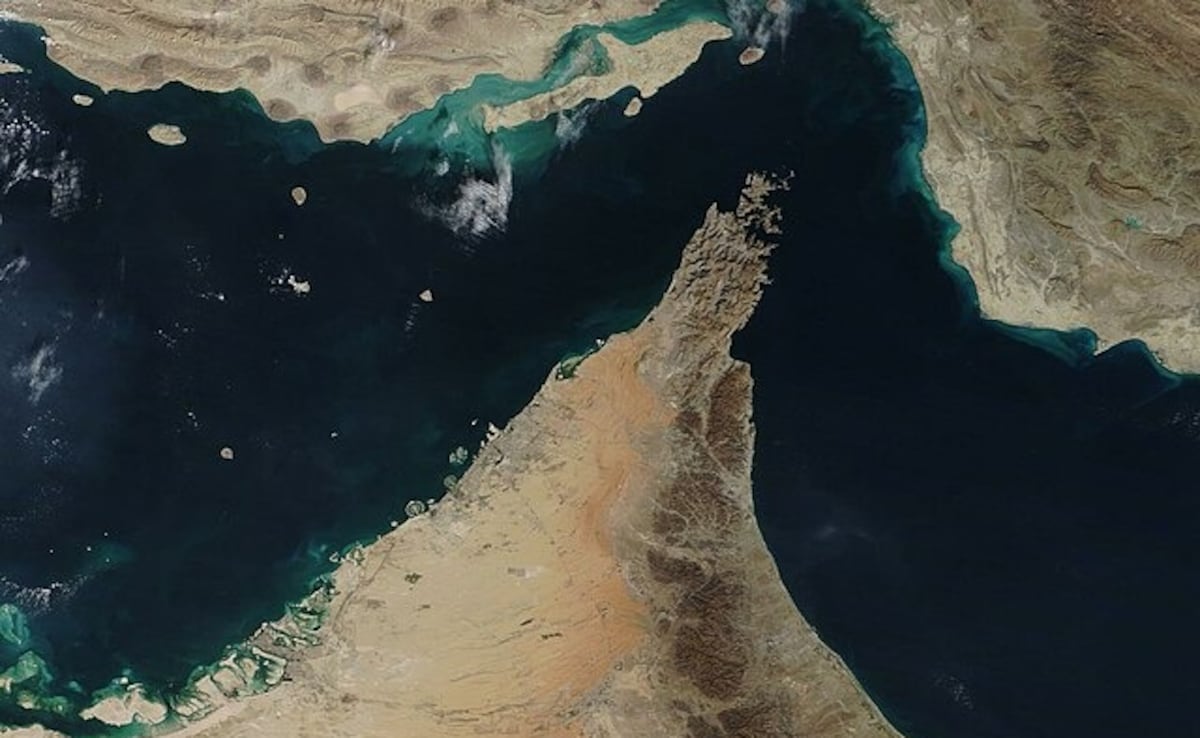
Consider the Strait of Hormuz. It is a narrow choke point, a literal throat through which one-fifth of the world’s oil supply passes. When a conflict flares, the "risk premium" on insurance for every tanker in those waters spikes. Shipping companies don't just absorb that cost out of the goodness of their hearts. They pass it down.
The oil is more expensive to move, so it’s more expensive to refine, so it’s more expensive to put in a truck. The truck carries the grain. The grain becomes the bread. Suddenly, a family in Ohio is paying fifty cents more for a loaf of sourdough because of a geopolitical chess move in the Middle East.
This is how $210 billion disappears. It vanishes into the friction of a world on edge.
The Psychology of the Pump
Economics is rarely about math. It is almost always about fear.
The $210 billion figure isn't just a tally of destroyed infrastructure or spent munitions. A massive portion of it is the "uncertainty cost." When businesses don't know if the price of fuel will double next month, they stop hiring. They cancel the expansion of the factory. They hold onto their cash like a shield.
Imagine Sarah. She owns a small construction company. She’s been planning to buy two new excavators and hire four more operators. But the news cycle is dominated by talk of retaliatory strikes. She looks at her projected fuel costs for the next quarter. If oil stays where it is, she’s fine. If it jumps to $120 a barrel, those new hires will bankrupt her.
She decides to wait.
Multiply Sarah by a million small business owners across the country. That collective hesitation is a silent recession. It is a stagnant pool of capital that should be flowing, creating jobs, and building things. Instead, it sits frozen in the bank, paralyzed by the possibility of the next "surgical strike."
The Global Feedback Loop
We like to think of the American economy as an island, but it’s more like a nervous system. Iran knows this. They don't need to defeat the U.S. military in a traditional sense. They only need to rattle the cage of global energy markets.
When the U.S. leans into military escalation, it forces Iran to leverage the only real tool they have: disruption. Whether it’s harassment of shipping vessels or the threat of closing the Strait, the goal is the same. They want to make the cost of American interventionism too high for the American voter to stomach.
And the cost is high.
Beyond the immediate $210 billion hit, there is the long-term erosion of the dollar's stability. When the U.S. uses its economic and military might to squeeze a nation like Iran, it incentivizes other countries to look for ways to bypass the dollar entirely. They start trading in Yuan or Euros or gold. They build parallel systems.
Every time we use the economy as a weapon, the weapon gets a little bit duller.
The Human Toll of Macro-Economics
It’s easy to get lost in the "billions." The number is so large it becomes abstract. It feels like a video game score. But that $210 billion is composed of actual human experiences.
It’s the college student who has to drop a class because she can’t afford the commute. It’s the retiree whose fixed income doesn't stretch far enough to cover the heating bill in January. It’s the small-town grocery store that has to raise prices, losing the trust of a community that has shopped there for generations.
There is a profound disconnect between the rhetoric of "putting America first" and the reality of how these strikes ripple back home. True security isn't just about the strength of a border or the reach of a missile; it’s about the resilience of the household budget.
Elias, the logistics manager, finally shuts his laptop. The sun is up now. He has to go into the office and tell his drivers that their bonuses are being pushed back because the company's fuel hedge didn't hold. He has to look men and women in the eye and tell them that a decision made in a room he’ll never enter has just reached into their pockets and taken their Christmas money.
He doesn't feel more secure. He just feels poorer.
The missiles fly, the targets are hit, and the maps in the Pentagon are updated. But back on the ground, in the quiet aisles of the supermarket and the fluorescent-lit offices of the Midwest, the real bill is being tallied. It is a debt paid in missed opportunities, lost wages, and the slow, grinding anxiety of a nation that realized its prosperity is held hostage by a hair-trigger.
The world is smaller than we think, and the price of a strike is never just the cost of the fuel in the jet. It is the cost of everything else.