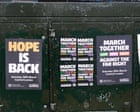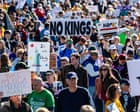
The Third No Kings protest, scheduled to flood American streets today, March 28, 2026, is no longer just a reaction to a single administration. It has transformed into a massive, decentralized rejection of a governing philosophy that critics say has traded constitutional checks for executive decrees. With over 3,000 events planned across all 50 states and early turnout estimates reaching into the millions, this movement is poised to become the largest single-day political mobilization in United States history.
While the headline-grabbing rallies in St. Paul and Washington D.C. feature the usual roster of senators and rock stars, the true story lies in the shifting demographics of the dissent. For the first time, internal data from organizing coalitions like Indivisible and 50501 indicates that nearly two-thirds of RSVPs are coming from outside major urban centers. This is a movement moving into the suburbs, the rural counties, and the "red" districts that were once considered the bedrock of the current administration’s support.
The Triggering Events of 2026
To understand the sheer scale of today's turnout, one has to look back at the bloody January that preceded it. The No Kings movement gained its current, jagged edge following the deaths of three Americans—Renée Good, Keith Porter, and Alex Pretti—during a series of aggressive Immigrations and Customs Enforcement (ICE) operations. These were not fringe activists caught in a crossfire; they were citizens documenting federal activity in their own neighborhoods.
The deaths acted as a catalyst, fusing a fragmented opposition into a singular, albeit leaderless, front. The administration's subsequent "Operation Metro Surge," which saw a heavy influx of federal agents into cities like Minneapolis and Chicago, only deepened the sense of an escalating domestic conflict. For many marching today, the protest is a direct response to what they perceive as the militarization of civil society.
A War Without a Map
The context of the March 28 protests has also been radically altered by the outbreak of the 2026 Iran War. What began as a movement focused on domestic civil rights has been forced to pivot as the administration launched a military offensive alongside Israel. Protesters are now carrying signs that link the "authoritarianism at home" to "senseless war abroad."
The economic fallout of this conflict is palpable. Rising fuel prices and the skyrocketing cost of basic groceries—eggs and milk have reached record highs this spring—have turned a political protest into a survivalist one. Many in the crowds are not there because of ideological purity, but because they can no longer afford the status quo.
The Anatomy of a Leaderless Movement
Unlike the structured civil rights movements of the 20th century, No Kings is intentionally amorphous. There is no central committee, no single spokesperson to be discredited, and no unified list of policy demands. While some political analysts argue this lack of focus is a weakness, organizers claim it is their greatest defense.
"No Kings was intentionally conceived to be a container," says Leah Greenberg, co-founder of Indivisible. "It is a framework capacious enough to hold the collective outrage of millions."
This "container" strategy allows environmentalists, labor unions, and anti-war veterans to march under the same banner without bickering over the fine print of a platform. However, this decentralization brings its own risks. The movement relies heavily on "peacekeeper" volunteers—locals trained in de-escalation—to manage crowds that are increasingly being met by federal prosecutors using "antifa" terrorism charges as a deterrent.
The St. Paul Flagship
The eyes of the nation are on St. Paul, Minnesota today. The city has become the symbolic heart of the resistance following the ICE-related deaths in January. The presence of figures like Bruce Springsteen and Bernie Sanders serves to draw the cameras, but the grassroots infrastructure is what keeps the event from collapsing.
Local unions have coordinated a massive logistics network, providing water, medical tents, and legal aid stations for the expected hundreds of thousands. The administration has dismissed these gatherings as "Trump Derangement Therapy Sessions," yet the heavy presence of "boots on the ground" federal agents at these sites suggests the White House is taking the threat to its authority quite seriously.
Beyond the Saturday March
The critical question for the No Kings movement is what happens on March 29. A protest, no matter how large, is a momentary spike in pressure. For this energy to translate into political change, it must survive the transition from the street to the ballot box in the upcoming November midterms.
The administration’s strategy has been one of legal and rhetorical attrition. By federally prosecuting protesters and framing the movement as a threat to public order, they aim to peel away the more moderate, suburban participants who are currently driving the growth of No Kings. The "SAVE Act 2.0" and other proposed voting law changes also loom large, threatening to complicate the very democratic processes the protesters are marching to protect.
The movement is currently operating as a relay race. The large mass mobilizations provide the visibility and the "on-ramp" for new activists, but the real work is being handed off to local organizations focused on election defense and mutual aid. Whether this decentralized network can withstand a coordinated federal crackdown remains the central tension of the 2026 political landscape.
If the goal is to prove that the country belongs to the people and not a single executive, today's numbers will be the first data point in a very long and uncertain experiment in modern American resistance.
Check the local traffic and road closure maps for your city before heading to a designated rally point.