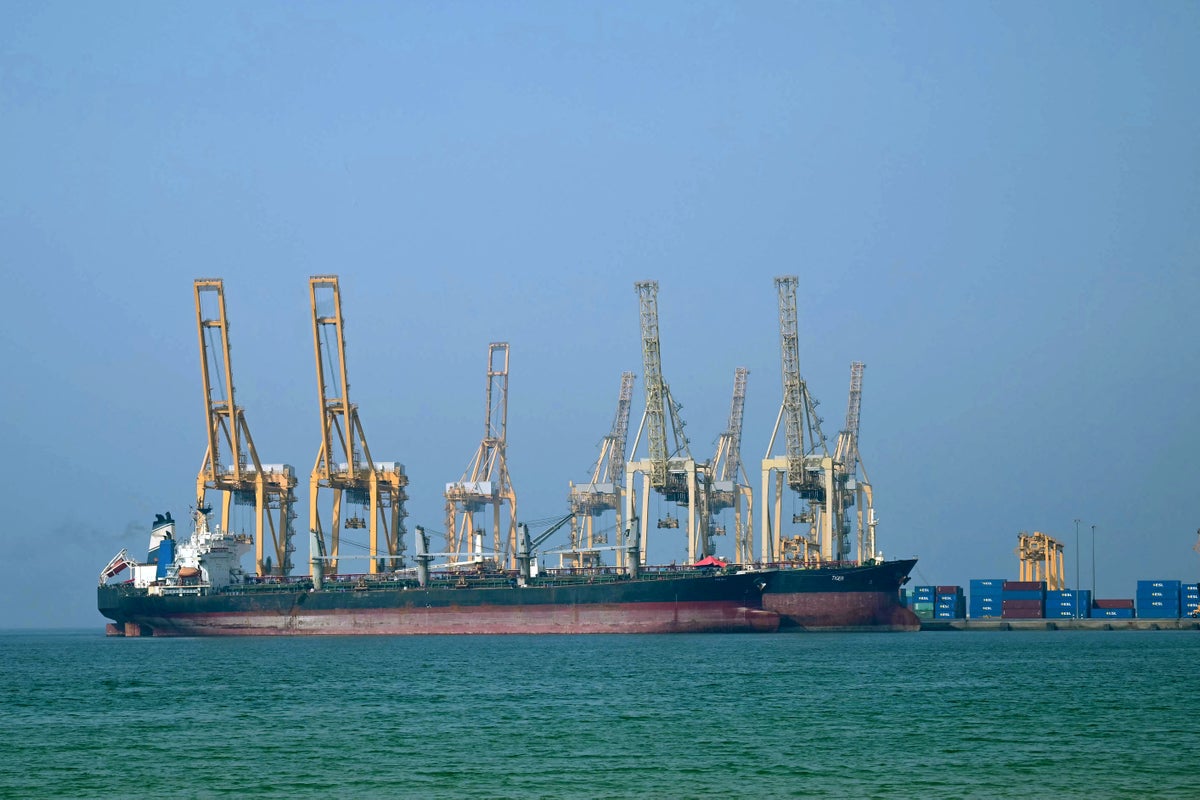
The United States is currently staring down triple-digit oil prices while its primary emergency lever remains locked. As of early March 2026, Brent crude has rocketed past $100 per barrel following military strikes in Tehran and a near-total paralysis of the Strait of Hormuz. Despite the immediate shock to American wallets—with gas prices jumping 50 cents in a single week—the Trump administration is signaling a hard "no" on tapping the Strategic Petroleum Reserve (SPR). The administration’s gamble is simple but high-stakes: they believe that record-high domestic production and a slowly refilling reserve are better kept as a "war chest" than spent on temporary price relief.
This refusal to act is not merely a matter of stubbornness. It is a calculated response to the reality of a depleted stockpile that has only recently begun to recover from the massive 180-million-barrel drawdown of 2022.
The Mathematical Trap of the SPR
The Strategic Petroleum Reserve currently holds approximately 415 million barrels. While this is an improvement from the 395 million barrels held a year ago, it remains nearly 300 million barrels short of its 714-million-barrel capacity. The "why" behind the administration's hesitation lies in the math of national security.
In a scenario where 20 million barrels of oil a day are blocked from moving through the Strait of Hormuz, the global market faces a deficit that no single reserve can fix. If the U.S. were to release oil at its maximum physical drawdown rate of 4.4 million barrels per day, the reserve would be effectively exhausted in less than 100 days. By keeping the vaults closed, the administration is betting that the market will eventually price in the risk, and that U.S. shale producers will fill the gap more effectively than a finite government stockpile.
The Production Paradox
The White House is leaning heavily on the fact that U.S. crude production hit a record 13.6 million barrels per day in 2025. The official stance is that America is now "energy dominant" enough to weather a global storm without dipping into emergency supplies. However, this narrative overlooks the breakeven reality for domestic drillers.
While prices above $100 are a boon for oil majors, the volatility makes it difficult for mid-sized shale companies to commit to new drilling. Most U.S. projects require price stability to justify the capital expenditure of fracking new wells. If the government releases oil and successfully drives prices down to $70, it might actually disincentivize the very domestic production the administration claims is the ultimate solution.
The strategy is essentially a hands-off approach that allows the "invisible hand" of the market to be the primary regulator. It is a brutal trade-off: allow consumers to suffer at the pump now to ensure that oil companies have the maximum financial incentive to drill as much as possible.
Geopolitical Chicken in the Persian Gulf
The refusal to tap the SPR is also a diplomatic signal. By keeping the reserve intact, the U.S. maintains a credible threat against further escalations in the Middle East. If the reserves were already being drained to manage a price spike, the U.S. would have significantly less leverage if the conflict turned into a multi-year maritime blockade.
Instead of releasing oil, the administration has pivoted toward military and financial intervention:
- Naval Escorts: The U.S. Navy is moving to protect non-sanctioned tankers through the Strait.
- Political-Risk Insurance: The U.S. Development Finance Corp is being utilized to lower the cost of shipping in war zones.
- Sanction Flexibility: In a pragmatic—if controversial—move, the administration has signaled it may loosen energy sanctions on certain Russian oil flows to ensure global supply remains high.
The Infrastructure Bottleneck
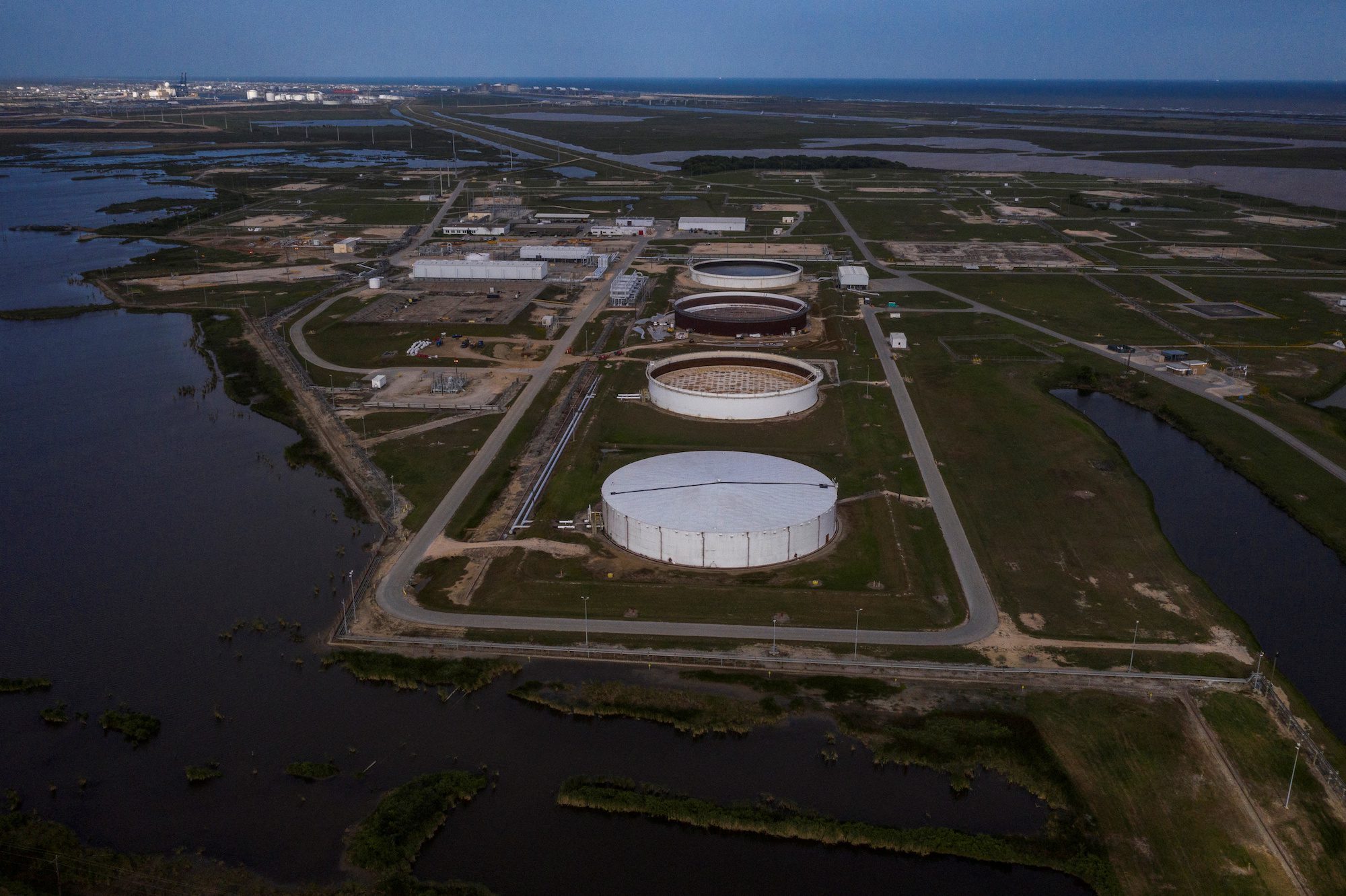
There is a technical reason for the silence that few want to admit: the SPR infrastructure is showing its age. Decades of drawdowns and refills have put immense pressure on the salt caverns in Texas and Louisiana. Maintenance at sites like Bryan Mound has slowed replenishment efforts, and there are valid concerns about how quickly the system could actually sustain a maximum-rate drawdown after years of intensive use.
The current inventory provides about 47 days of protection based on 2024 import levels. While that sounds substantial, the modern energy economy is integrated in a way that the 1973 architects of the SPR never imagined. We don't just consume crude; we consume the stability that a full reserve represents.
A High-Stakes Bet on Resilience
The choice to downplay the need for reserves is a pivot away from the "price-stabilizer" role the SPR played during the Ukraine crisis. The administration is redefining the reserve as a tool for total war rather than economic management. If domestic production continues to climb and the Navy successfully reopens the Strait, this will be remembered as a masterstroke of restraint. If prices hit $150 and the economy stalls, the decision to keep 415 million barrels underground while the country burned will be the defining failure of this energy policy.
The administration is betting that you can handle a $5 gallon of gas today to avoid a total collapse tomorrow. It is a gamble that assumes the American consumer’s breaking point is much further away than the pollsters suggest.