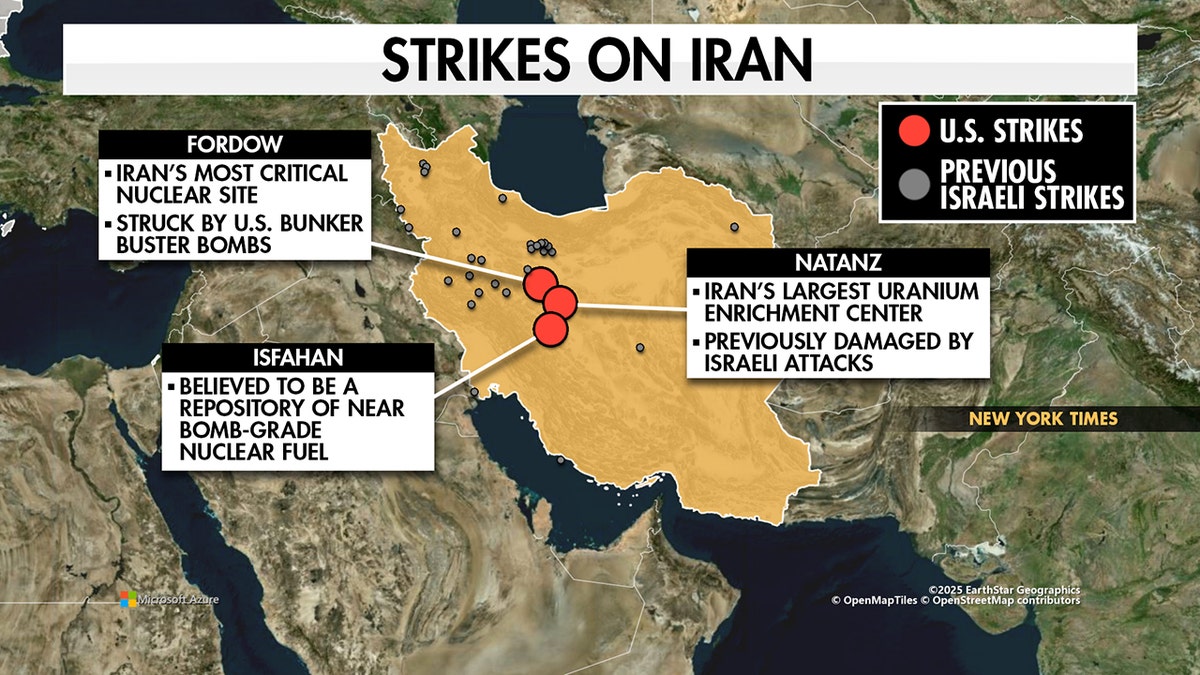
The hand-wringing from the "strategic depth" crowd has reached a fever pitch. You’ve seen the headlines: a conflict in the Middle East will "drain the arsenal," "distract the Commander-in-Chief," and leave Taiwan or the Philippines as sitting ducks for a Chinese land grab. It is a seductive narrative because it feels intuitive. It’s also completely wrong.
Asian allies aren't trembling because they fear a shortage of Patriot missiles. They are posturing because they want to lock in American subsidies before the geopolitical price of admission goes up. The idea that the U.S. military is a finite battery that loses a bar of charge in the Persian Gulf every time a drone is intercepted is a fundamental misunderstanding of how modern power projection—and industrial scaling—actually works.
The Myth of the Zero-Sum Arsenal
The most common fallacy floating around DC and Tokyo is the "Inventory Trap." Pundits argue that every SM-6 fired at an Iranian-backed proxy is one less missile available for the Taiwan Strait. This assumes the U.S. defense industrial base is a static museum.
In reality, a hot theater in the Middle East acts as a high-pressure stress test that forces the "just-in-time" supply chain into a "just-in-case" reality. For decades, the Pentagon has begged for the budget to double or triple production lines for critical munitions. Congress rarely bites during peacetime. It takes the visceral reality of active depletion to trigger the multi-year, multi-billion dollar procurement contracts that actually build the capacity Asia needs.
If you want 100,000 Long Range Anti-Ship Missiles (LRASMs) by 2030, you don't get there by sitting in a "pivot to Asia" crouch and hoping nothing happens. You get there by proving the current stockpile is insufficient through active engagement, thereby forcing the industrial gears to grind into 24/7 operation. Conflict in the Middle East isn't a distraction; it’s a catalyst for the re-industrialization of the West.
China is Not a Vulture, It’s a Bureaucracy
The "Vulture Theory" suggests that the moment the U.S. focuses on Tehran, Beijing will launch an armada across the strait. This ignores the internal mechanics of the CCP. China’s military leadership does not operate on "opportune moments" created by Twitter cycles. Their timeline for a potential move on Taiwan is dictated by internal readiness, domestic economic stability, and the hardening of their own "Fortress China" defenses.
Xi Jinping is not watching the Red Sea to see if the U.S. is "distracted." He is watching the Red Sea to see if American technology actually works.
If the U.S. and its allies effectively neutralize sophisticated Iranian missile threats, it provides a terrifying data point for Beijing: Western Integrated Air and Missile Defense (IAMD) is battle-hardened, while the PLA’s systems remain theoretical. A war in the Middle East provides the U.S. with real-world telemetry on hypersonic intercepts and drone swarm neutralization—data that is worth more than a dozen "freedom of navigation" cruises in the South China Sea.
The Carrier Fallacy and the New Geometry of Power
We need to stop talking about "Presence" as if it’s 1944. The competitor's view relies on the physical location of a Carrier Strike Group (CSG). If the carrier is in the Gulf, it’s not in the Pacific, therefore Asia is "weak."
This is 20th-century thinking.
Modern warfare is defined by distributed lethality. The U.S. is moving toward a model where land-based missiles in Japan, autonomous sub-surface vessels, and space-based targeting assets do the heavy lifting. Moving a carrier to deal with Iran doesn't "sap" the defense of the First Island Chain because the defense of that chain is increasingly being handed off to the allies themselves—as it should be.
The fear in Seoul and Manila isn't about safety; it's about the end of the free ride. For fifty years, Asian allies have treated American protection as a utility bill they didn't have to pay. A Middle East conflict forces these nations to accelerate their own "porcupine" strategies. When Japan buys 400 Tomahawks or Australia commits to nuclear subs, the region becomes objectively safer, regardless of where the USS Abraham Lincoln is floating.
The Energy Disconnect
Critics argue that an Iran war would spike oil prices, crippling the economies of U.S. allies in Asia. This is another lazy consensus point. China is the world's largest importer of crude. If the Strait of Hormuz closes or becomes a kinetic zone, Beijing’s economy—already teetering on a debt-induced demographic collapse—takes a significantly harder hit than the U.S., which is now a net exporter of energy.
An Iranian conflict doesn't "weaken" the U.S. position against China; it weaponizes the global energy supply chain against the party most dependent on it. The U.S. can weather $150 oil far longer than a Chinese manufacturing sector that is already operating on razor-thin margins.
Why "Stability" is a Trap
People also ask: "Wouldn't a peaceful Middle East allow for a cleaner pivot?"
The answer is no. "Stability" in the Middle East usually translates to a slow-motion rot where the U.S. maintains a massive, expensive, and stagnant footprint without the political will to modernize it. Active friction exposes the gaps in the Global Positioning System (GPS) resilience, the vulnerabilities in the JADC2 (Joint All-Domain Command and Control) framework, and the limitations of current electronic warfare suites.
I have seen the Pentagon spend ten years on a white paper for "Multi-Domain Operations" only to have a single week of kinetic reality in a secondary theater render the entire document obsolete. You don't learn how to fight a peer competitor by running simulations in a basement in Virginia. You learn by managing the chaos of a proxy war.
The Hard Truth for Asian Allies
If you are a leader in Taipei or Manila, the sight of the U.S. engaging Iran should be a signal to double down, not to panic. It is a demonstration that the U.S. still has the stomach for high-end kinetic operations. The worst-case scenario for Asia isn't a U.S. distracted by Iran; it's a U.S. that becomes so isolationist and risk-averse that it won't engage anywhere.
The "drain on resources" argument is a ghost story told by bureaucrats who want to keep their specific programs funded. The U.S. budget is $800 billion plus. The "drain" is a rounding error. What isn't a rounding error is the combat experience gained by the next generation of operators who will eventually be tasked with holding the line in the Pacific.
Stop asking if the U.S. can do both. Start asking how the U.S. can use the first conflict to ensure it never has to fight the second.
Buy the missiles. Harden the bases. Stop waiting for a carrier to save you. The pivot is happening, but it’s being forged in the fires of the Middle East, not in a subcommittee hearing.
The era of the "uncontested Pacific" is over. If you aren't ready to defend your own backyard while the neighborhood's biggest cop is busy elsewhere, you were never actually "defended" to begin with. You were just an observer.
Build the wall of fire. Now.