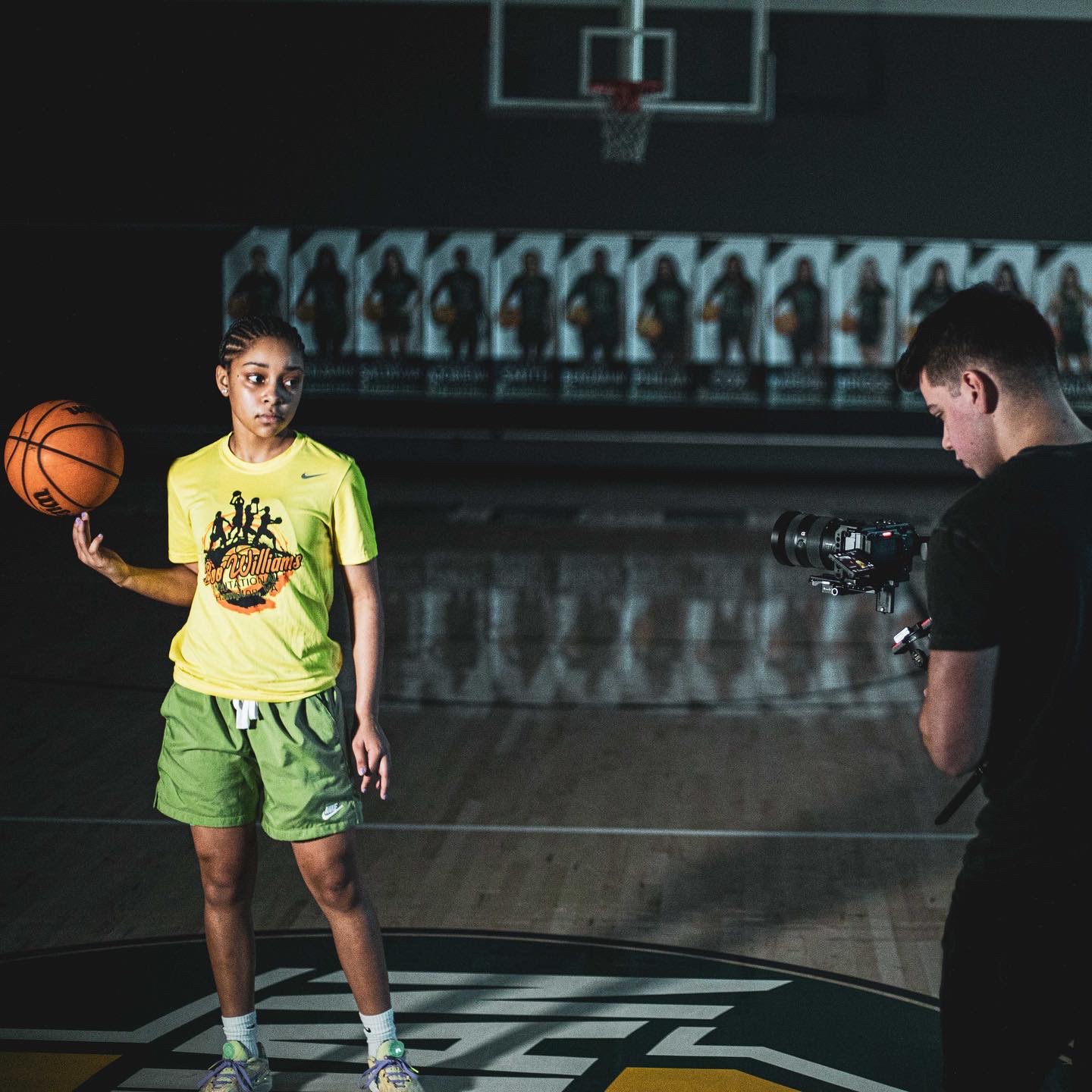
Ontario Christian just secured the CIF State Open Division girls' basketball championship, but the scoreboard only tells a fraction of the story. While the box score highlights a dominant performance by freshman sensation Kaleena Smith, the real narrative lies in how a small private school in San Bernardino County dismantled the traditional hierarchy of California high school sports. This wasn't just a win. It was a hostile takeover of a system that usually favors established dynasties like Sierra Canyon or Archbishop Mitty.
Kaleena Smith, known widely by her moniker "Special K," is no longer just a viral prospect. She is a tactical problem that the highest level of amateur basketball has no answer for. In the state final, she didn't just score; she manipulated the geometry of the court, forcing double-teams that opened lanes for teammates and systematically breaking the spirit of a defense designed specifically to stop her.
The Engineering of a Prodigy
We often talk about "natural talent" as if it’s a stroke of lightning. That is a myth sold to people who don't want to acknowledge the grind. Smith’s ascent is the result of a calculated, multi-year developmental program that treats middle school athletics with the seriousness of a professional scouting combine. By the time she stepped onto the court for Ontario Christian, she had already played more high-stakes minutes than most college seniors.
The "why" behind her success isn't just her shooting range or her handle. It is her vision. Most players her age see the ball and the rim. Smith sees the rotation of the weak-side defender before the pass is even made. This level of floor generalship is rare in the high school game, where raw athleticism usually masks a lack of fundamental IQ. At Ontario Christian, the coaching staff built a system that doesn't just feature her—it weaponizes her.
They play a brand of positionless basketball that mirrors the modern NBA. It is fast, it is spacing-heavy, and it relies on the gravity Smith creates. When she crosses half-court, the defense must react. If they don't, she pulls from 28 feet. If they do, she threads a needle to the corner. This creates a psychological weight on opponents that eventually leads to the defensive collapses we saw in the championship run.
Disruption of the Private School Pipeline
For decades, the path to a California state title ran through a few select zip codes. The elite programs relied on a gravitational pull that sucked in the best talent from surrounding counties. Ontario Christian has flipped that script. They have proven that a singular, generational talent can act as a catalyst for a program to skip the usual decade-long rebuilding phase.
This shift has massive implications for the California Interscholastic Federation (CIF). We are seeing a decentralization of talent. When a player of Smith's caliber chooses a program like Ontario Christian over a traditional powerhouse, it sends a signal to every other elite middle schooler in the state. The prestige is no longer in the jersey; it’s in the person wearing it.
The Recruitment of Atmosphere
High school basketball at this level has become an arms race of facilities, schedules, and social media presence. Ontario Christian didn't just win games; they won the "vibe" war. By creating an environment where a freshman could take the reins of a program without being buried under senior-heavy politics, they attracted a supporting cast that bought into the mission.
- Aggressive Scheduling: They sought out national tournaments to test Smith against the best.
- Media Savvy: The program embraced the spotlight rather than shying away from it.
- Tactical Flexibility: The coaching staff adjusted their defensive schemes mid-season to protect their stars from foul trouble.
The Physicality Gap
One of the overlooked factors in the state title run was the sheer conditioning of this roster. In the fourth quarter of the championship game, while the opposition showed the heavy legs of a long season, Ontario Christian looked like they were just starting their warm-ups. This is the "how" that people miss. It’s the 6:00 AM track sessions and the specialized strength training that allows a 14 or 15-year-old to hold her own against 18-year-old women.
Smith’s ability to take contact is a direct result of this preparation. She isn't just fast; she is strong. In the paint, she uses her low center of gravity to bump defenders off their spots, a veteran move that usually takes years to master. Watching her play is a lesson in leverage.
Countering the Hype Machine
There is a danger in crowning a freshman as the face of California basketball. We have seen the burnout rates. We have seen the injuries that come from the year-round circuit. The skepticism from old-school analysts isn't entirely unfounded. They argue that the pressure of carrying a program can lead to a premature plateau.
However, Smith seems to be the outlier. Her composure in post-game interviews and her demeanor during high-pressure possessions suggest a level of mental maturity that matches her physical tools. She isn't playing for the highlights; she is playing for the result. That distinction is what separates a "social media star" from a champion.
The Tactical Counter-Argument
Critics of the Ontario Christian style suggest it is too dependent on a single point of failure. If Smith has an off night, does the system hold? The state championship proved that while Smith is the engine, the rest of the car is built to high specifications. The role players hit their shots because they were in the right spots. The defense held because the communication was elite. This was a team win disguised as a superstar performance.
The Economic Reality of State Titles
Winning at this level isn't cheap. The travel, the specialized coaching, and the administrative support required to maintain an Open Division program are significant. Ontario Christian’s success will likely trigger an investment surge in rival programs. No one likes being embarrassed on a state stage, and the "arms race" in the Inland Empire is about to accelerate.
We should expect to see more specialized training academies and private-public partnerships as schools try to replicate this model. The blueprint is now public: find a centerpiece, build a modern offensive system around them, and ignore the traditional rules of program building.
Mapping the Future of the Open Division
The CIF Open Division was created to ensure the best played the best, avoiding the blowouts seen in lower tiers. By winning it all as a freshman-led squad, Smith has essentially moved the goalposts. The standard for "elite" has been raised. Teams can no longer rely on having three or four "good" players; they now need a superstar who can negate the tactical advantages of an opponent.
This creates a vacuum. Other schools will now look for their own "Special K," potentially leading to an even earlier scouting cycle. We are looking at a future where 7th and 8th graders are being evaluated for their ability to deliver a state title the moment they step on a high school campus. Whether that is healthy for the sport is a secondary concern to those in the business of winning.
Ontario Christian’s victory wasn't a fluke or a lucky bounce. It was the inevitable outcome of a program that recognized the game had changed and moved faster than its peers to adapt. They didn't just win a trophy; they provided a proof of concept for the next era of high school sports.
Watch the tape of the final five minutes. It isn't just about the points. It’s about the way the defense looks paralyzed, caught between doubling the star and covering the shooters. That is the Kaleena Smith effect in its purest form. It is a puzzle that every coach in California will be trying to solve for the next three years, and right now, none of them have the answer.