The management of radioactively contaminated soil from the Fukushima Daiichi nuclear accident has reached a point of structural paralysis. While the Japanese government has committed to removing all soil from temporary storage in Fukushima Prefecture by 2045, the mathematical reality of the volume—roughly 14 million cubic meters—collides with a total lack of domestic political appetite for final disposal sites. To solve this, the Ministry of the Environment has pivoted to a "recycling" strategy, aiming to reuse 99% of the soil in public works projects. This strategy fails to account for the breakdown in public trust and the fundamental economic misalignment between central government mandates and local municipal sovereignty.
The Triad of Waste Categorization
The strategy for managing Fukushima’s soil is governed by three distinct radioactivity thresholds, each dictating a different logistical path. Understanding these limits is essential to identifying where the bottleneck occurs.
- High-Activity Waste (>8,000 Bq/kg): Classified as "designated waste." This material is legally required to be stored in specialized facilities with enhanced shielding.
- Recyclable Threshold (<8,000 Bq/kg): This is the government’s target for reuse. Under current regulations, soil under this limit can be used as a core material for roads, seawalls, or land reclamation, provided it is covered by a clean layer of soil to limit radiation exposure to the public to 1 mSv per year.
- Clearance Level (100 Bq/kg): The international standard for material that can be treated as non-radioactive. The gap between the 100 Bq/kg clearance level and the 8,000 Bq/kg "recyclable" level is the primary source of public resistance.
The government’s reliance on the 8,000 Bq/kg limit assumes that physical shielding (clean soil cover) is a sufficient substitute for isotopic decay. However, this ignores the risk of geomorphic displacement—floods, earthquakes, or erosion—that could expose the contaminated core of a public works project, turning a road into a long-term liability.
The Physics of Volume Reduction
To meet the 2045 deadline, Japan is employing a mechanical separation process designed to concentrate radioactivity into a smaller volume. The effectiveness of this system determines the total land area required for final disposal.
- Mechanical Sifting: Large debris and stones are removed.
- Magnetic Separation: Used to pull out specific minerals that tend to bind with Cesium-137.
- Wet Scrubbing: Using water to wash fine clay particles away from larger sand grains. Since Cesium binds primarily to fine clay and silt due to their high cation exchange capacity, the "clean" sand can be repurposed while the concentrated "sludge" becomes the primary waste product.
The limitation of this process is the concentration ratio. If the initial soil is 2,000 Bq/kg, the scrubbing process might produce a large volume of 400 Bq/kg sand and a small volume of 15,000 Bq/kg sludge. The government successfully reduces the volume of "waste," but it creates a massive inventory of "reusable" soil that no prefecture outside of Fukushima is willing to accept.
The NIMBY Feedback Loop and Municipal Sovereignty
The primary obstacle to the Fukushima cleanup is not engineering, but the "Not In My Backyard" (NIMBY) phenomenon, exacerbated by Japan’s decentralized governance. Governors in prefectures such as Saitama, Shinjuku, and Ibaraki have faced immediate, organized backlash when suggesting even small-scale pilot tests for soil reuse.
This resistance is rooted in a specific failure of the Central-Local Risk Transfer Model. The central government attempts to transfer the physical risk (the soil) to the local level while retaining the decision-making authority. For a local Governor, accepting the soil offers zero political or economic upside. Unlike a nuclear power plant, which provides tax revenue and jobs, recycled radioactive soil is a passive liability. It creates a perceived "reputational damage" (風評被害, fūhyō higai) that threatens local agriculture and tourism.
Structural Deficiencies in the Recycling Pilot Programs
The Ministry of the Environment has launched demonstration projects in locations like Shinjuku Gyoen National Garden and the city of Tokorozawa. These pilots are designed to prove that radiation levels at the surface of a soil-covered mound do not exceed background levels.
The logic is flawed because it measures the wrong variable. The public is not concerned with the current Geiger counter reading; they are concerned with the permanence of the containment.
- Containment Integrity: Who maintains the "clean" soil cap over 50 or 100 years?
- Liability Assignment: If a landslide occurs in 2060 and washes 8,000 Bq/kg soil into a local river, who is financially responsible?
- Monitoring Costs: The cost of long-term environmental monitoring for thousands of "recycled" sites may eventually exceed the cost of a single, massive deep-geologic repository.
The Economic Disparity of Disposal vs. Reuse
The cost function of the Fukushima cleanup is currently hidden within the general budget, but the transition from temporary storage to final disposal requires a massive capital injection.
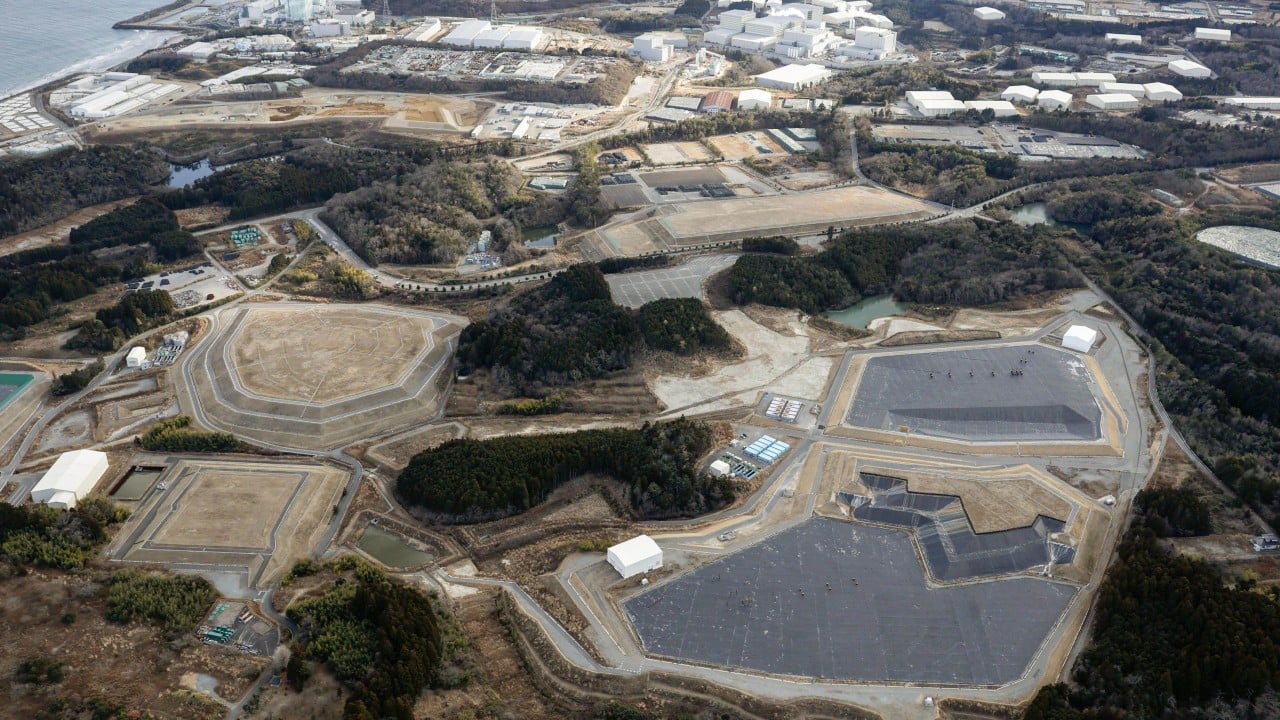
- The "Off-Site" Constraint: By law, final disposal must happen outside of Fukushima Prefecture. This was a political promise made to secure the cooperation of Fukushima residents for the construction of the Interim Storage Facility (ISF) surrounding the power plant.
- Transport Logistics: Moving 14 million cubic meters of soil requires hundreds of thousands of truck trips or specialized rail corridors. The carbon footprint and the risk of transit accidents are rarely factored into the "safety" of the recycling plan.
- Land Value Depreciation: Any land containing recycled soil will likely suffer a permanent discount in the real estate market. The government has not proposed a compensation mechanism for the loss of property value associated with these public works.
Strategic Realignment: The Decentralized Entrenchment Strategy
If Japan continues its current trajectory, the 2045 deadline will be missed, leading to a constitutional crisis between the central government and Fukushima Prefecture. To avoid this, the strategy must move away from "recycling" as a PR tool and toward an Industrial Isolation Zone model.
Instead of attempting to spread the soil across the archipelago in small increments—which maximizes public friction and monitoring costs—the government should identify "Brownfield" industrial zones or decommissioned mining sites that can be converted into high-density, long-term storage hubs.
- Financial Incentives: Shift from "proving safety" to "compensating risk." Prefectures that host final disposal sites should receive massive, multi-decade subsidies similar to those given to nuclear host communities.
- Legislative Redefinition: Reclassify "recycled soil" as a new category of industrial material with strict federal (rather than local) oversight to bypass municipal vetoes in cases of national interest.
- Isotopic Focus: The primary contaminant is Cesium-137, with a half-life of approximately 30 years. The "2045" goal is conveniently aligned with two half-lives since the 2011 accident. By 2071, the radioactivity will have decayed to 25% of its initial levels. The strategy should prioritize Time-Based Sequestration over Dispersed Reuse.
The current impasse is a result of treating a technical problem as a marketing problem. The soil cannot be "branded" into acceptability. It must be managed as a concentrated industrial liability until isotopic decay renders the volume manageable. The most viable path forward is the consolidation of waste into a few highly compensated, high-security zones rather than the current plan of 99% redistribution, which creates 14 million cubic meters of political friction.