The cancellation of 20 flights at Sardar Vallabhbhai Patel International (SVPI) Airport in Ahmedabad, coupled with the secondary stranding of passengers in major transit hubs like Dubai and Abu Dhabi, is not an isolated scheduling error. It is a textbook example of a linear disruption evolving into a non-linear systemic failure. When an aviation node as critical as Ahmedabad—which serves as a primary gateway for the industrial heart of Gujarat—experiences a cluster of cancellations, the impact is governed by the Network Effect of Hub-and-Spoke Dynamics. The failure of a single "spoke" (Ahmedabad) during peak transit windows creates an immediate "bottleneck" at the "hubs" (Dubai/Abu Dhabi), where displaced passenger volume quickly exceeds the buffer capacity of local ground operations.
The Triple Constraint of Airline Recovery Operations
Aviation reliability is dictated by the intersection of three rigid variables: Asset Positioning, Crew Duty Limitations, and Slot Perishability. When an external factor—be it extreme weather, technical ground outages, or geopolitical airspace restrictions—forces a cancellation, the airline’s recovery capability is constrained by these factors.
- Asset Positioning Geometry: Aircraft are scheduled in "rotations." An aircraft scheduled to fly Dubai-Ahmedabad-Dubai cannot simply "skip" a leg without leaving its next set of passengers stranded at the origin point. This creates a "deadhead" scenario where the physical hardware is in the wrong geographic location to fulfill its revenue obligations.
- Crew Legalities (FDP): Flight Duty Period (FDP) regulations are non-negotiable safety mandates. If a flight is delayed by four hours due to ground issues in Ahmedabad, the crew may "time out" before they can legally fly the return leg. Replacing a timed-out crew in a non-base station like Ahmedabad is an operational nightmare that often results in "rolling cancellations."
- Slot Perishability: Airport slots are the most undervalued commodity in these crises. If a flight misses its departure window at a congested hub like Dubai (DXB), it does not simply move to the next minute. It loses its priority, often pushed behind 50 other scheduled movements, compounding a 30-minute technical delay into a 4-hour operational stall.
The Dubai-Abu Dhabi Stranding Mechanism
The reason passengers found themselves stuck in the UAE while their destination was Ahmedabad is found in the Upstream Displacement Principle. International carriers like Emirates, Etihad, and IndiGo operate high-frequency shuttle routes between the Gulf and Western India.
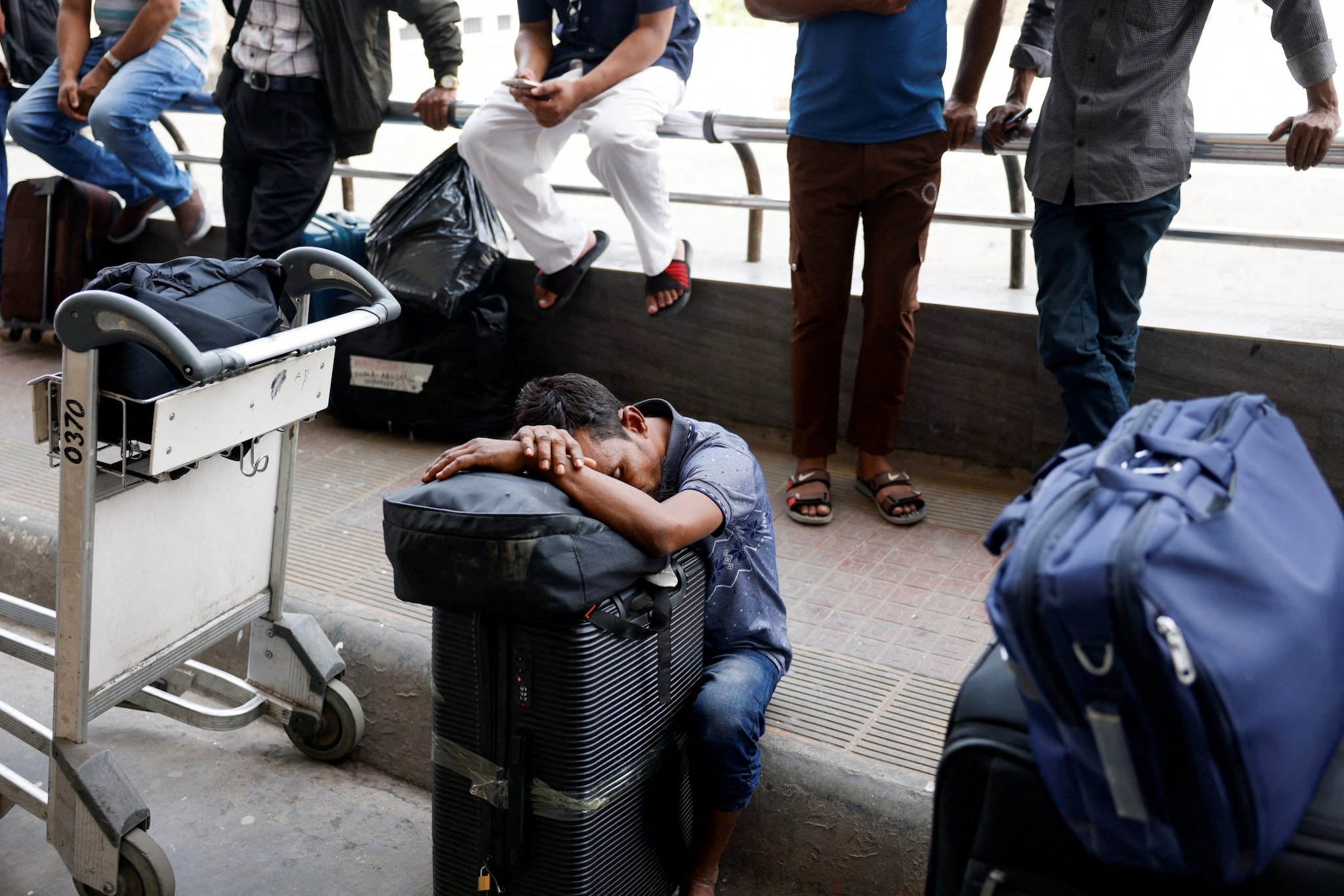
When Ahmedabad ground conditions or local operational constraints prevent landing, the "Inbound Flow Control" is triggered. Flights already in the air are diverted, but flights still on the tarmac at DXB or AUH are grounded. This creates a high-density accumulation of passengers in the transit zone. Unlike a domestic cancellation where a passenger might return home, a transit passenger in Dubai is legally and logistically "captured" within the terminal, placing an immense load on the carrier's Duty of Care Infrastructure.
The failure to provide immediate accommodation or rebooking is often a failure of Service Recovery Paradox. As the number of stranded passengers crosses a specific threshold—typically 500+ across multiple flights—the manual processes of rebooking and hotel voucher issuance undergo "systemic friction." Digital systems often crash under the weight of simultaneous rebooking requests, forcing a transition to manual processing which is orders of magnitude slower.
Quantifying the Economic Friction of Mass Cancellations
For the operator, the cost of cancelling 20 flights is not merely lost ticket revenue. The Total Economic Impact (TEI) is calculated through a composite of:
- Direct Operational Loss: Wasted fuel for taxiing, ground handling fees, and perished catering.
- Irregular Operations (IROP) Expenses: Mandatory passenger compensation, hotel accommodations, and meal vouchers as dictated by civil aviation requirements (such as India’s DGCA CAR Section 3).
- Opportunity Cost of the Fleet: Every hour a Boeing 737 or Airbus A320 sits idle on the tarmac at SVPI, it is failing to amortize its multi-million dollar lease cost.
- Network Repropagation: The cost of repositioning "ferry flights" (empty aircraft) to reset the schedule for the following day.
Infrastructure Limitations at SVPI Airport
The Ahmedabad airport has undergone significant privatization and upgrades, yet it faces the Legacy Throughput Ceiling. During peak hours, the terminal and runway capacity operate near $90%$ utilization. In a high-utilization environment, there is zero "Slack Capacity."
Slack is the buffer that allows a system to absorb shocks. When a system is optimized for maximum efficiency (high throughput), it becomes inherently fragile. A minor delay in one flight at SVPI consumes the buffer for the next three arrivals. When 20 flights are cancelled, it indicates that the "Shock Absorption" capacity of the airport's ground coordination or air traffic control (ATC) was completely breached.
The Information Asymmetry Gap
The primary driver of passenger distress in these scenarios is Information Asymmetry. The airline possesses "Real-Time Operational Data" (where the plane is, why it’s not moving), while the passenger relies on "Lagging Indicators" (the departure board).
The breakdown in communication during the Dubai/Abu Dhabi strandings reveals a gap in Cross-Border Operational Transparency. Often, the ground staff at the hub (Dubai) are not updated in real-time on the specific constraints at the spoke (Ahmedabad), leading to the "Gate-Hold Limbo" where passengers are told a flight is "delayed" for six consecutive hours before it is finally "cancelled." This delay in decision-making is usually caused by the airline's "Operations Control Center" (OCC) attempting to "protect" the flight—trying to find any possible way to fly it—rather than declaring it a loss early.
Strategic Response Framework for Systemic Aviation Stability
To prevent the recurrence of a 20-flight collapse, the focus must shift from "Efficiency" to "Resiliency."
- Dynamic Buffer Allocation: Airports like SVPI must implement "Trigger-Based Slot Throttling." If three consecutive flights are delayed by more than 60 minutes, the airport should proactively thin the schedule to prevent a total ground gridlock.
- Digital Duty of Care Integration: Airlines must move away from physical vouchers. Rebooking, hotel assignment, and meal credits should be pushed to the passenger's mobile device automatically via an IROP Management Engine. This removes the physical bottleneck at the transfer desk.
- Cross-Node Data Sharing: Establishing a "Unified Operational Picture" between the SVPI ATC and major international hubs would allow Dubai or Abu Dhabi to hold passengers in more comfortable environments (or even at their origin) before they enter the high-pressure "Transit Capture" zone.
The Ahmedabad disruption serves as a warning of the Efficiency-Fragility Trade-off. As air travel volume in India continues to scale toward 2030 projections, the current reliance on "just-in-time" scheduling without corresponding "Just-in-Case" infrastructure will lead to more frequent operational cascades. The strategy for the next decade must prioritize the building of Redundancy into the Hub-and-Spoke Architecture, ensuring that a failure in one city does not paralyze the travel of thousands across an entire continent.
The immediate tactical play for carriers involved is a Fleet Reset. Instead of attempting to "catch up" on delayed rotations, which carries the error forward into the next 48 hours, the most effective recovery is a "Hard Reset"—cancelling the tail end of the disrupted day to ensure 100% on-time departures the following morning. This sacrifices short-term revenue to stop the bleed of operational reputation and mounting IROP costs.