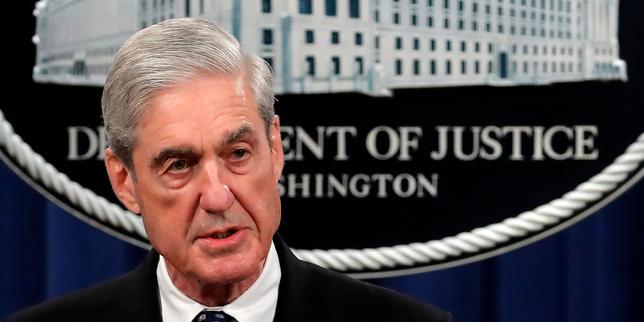
Robert S. Mueller III, the former FBI Director and Special Counsel who became the Rorschach test for American justice in the 21st century, died Friday night at the age of 81. His family confirmed his passing in a brief statement on Saturday, marking the end of a life defined by a rigid, almost monastic adherence to the rules of the federal bureaucracy. Mueller’s death follows a private battle with Parkinson’s disease, a diagnosis that only became public in late 2025, yet his departure feels like the final closure of a specific chapter in American governance. For some, he was the ultimate guardian of the rule of law; for others, he was the face of a "Deep State" that failed to deliver on its promises or, conversely, overstepped its bounds.
The Burden of the Bronze Star
To understand why Mueller became such a polarizing figure, one must look at the marrow of the man. He was a creature of the mid-century establishment, a Marine who earned a Bronze Star and a Purple Heart in the jungles of Vietnam. That experience baked into him a sense of hierarchy and duty that never wavered, even as the world around him became increasingly cynical. When he took over the FBI in September 2001—just one week before the Twin Towers fell—he inherited a "domestic" agency that he had to forcibly pivot into a counter-terrorism machine.
He didn't do this with charismatic speeches or media savvy. He did it through grueling, methodical reorganization. He stayed in the post for twelve years, a rare extension granted by President Obama, because both sides of the aisle trusted his lack of imagination. They trusted that he didn't want to be a politician. They trusted that he only cared about the file on his desk.
The Special Counsel Trap
The 2017 appointment of Mueller as Special Counsel to investigate Russian interference in the 2016 election was, in retrospect, an impossible mission. The country was looking for a hero or a villain; Mueller offered a 448-page report written in the dry, cauterized prose of a career prosecutor.
The investigation was a masterclass in professional discipline. While the President of the United States attacked him daily on social media, Mueller said nothing. While cable news pundits speculated on "sealed indictments" that would bring down the administration, Mueller simply kept filing paperwork. He secured 34 indictments and several high-profile convictions, including Paul Manafort and Rick Gates, but he famously refused to reach a "prosecutorial judgment" on whether the President had obstructed justice.
This was the core of the Mueller paradox. He believed so deeply in the Department of Justice’s policy that a sitting president could not be indicted that he refused to even suggest a crime had been committed, lest he deprive the accused of a "neutral forum" to defend himself. It was a stance of extreme legal purity that left the public, and the political establishment, in a state of terminal frustration. He followed the manual to the letter, even as the book was being burned in front of him.
A Legacy under Fire
In the years following his testimony before Congress in 2019, Mueller faded from the spotlight, but the impact of his work continued to ripple through the courts. Even as recently as 2025, new subpoenas were being issued in various inquiries into the 2016 response, a testament to the depth of the trail his team left behind.
The reaction to his death has been as divided as the country he served. Donald Trump, on his Truth Social platform, reacted with characteristic bluntness, stating he was "glad" Mueller was gone. Meanwhile, institutionalists at the DOJ and the FBI have spent the weekend mourning a man they view as the last of a dying breed: the non-partisan public servant.
Mueller’s passing signifies more than the loss of a former director. It is the end of an era where "the process" was considered sacred. We are now living in the wreckage of the institutional trust that Mueller tried, and perhaps failed, to preserve through silence and starch. He was a man out of time, a soldier who brought a manual to a street fight, and he never once considered changing the rules.
Would you like me to analyze the historical conviction rates of the Special Counsel's office compared to standard federal prosecutions?