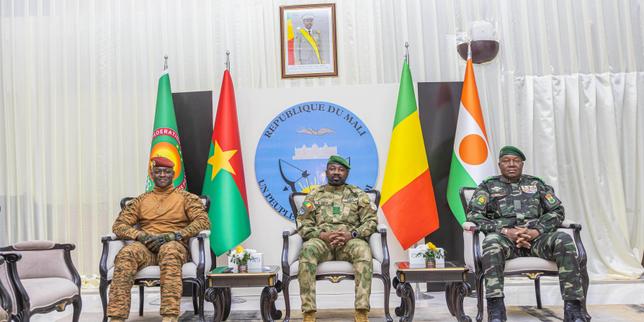
Western media loves the word "forgotten." It implies a collective amnesia, a tragic oversight by a busy world that simply failed to look at the map. When the "competitor" press writes about the Sahel—that vast strip of semi-arid land stretching across Africa—they frame it as a peripheral crisis. They paint a picture of a "zone of forgotten wars" where jihadists and military juntas play out a localized tragedy in a vacuum.
They are dead wrong.
The Sahel isn't forgotten. It is being ignored on purpose because the reality of what is happening there breaks every comfortable geopolitical narrative held by the Davos crowd and the UN circuit. This isn't a "crisis" in the sense of a temporary breakdown of order. It is the emergence of a new, brutal order that thrives on the wreckage of post-colonial states.
Stop looking for "stability" to return. Stability was a 20th-century luxury. What we are seeing in Mali, Burkina Faso, and Niger is a high-speed evolution of conflict that the West is fundamentally unequipped to understand, let alone manage.
The Myth of the Security Vacuum
The standard take is that the Sahel is a "vacuum" where the state has disappeared, leaving room for ISIS and Al-Qaeda to breathe. This is lazy thinking. There is no such thing as a vacuum in human geography. When the central government in Bamako or Niamey fails to provide security, something else fills that space instantly.
In the Sahel, the "vacuum" is actually a crowded marketplace of competing governance. You have ethnic militias like the Dan Na Ambassagou, jihadist shadow governments that collect taxes (Zakat) more efficiently than the state ever did, and Russian mercenaries who don't care about human rights metrics as long as the gold mines keep producing.
The West keeps trying to "restore the state." I have seen billions of dollars in development aid and military training poured into these regions with the assumption that the "state" is the only legitimate actor. But for a farmer in the Mopti region, the "state" is often just a guy in a uniform who shows up once a year to demand a bribe. When the jihadists show up and offer a harsh but predictable form of justice, they aren't filling a vacuum; they are winning a hostile takeover bid.
Why Military Interventions Actually Fueled the Fire
France’s Operation Barkhane wasn’t a failure because of a lack of firepower. It failed because it was an analog solution to a digital problem. You cannot kill an insurgency by hunting "high-value targets" with Reapers when the insurgency is rooted in a fundamental rejection of the borders drawn in 1884.
The "competitor" narrative laments the withdrawal of Western forces as a sign of abandonment. In reality, the presence of these forces acted as a massive subsidy for incompetent local regimes. Why bother with difficult domestic reforms when the French Foreign Legion is there to keep the capital from falling?
The moment the French left, the house of cards didn't just fall—it was set on fire. The rise of the "Alliance of Sahel States" (AES) between Mali, Burkina Faso, and Niger isn't just a series of "coups." It is a regional divorce from Western influence. It is a pivot toward a mercenary-based security model that prioritizes regime survival over democratic "benchmarks."
The Gold-Terror Nexus: Follow the Money, Not the Ideology
If you want to understand why the Sahel is burning, stop reading manifestos from Al-Qaeda in the Islamic Maghreb (AQIM). Follow the artisanal gold mines instead.
The Sahel is currently undergoing a gold rush that rivals the Klondike. Across the region, thousands of unregulated, small-scale mines have sprouted up. These aren't just holes in the ground; they are the central nervous system of the conflict.
- Jihadists tax the miners and provide "protection" against bandits.
- Military juntas use the gold to pay for Russian hardware and Wagner Group (now Africa Corps) contractors.
- Refining hubs in Dubai and elsewhere wash the gold, turning "conflict metal" into global liquidity.
This isn't a war of religion. It’s a war of extraction. The "forgotten" tag is a convenient smokescreen that allows global markets to continue absorbing Sahelian gold without asking too many questions about the blood on the bullion.
The Climate Change Misdirection
The "lazy consensus" loves to blame climate change for the Sahel's woes. The logic goes: the desert expands, resources shrink, and people fight. It’s a clean, linear narrative that makes for great NGO fundraising.
Except it’s largely a myth.
While the climate is indeed changing, the Sahel has actually seen a "greening" trend in several areas due to increased rainfall intensity over the last three decades. The conflict isn't about a lack of resources; it's about the politicization of those resources.
The real driver isn't a shrinking Lake Chad; it’s the collapse of traditional land-use agreements between nomadic herders (like the Fulani) and sedentary farmers (like the Dogon). This collapse was engineered by modern legal codes that favor landowners and political elites, pushing marginalized groups into the arms of radical insurgents. When we blame "climate," we absolve the corrupt politicians and the failed legal systems that actually ignited the dry brush.
The Russian Pivot is Not a Fad
Western analysts are waiting for the "Russian experiment" in the Sahel to fail. They point to the high casualty rates of mercenaries or the lack of long-term development strategy. They are missing the point.
Russia isn't trying to "fix" the Sahel. Russia is practicing disruption-as-a-service.
By providing a security package that ignores human rights, Moscow has bought itself a massive amount of leverage for a fraction of the cost of a single US carrier group. They have secured access to strategic minerals and created a persistent headache for the EU on its southern flank. The juntas in Bamako and Ouagadougou don't care if Russia is a "reliable partner" in the long term. They only care that Russia is a partner that won't lecture them about "inclusive governance" while their palaces are under siege.
The Migration Weapon
The Sahel is the gateway to the Mediterranean. Every time a Western diplomat talks about "stabilizing the Sahel," what they actually mean is "keeping the migrants on that side of the fence."
The juntas know this. They have turned migration into a geopolitical currency. Niger’s repeal of the 2015 law against migrant smuggling was a direct shot across the bow of the European Union. The message was clear: if you don't recognize our government and keep the aid flowing, we will open the floodgates.
The "forgotten war" is actually the front line of Europe's internal identity crisis. The destabilization of the Sahel ensures a steady stream of displacement, which in turn fuels the rise of populist movements in Europe. It is a feedback loop of chaos that serves the interests of every actor involved except the people actually living in the region.
The Actionable Truth for the Outsider
If you are looking at the Sahel as a place to "save," you have already lost. The era of Western-led liberal interventionism died in the sands of northern Mali. To operate in, or even understand, this region now requires a total shift in perspective:
- Acknowledge the Sovereignty of Chaos: The juntas are not temporary. They are the new political reality. Engaging with them on a purely moralistic basis is a dead end.
- Decentralize Everything: The "nation-state" in the Sahel is a ghost. Real power lies with local strongmen, religious leaders, and trade syndicates. If your strategy relies on a signature from a central government, your strategy is worthless.
- Track the Hardware, Not the Hearts and Minds: Stop measuring "public opinion." It’s irrelevant in a theater where the only thing that matters is who owns the drones and who controls the artisanal mine sites.
The Sahel is not a "forgotten" corner of the world. It is a glimpse into a future where global powers compete through proxies, where formal borders are irrelevant, and where the line between "terrorist group" and "legitimate government" is blurred beyond recognition.
The "competitors" want you to feel pity for a region lost in time. I’m telling you to pay attention, because the Sahel is ahead of us, not behind. It has already adapted to the collapse of the international order that the rest of us are still pretending exists.
Burn the old maps. The new ones are being written in gold and blood, and they don't have "State" written anywhere on them.
Next time you hear a "crisis" described as forgotten, ask yourself who benefits from you looking the other way. In the Sahel, the answer is everyone except the people dying for the gold under their feet.
Do not look for a solution where there is only a metamorphosis.