The committee room is a high-ceilinged cage of mahogany and history. When the witnesses arrive, they sit under the harsh, unblinking glare of the television lights, forced to account for their movements, their decisions, and their allegiances. It is a theatre of accountability. Or, at least, that is the theory.
Last week, that theatre went dark. Also making headlines lately: Why political parties are stalking your postcode this election.
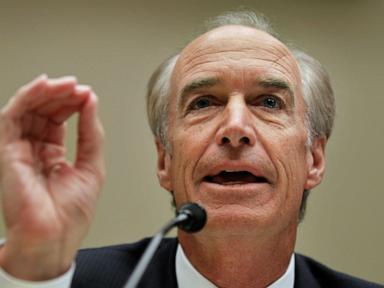
The chair sat empty. A nameplate—a sharp, white card bearing the identity of a key figure in the Mandelson vetting scandal—remained on the table, mocking the MPs who had gathered to question them. This was not merely an absence. It was a statement. The witness had effectively pulled the rug out from under the inquiry, deciding that the cost of transparency was higher than the cost of defiance.
To understand why this matters, you have to stop looking at the spreadsheets. You have to stop reading the leaked memos and the dry summaries of public appointments. Forget the technicalities of the vetting process for a moment. Look instead at the mechanics of influence. Additional information on this are explored by The New York Times.
Vetting in the halls of British power is rarely a clinical procedure. It is not simply checking if someone paid their taxes or if they have a criminal record. It is an act of curation. It is the quiet, essential work of determining who belongs in the inner sanctum and who remains on the outside. When a name appears on a list for a significant role—be it in a think tank, a trade body, or a government board—it is the result of a thousand whispered conversations. It is a network of trust.
Peter Mandelson, a name that has spent decades woven into the fabric of British politics, is a creature of that network. He operates in the spaces between formal institutions. He understands that influence is not held; it is exercised. When questions arose regarding the vetting process surrounding appointments associated with his circle, the public was told that rules were followed. Everything was by the book. But in the world of Westminster, the "book" is often a loose-leaf binder that gets rewritten whenever the protagonist needs a new chapter.
When the MPs on the committee sent out their summons, they were not just asking for information. They were attempting to assert the supremacy of the legislature over the unelected shadow-machine that actually runs the country.
The refusal to appear is a signal. It tells the public that there is a hierarchy of accountability. Some people must stand in the light and answer questions. Others, the architects, the fixers, and the gatekeepers, are permitted to operate in the gloom, safe behind the walls of "advice" and "proprietary processes."
Consider the person who chose not to show up. They are likely not a villain in a cartoonish sense. They are probably a person who believes, with absolute conviction, that they are doing the necessary work to keep the engine of government running smoothly. They believe that if the public truly understood the granular, often messy, and pragmatic nature of these appointments, the system would collapse. They view their silence not as a crime, but as a duty.
That is the danger.
When public officials or their crucial advisors decide they are beyond the reach of scrutiny, the democratic contract begins to fray. It is a slow, silent process. It begins with one empty chair. Then it becomes two. Then it becomes a precedent. Soon, the committee room is just a room, and the questions are just noise that nobody feels compelled to answer.
There is a specific kind of arrogance in this silence. It is the arrogance of those who believe they are the adults in the room, protecting the children—the voters—from the brutal reality of how the world actually works. They assume that if they were to testify, they would be misunderstood. They assume that their actions, while perhaps opaque, are ultimately for the greater good.
But democracy does not function on the "greater good" as defined by the people in the rooms. It functions on the ability to challenge, to verify, and to hold power to account. When that is taken away, we are left with a veneer of governance. We see the MPs asking the questions, we see the cameras recording the answers, but the truth remains locked in an office where the light does not reach.
The Mandelson vetting scandal is not just about the specific appointments. It is about the question of who owns the process of government. Is it the public, represented by the committee? Or is it the informal coalition of advisors, donors, and career political operatives who move seamlessly from one position of power to the next?
By refusing to testify, the key figure has crystallized the issue. They have stripped away the bureaucratic excuses. There is no talk of "scheduling conflicts" or "privacy concerns" that can hide the raw nature of this standoff. It is a simple binary: you are either subject to the law and the scrutiny of the people’s representatives, or you are above it.
The MPs are now left with a choice. They can bluster. They can issue sternly worded reports that will be filed away and forgotten. They can hold another hearing, and another, and watch more chairs remain empty. Or they can fundamentally change the way they wield power.
If the committee cannot force a witness to speak, then the committee is not a check on power. It is a prop. And if it is a prop, the people who play the leading roles—the civil servants, the advisors, the fixers—will continue to walk off the stage whenever the script becomes inconvenient.
There is a specific weight to this kind of political cynicism. It settles into the bones of a country. It changes the way people talk about their government. It moves the conversation from "What is the government doing?" to "Who is actually in charge?"
When the answer to that question becomes "We don't know," the structure of society begins to lean.
We see this pattern across modern politics. The barrier between the official path and the shadow path is thinning. In every capital, there are rooms where decisions are made that affect thousands, and the people in those rooms are rarely the ones standing for election. They are the ones who draft the policies, vet the candidates, and manage the optics. They are the infrastructure of power.
When we allow them to go unchecked, we are essentially saying that we are fine with the architecture of our state being invisible. We are saying that we are comfortable with a government that exists in two tiers: the one we see, and the one that steers.
The silence of this witness is loud. It echoes through the empty committee room. It is a reminder that while the machinery of democracy is loud and performative, the machinery of control is quiet and persistent.
We are left to wonder what was said in the private emails, what was discussed in the hushed phone calls, and what calculations were made to decide that it was safer to insult a parliamentary committee than to answer them. We will likely never know. That, of course, is the entire point.
The empty chair remains. The committee session ends. The doors swing shut, sealing the secrets back inside the mahogany walls, leaving the rest of us on the outside, looking in at a reflection of a democracy that is not quite as open as we were promised.
Power, when challenged, does not always fight. Sometimes, it just refuses to acknowledge the question. And that refusal is the most honest answer we are ever going to get.