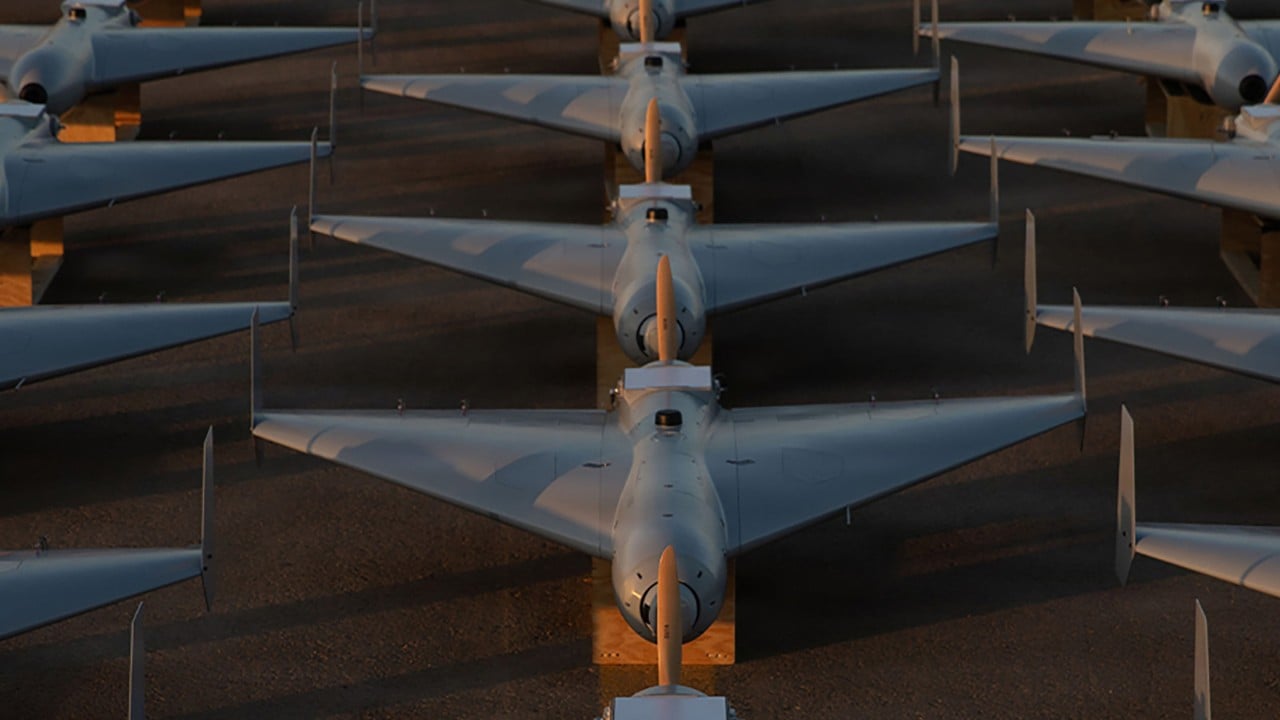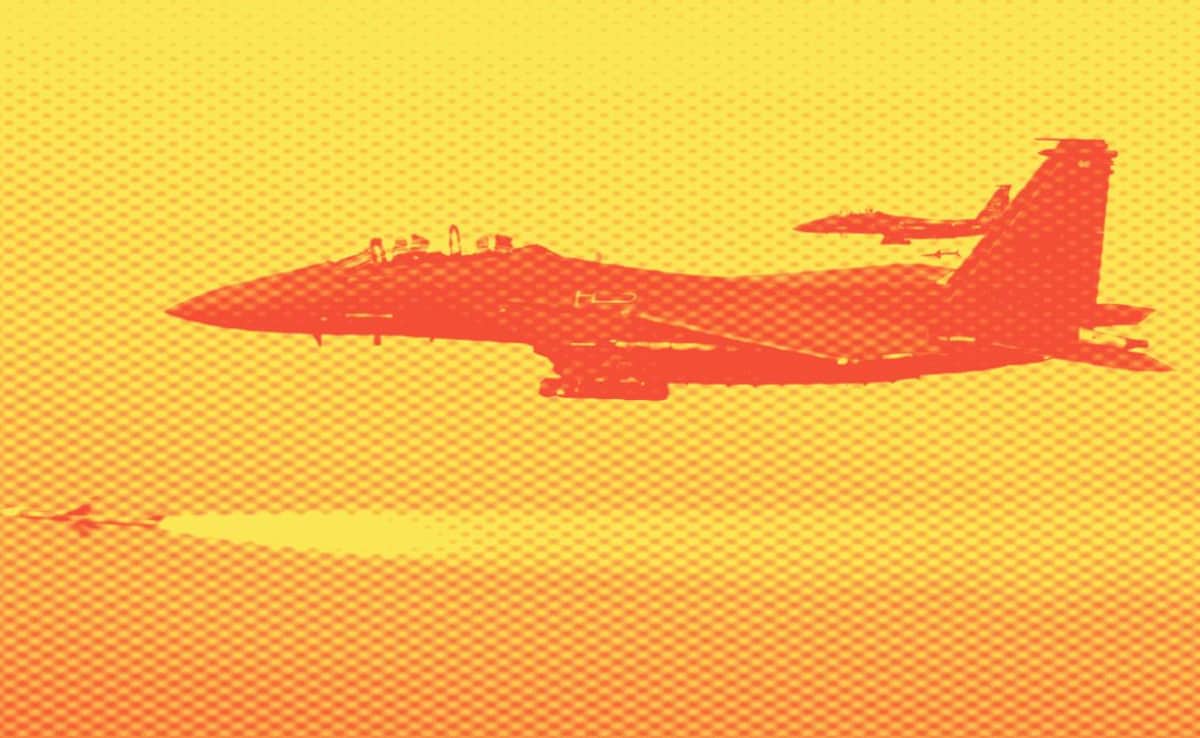
A single line of code can travel faster than a predator drone.
In a dimly lit command center thousands of miles from the Iranian desert, an algorithm sifts through a mountain of digital noise. It ignores the static. It bypasses the mundane. It looks for a specific heat signature, a pattern of movement, a heartbeat that matches a database of threats. When the US military employs AI to assist in strikes, the "kill chain" compresses from hours to seconds.
But the explosion isn't the only impact.
Across the world, in the high-tech corridors of Shenzhen and the government offices of Beijing, those same strikes are felt as a different kind of shockwave. For Chinese analysts, the use of AI-enhanced weaponry in the Middle East isn't just a matter of regional security. It is a terrifying proof of concept. It is a flashing red light on a dashboard that has been screaming for years.
The Architect’s Dilemma
Consider a hypothetical engineer named Chen.
Chen works for a semiconductor firm in Shanghai. He spends fourteen hours a day perfecting the architecture of a chip that is thinner than a human hair. Before the recent escalations, Chen’s goal was simple: make the chip faster for consumer smartphones. He wanted better graphics for gamers. He wanted smoother video calls for families.
Now, the pressure has shifted. Chen isn’t just an engineer anymore; he is a soldier in a cold war of bits and bytes. Every time an American AI identifies a target with pinpoint accuracy, Chen’s superiors receive a memo. The message is always the same. We are behind. Our reliance on Western architecture is a leash. Cut it.
The geopolitical reality is that AI is only as good as the hardware it runs on. If the US can use AI to dominate a physical battlefield, it can certainly use its control over the global semiconductor supply chain to dominate the digital one. This realization has turned China’s drive for "tech self-reliance" from a long-term economic goal into an immediate existential necessity.
The Invisible Chokepoint
Washington knows this.
The strategy is twofold: use the most advanced AI to maintain military superiority, while simultaneously tightening the screws on the exports of the very chips required to build that AI. It is a pincer movement.
For years, the global tech industry thrived on a philosophy of open borders and shared innovation. We lived in a world of "just-in-time" manufacturing. If you needed a specialized GPU, you bought it from Nvidia. If you needed the software to run it, you looked to Silicon Valley.
That world is dead.
The "ghost in the target"—the AI that facilitates these strikes—depends on a specific type of high-end silicon that China currently struggles to produce at scale. When the US demonstrates the lethality of this tech, it provides a vivid, violent reminder to Beijing that their entire digital infrastructure is built on a foundation they do not own.
It is a vulnerability that keeps leaders awake at night.
Suppose you are a strategist in Beijing. You watch footage of a precision strike. You don't see the politics of the Middle East. You see a mathematical equation. You see that the US has integrated data processing, satellite imagery, and autonomous decision-making into a singular, fluid weapon. You also know that the "brains" of that weapon are off-limits to you.
The Great Decoupling
The result is a frantic, expensive, and deeply human scramble.
China is currently pouring billions into "The Big Fund," a state-backed initiative to jumpstart their domestic chip industry. But money cannot buy time. It cannot instantly replicate thirty years of institutional knowledge held by ASML in the Netherlands or TSMC in Taiwan.
The stakes are felt in the smallest interactions.
It’s in the way a Chinese startup founder has to pivot their entire business model because they can no longer access the A100 chips they need for their neural networks. It’s in the way academic researchers in Beijing are suddenly finding themselves "de-indexed" from international collaborations.
There is a palpable sense of friction.
We often talk about "decoupling" as if it’s a neat divorce—two entities walking away from a shared house. In reality, it’s more like trying to separate two nervous systems that have grown together for decades. It is painful. It is messy. And it leaves both sides scarred.
The Data War
If chips are the hardware, data is the fuel.
One of the reasons the US has been able to refine its AI-assisted targeting is its access to vast, diverse datasets from decades of operations. Every flight, every sensor ping, and every intercepted transmission is fed back into the machine. The AI learns. It evolves.
China understands that to compete, they need their own data loops. This is why we are seeing an unprecedented push for "smart cities" and total digital integration within Chinese borders. It isn’t just about domestic surveillance; it is about harvesting the raw material needed to train the AI of tomorrow.
They are building a digital mirror of their society, hoping that within that mirror, they can find the secrets to the same precision and efficiency the US displays on the battlefield.
A Fragmented Future
We are moving toward a "Splinternet"—a world where the tech you use depends entirely on which side of the geopolitical fence you stand on.
Imagine a future where a phone made in California cannot talk to a cell tower in Guangzhou. Imagine a world where the very language of mathematics is divided into "Western AI" and "Eastern AI."
This isn't just about trade deficits or military posturing. It's about the fundamental way humans interact with the world. Technology was supposed to be the great equalizer. It was the bridge that would span the gaps of culture and geography. Instead, it is becoming the ultimate barrier.
The irony is that the more the US uses AI to "intensify" its strikes and protect its interests, the more it accelerates the very thing it fears: a China that is completely independent, technologically sovereign, and fundamentally unreachable.
The Cost of Certainty
There is a specific kind of coldness in an AI-assisted strike.
It removes the hesitation. It eliminates the "fog of war" for the operator, replacing it with a high-definition, color-coded interface of certainty. But that certainty is an illusion.
Every strike creates a reaction. Every technological leap by one superpower forces a desperate, panicked sprint by the other. We are caught in a feedback loop where the quest for security creates a world that is inherently more volatile.
Chen, our engineer in Shanghai, doesn't think about global volatility.
He thinks about the microscopic layers of his chip. He thinks about the microscopic imperfections that lead to a "failed" batch. He knows that his work is no longer just about consumer electronics. He knows that the future of his country’s sovereignty might depend on whether he can solve a specific heat-dissipation problem in a laboratory.
He feels the weight of a billion people on his shoulders every time he looks through a microscope.
The US military might be hitting targets in Iran, but the real damage is being done to the global order. The era of the "global village" is being replaced by the era of the "fortress state."
In this new world, the most valuable resource isn't oil, and it isn't even data.
It is the ability to stand alone.
As the algorithms get smarter and the strikes get faster, the space for diplomacy and shared progress shrinks. We are building machines that can think for us, but we are using them to reinforce our oldest, most primitive tribalisms.
The silicon is hard. The logic is cold. But the consequences are human, and they are permanent.
The next time a headline flashes across your screen about a precision strike or a new export ban, don't look at the numbers. Look at the invisible lines being drawn across the map. Look at the engineers like Chen who are being told that their minds are now munitions.
The ghost in the target isn't just a piece of software. It’s the shadow of a future where we have successfully built a world of perfect, automated walls.