The rumors surrounding Volkswagen exploring a defense-related partnership in Israel represent more than a simple expansion of a corporate portfolio. It is a collision between a dark historical legacy and the cold, modern pressure of an automotive industry in freefall. For a company that has spent the better part of eighty years trying to scrub the grease of its wartime origins from its public image, even the slightest pivot toward the arms trade signals a desperation that should worry every shareholder in Wolfsburg.
Volkswagen is currently battling a perfect storm. The transition to electric vehicles has been clumsily executed. Software glitches have plagued their newest models. Meanwhile, Chinese competitors are eroding their market share in Asia and Europe with a speed that felt impossible five years ago. When a carmaker starts looking at defense contracts, it isn't usually because they’ve found a brilliant new "growth sector." It is because their primary business is failing to sustain the massive overhead of a global empire.
The Heavy Weight of History
Volkswagen cannot move through the world like a standard corporation. Most firms have the luxury of a clean slate, but VW carries the "People’s Car" heritage, a project born from the Third Reich. This isn't just trivia; it is the fundamental reason why the company has historically steered clear of anything resembling military hardware. The optics are not just bad; they are potentially radioactive.
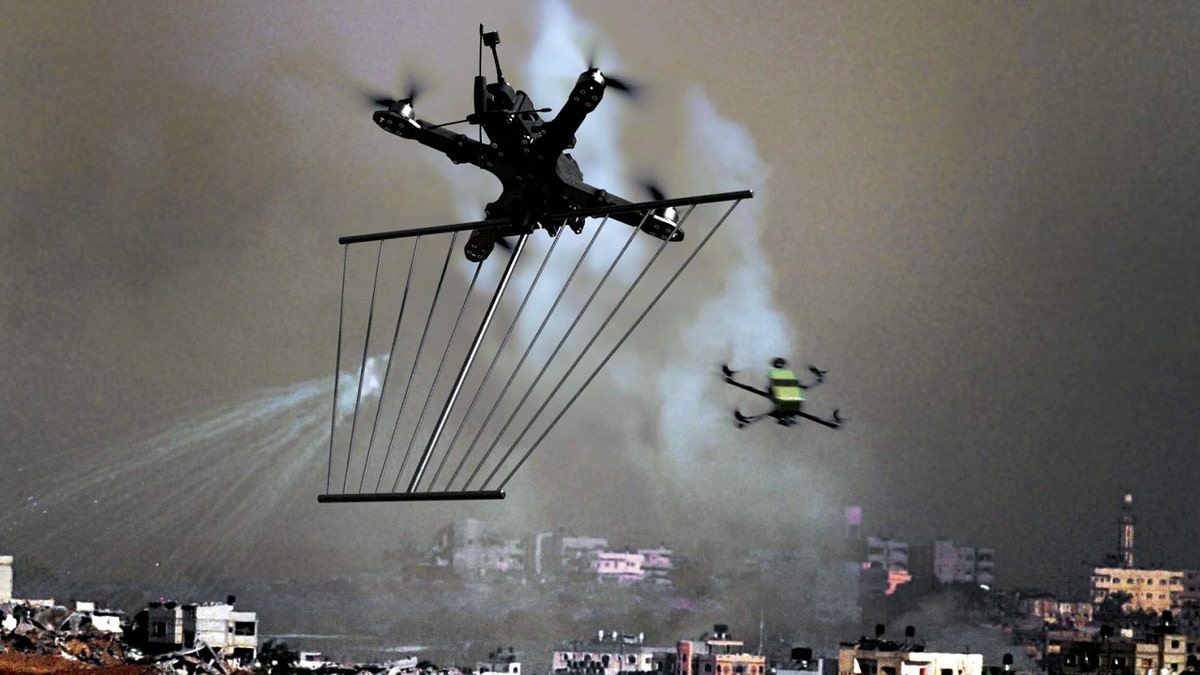
Entering the Israeli tech and defense ecosystem brings these sensitivities into sharp focus. Israel is the global center for cybersecurity, autonomous systems, and sensor fusion—technologies that are, on paper, dual-use. A sensor that helps a Tiguan avoid a pedestrian is functionally similar to a sensor that helps a loitering munition find a target. By engaging with firms deeply embedded in the Israeli defense establishment, Volkswagen is effectively ending its long-standing policy of military neutrality.
The Technical Gravity of the Deal
The draw for VW isn't just about selling vehicles to a military fleet. It is about the software. Modern warfare is increasingly fought with algorithms, and Israel’s defense sector is arguably the most advanced in the world at integrating AI with physical hardware.
Volkswagen’s internal software unit, Cariad, has been a documented disaster. Delays in software development pushed back the launch of crucial Porsche and Audi models, costing the group billions. By looking toward Israel, VW is likely trying to bypass its own internal incompetence. They are looking for "battle-tested" code. They want systems that can handle massive amounts of data in real-time without crashing.
However, the cost of this technical shortcut is high. Military contracts come with strings. They involve export controls, security clearances, and the risk of being caught in the middle of geopolitical crossfire. If VW integrates Israeli defense-grade tech into its global platforms, it may find itself barred from certain markets or subject to intense scrutiny from regulators who view such technology as a security risk.
Financial Desperation in Wolfsburg
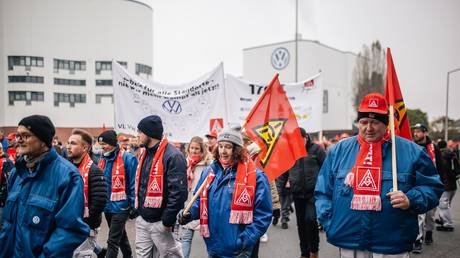
To understand why a company with VW’s baggage would even consider this, one must look at the balance sheet. The company recently signaled that factory closures in Germany—once an unthinkable prospect—are now on the table. The labor unions are preparing for war. The profit margins on mass-market EVs are razor-thin or non-existent for the German giant.
Defense contracts offer something that the volatile consumer car market does not: stability. Government contracts are long-term, inflation-protected, and usually involve high margins. For a CEO under fire, the defense sector looks like a life raft. But it is a life raft made of lead.
The German government, which holds a significant stake in VW through the state of Lower Saxony, finds itself in a precarious position. On one hand, Berlin is pushing for a more capable European defense industry. On the other, the political fallout of the national carmaker becoming an arms merchant is immense.
The Dual Use Trap
The line between "mobility solutions" and "combat support" is vanishing. We are seeing a trend where automotive giants attempt to rebrand themselves as "tech companies." This rebranding provides a convenient veil. If VW provides the chassis for an autonomous transport vehicle used by the military, they can argue they are simply a hardware supplier.
This argument rarely holds up under investigative scrutiny. In the modern era, the provider of the platform is held responsible for the platform's ultimate application. If a Volkswagen-engineered autonomous system is used in a strike, the brand damage will be irreversible. The "Das Auto" slogan was meant to project reliability and simplicity. There is nothing simple about the ethics of modern drone warfare or automated border enforcement.
The Competitive Context
Volkswagen isn't the first to look at the defense sector, but it is the most significant. Companies like GM and Toyota have long had "Defense" wings, but those were established decades ago and are largely siloed from their consumer brands. VW is attempting this pivot at a moment of extreme global tension and internal weakness.
Tesla has already blurred these lines with Starlink and its various Department of Defense collaborations. But Tesla is a "disruptor" brand that thrives on controversy and high-risk maneuvers. Volkswagen is a legacy institution. It represents the German middle class, the stability of the Eurozone, and a specific type of post-war corporate social responsibility. A move into arms is a confession that the old model is dead.
Engineering the Future or Managing the Decline
There is a technical argument to be made that the car of the future is essentially a robot on wheels. If that is true, then the best robotics engineers are currently working in defense. By tapping into the Israeli startup scene, VW is hunting for the talent that can save its EV program.
The problem is that talent follows the money, and the money in defense is currently much greener than the money in consumer cars. If VW starts siphoning its best engineering minds into military-adjacent projects, the quality of its consumer vehicles will continue to slide. This creates a death spiral where the company becomes more dependent on the very contracts that are destroying its reputation.
The automotive industry is currently littered with the remains of companies that tried to be everything to everyone. VW’s strength was always its scale and its engineering precision. By pivoting toward the defense sector, they are admitting that their engineering is no longer enough to win on the showroom floor.
Investors should be asking why the company feels the need to look at arms deals while its core product line is aging and its software is failing. It suggests a leadership team that has run out of ideas for how to build a better car. They are instead looking for a captive customer—the state—to bail them out of their own strategic failures.
The Geopolitical Minefield
Engaging with Israel at this specific moment in history is a choice that carries immense weight. The global political climate is hyper-polarized. Corporations are no longer allowed to be "apolitical." Any deal signed now will be viewed through the lens of current conflicts, and Volkswagen will find itself forced to take sides in a way that its business model isn't built to handle.
If the deal moves forward, expect a massive backlash from both environmental groups and human rights organizations. The irony of a "green" transition being funded by military hardware sales will not be lost on the public.
Volkswagen is at a crossroads. One path leads back to the grueling work of fixing its manufacturing and software to compete with the likes of BYD and Tesla. The other path leads toward the lucrative but morally complex world of defense contracting. Choosing the latter may provide a short-term boost to the share price, but it will permanently alter the DNA of the company. Once a carmaker becomes a defense contractor, it can never truly go back to being "The People's Car." The transition is one-way, and the destination is a world where the company's survival depends not on the quality of its cars, but on the frequency of global conflict.
The board in Wolfsburg is playing a high-stakes game. They are betting that the public's memory is short and that the need for "security tech" will outweigh the historical and ethical baggage of the brand. It is a cynical bet. It assumes that the soul of the company is for sale if the price is high enough to cover the losses of the EV division.
Whether the deal with Israel matures into a full-scale military partnership or remains a quiet "tech collaboration," the signal has been sent. Volkswagen is no longer just looking to put a car in every driveway. It is looking for a way to survive an era of disruption by any means necessary. The internal rot that led to Dieselgate appears to have evolved into a different kind of systemic risk—one that trades the company's remaining moral capital for a seat at the table of the global defense industry.
The real story isn't the deal itself. It is the admission of defeat that the deal represents. A healthy, confident Volkswagen would never touch this. A desperate one has no choice.