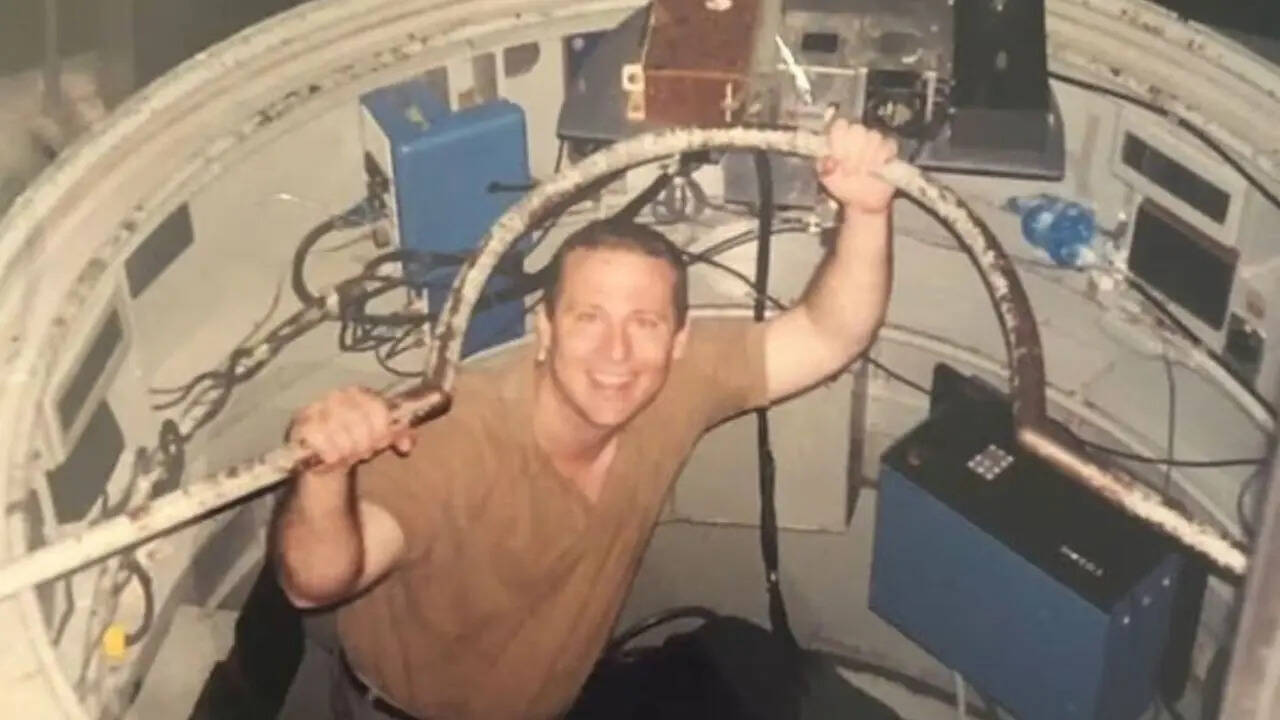
While the rest of the world slept, Michael David Hicks was staring at the abyss. He wasn’t looking for God or the meaning of life, though he might have found fragments of both in the data streams. He was looking for rocks. Specifically, the kind of rocks that carry enough kinetic energy to end a civilization.
He spent his nights—and many of his days—at NASA’s Jet Propulsion Laboratory (JPL), hunched over monitors that glowed with the cold, flickering light of distant suns. To the average observer, the data looked like noise. To Mike, it was a map. He was one of the planet’s premier sentinels, a man who dedicated his existence to the Near-Earth Object (NEO) program. His job was to track the wanderers of our solar system: the asteroids and comets that occasionally drift too close to our fragile blue marble. For a different perspective, see: this related article.
Then, the data stopped. Not the orbital mechanics, but the man himself. In late 2023, Michael David Hicks passed away. There were no flags at half-mast across the nation. No scrolling news tickers on the major networks. He slipped away with the same quiet humility that defined his career, leaving a void in the scientific community that is only now beginning to be felt by those who understand what he actually did for us.
The Physics of the Unseen
Imagine a pitch-black room the size of a cathedral. Somewhere in that room, a pebble is flying toward your head at thirty times the speed of a rifle bullet. You can’t see it. You can’t hear it. But if you have a flashlight and you know exactly where to point it, you might catch a glint of light off the surface of that pebble before it makes contact. Further coverage on this trend has been provided by Al Jazeera.
Mike Hicks was the man holding the flashlight.
He specialized in the physical characterization of these objects. It wasn’t enough to know where an asteroid was; Mike wanted to know what it was. Was it a solid chunk of nickel-iron, or a loose "rubble pile" held together by nothing more than its own weak gravity? This distinction is the difference between a successful deflection mission and a catastrophic failure. If we ever need to nudge a space rock out of our path, we need to know if we are hitting a bowling ball or a bag of gravel.
He worked extensively on the NEOWISE mission, a space telescope that surveyed the sky in infrared. Because asteroids are dark and cold, they are nearly invisible to standard telescopes. But they emit heat. By capturing that faint thermal glow, Mike and his team could calculate the size and reflectivity of thousands of objects. He turned the invisible into the quantifiable.
A Life Measured in Light Curves
To know Michael was to understand a man who spoke the language of light curves. When an asteroid rotates, its brightness changes. By plotting these fluctuations over hours or days, Mike could deduce the shape of the object. He could tell you if it was elongated like a cigar or spherical like a moon.
He didn't do this for the glory. In the hierarchy of NASA, the astronauts get the parades and the rover drivers get the documentaries. The people who study the "vermin of the skies"—as some early astronomers dismissively called asteroids—work in the shadows. Yet, their work is the ultimate insurance policy for the human race.
Mike was a fixture at the Goldstone Deep Space Communications Complex. He would spend grueling shifts analyzing radar echoes bounced off passing rocks. It is a tedious, exacting discipline. One decimal point out of place and the trajectory is ruined. Mike never missed a decimal point. He had a reputation for a kind of dogged, quiet brilliance. He was the person you went to when the data didn't make sense, the one who could find the signal in the static.
But there was a human cost to this vigilance. The schedule of an observational astronomer is a jagged thing. It is a life lived in opposition to the sun. You miss dinners. You miss bedtimes. You trade the warmth of a family living room for the sterile chill of a laboratory or the thin, biting air of a mountain-top observatory. Mike gave those years to us. He watched the dark so we didn't have to.
The Great Silence
When a person like Mike Hicks passes, the loss isn't just emotional; it’s an erosion of institutional memory. There are things he knew about the behavior of certain "problematic" asteroids that aren't written in any manual. He had an intuition for the data, a "feel" for the way a comet's tail might interfere with its observed position.
His colleagues at JPL describe a man who was as generous with his time as he was meticulous with his research. In an academic world often defined by sharp elbows and a race for citations, Mike was an anomaly. He mentored younger scientists with a patience that suggested he knew the task of defending the Earth was a multi-generational relay race. He was just one runner, and he wanted to make sure the next person was ready to take the baton.
Why did his death go so largely unnoticed by the public? Perhaps because he was too successful. We live in a world where we only notice the "watchmen" when they fail. If an asteroid hits a city, everyone knows the name of the agency that missed it. If the watchmen do their jobs perfectly, nothing happens. The sky remains empty. The sun rises on a boring, safe Tuesday. We enjoy the luxury of our ignorance because people like Mike Hicks spent forty years being worried on our behalf.
The Invisible Stakes
It is easy to dismiss asteroid tracking as science fiction. We’ve seen the movies; we’ve laughed at the over-the-top drama of oil drillers in space. But the reality is far more sobering. The Chelyabinsk meteor that exploded over Russia in 2013 wasn't even on the radar. It was a "small" one, only about twenty meters across, yet it shattered windows for miles and injured over a thousand people.
If a medium-sized asteroid—the kind Mike tracked daily—were to strike a populated area, the energy release would dwarf the largest nuclear weapons in our arsenal. We aren't talking about a bad day at the office. We are talking about the end of a nation’s economy, the displacement of millions, and a global climate shift.
Mike understood these stakes at a cellular level. He didn't talk about them in doomsday terms, though. He talked about them in terms of "eccentricity," "albedo," and "semi-major axes." He took the terrifying and made it mathematical. He took the chaotic and made it predictable. By categorizing the threats, he stripped them of their power to surprise us.
The Legacy in the Stars
There is an asteroid out there named (23284) Celitres. But there is also one named after the man himself: 8249 Hicks.
It is a fitting tribute. A small, silent rock, orbiting the sun between Mars and Jupiter, carrying his name through the vacuum. It is a permanent marker in the very territory he spent his life mapping. Most of us will leave behind houses, or books, or digital footprints that will eventually be deleted. Michael David Hicks left his name on the architecture of the solar system.
But the real legacy isn't the rock with his name on it. The real legacy is the fact that we have a map at all. We are the first generation of humans in four billion years who have the capability to see a threat coming from the stars and actually do something about it. We are no longer blind victims of cosmic billiards.
We have that power because of the "quiet" scientists. The ones who didn't seek the spotlight. The ones who found beauty in a grainy, black-and-white radar image. The ones who understood that the most important stories aren't always the ones that make the front page, but the ones that ensure there will be a front page tomorrow.
The next time you look up at a clear night sky, don't just see the stars. Think of the gaps between them. Think of the dark places where things move in silence, hidden from view. And remember that for a long time, there was a man in California who was looking right back at that darkness, making sure it stayed exactly where it belonged.
The flashlight has been passed. The cathedral is still dark. But because of Mike, we know where to point the beam.
The monitors at JPL continue to flicker. New data streams in, bytes of information traveling millions of miles to land on desks that are a little emptier than they used to be. The search continues, the tracking goes on, and the rocks keep moving.
The silence he left behind is heavy, but it is not empty. It is filled with the trajectories he calculated, the discoveries he shared, and the safety he provided for a world that never even knew his name.
That is the highest form of service: to protect everyone, including those who don't know they need protecting.
Michael David Hicks didn't save the world in a single, cinematic moment. He saved it slowly, one data point at a time, for forty years.
He was the watchman. And he did his job perfectly.