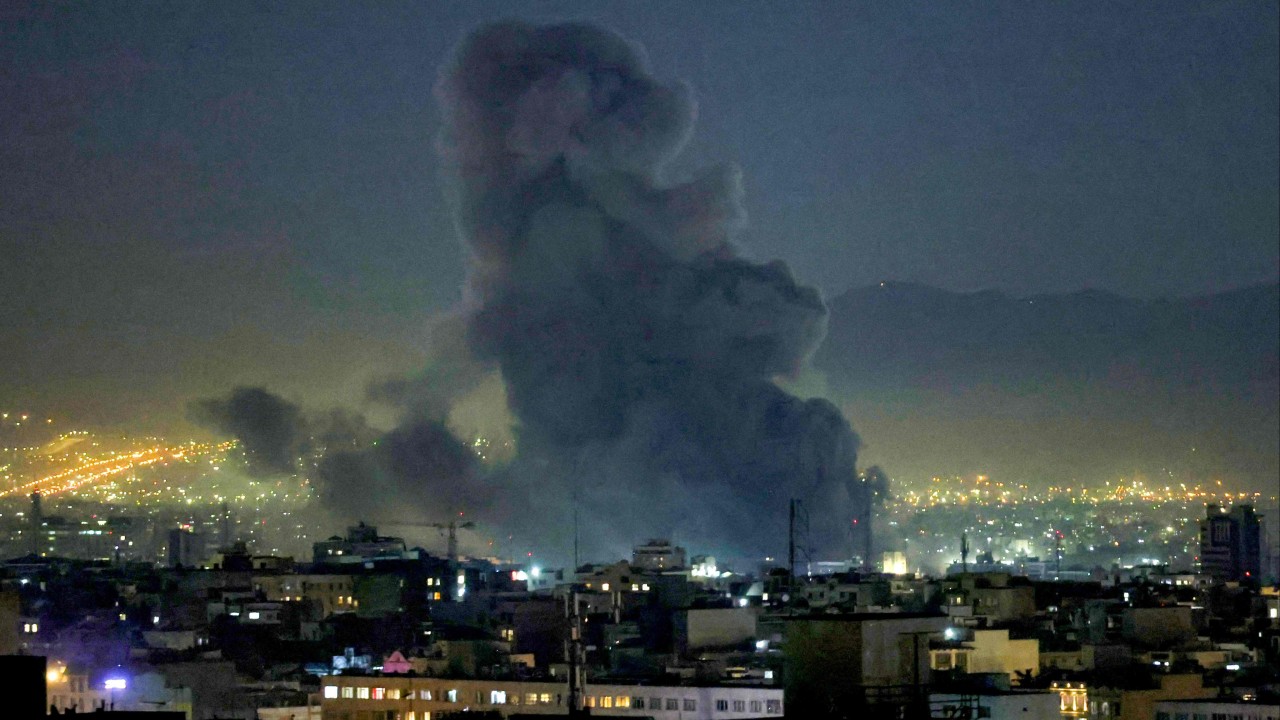
A single spark in the Middle East does more than light the sky; it rattles the windows of a factory in Shenzhen.
When missiles traverse the Persian Gulf or tankers sit idle under the shadow of a brewing conflict in Iran, the reverberations aren't just political. They are visceral. For China, these tremors represent a recurring nightmare of vulnerability. For decades, the world's manufacturing heart has relied on a fragile, liquid lifeline of crude oil flowing through some of the most volatile geography on the planet.
But something has shifted.
The chaos in the Middle East is no longer just a threat to be managed. It has become an accelerant. It is the heat that is tempering China’s resolve to become an "energy powerhouse," a term that analysts often use to describe a country that no longer needs to ask permission to keep its lights on.
The Vulnerability of the Strait
Consider a hypothetical logistics manager named Chen.
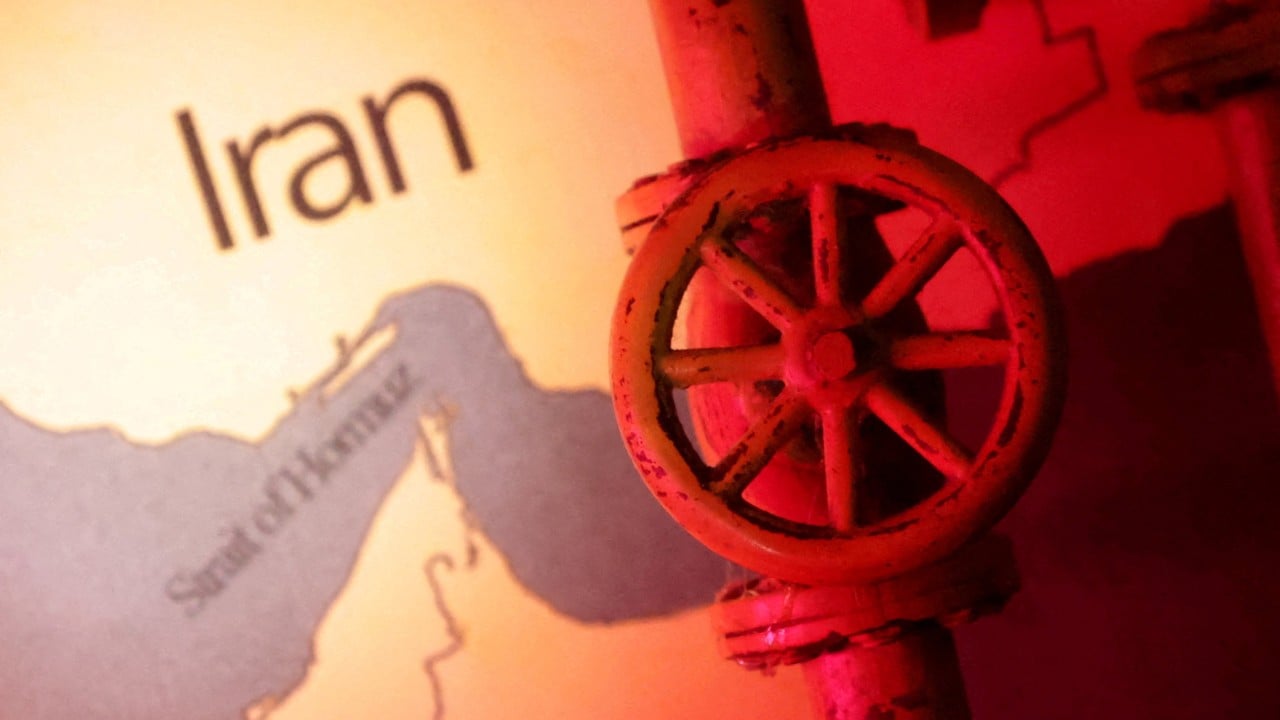
Chen doesn’t care about grand strategy. He cares about the price of the plastic resin used in his company’s electric vehicle components. Every time news breaks of an escalation between Iran and its neighbors, Chen watches the Brent Crude tickers with a sinking feeling. He knows that a significant portion of China's oil imports—roughly half—comes from the Middle East. Most of that must pass through the Strait of Hormuz.
If that narrow neck of water closes, Chen’s factory doesn't just get more expensive to run. It stops.
This isn't a minor concern. It is an existential dread. Beijing refers to this as the "Malacca Dilemma," but the Iranian theater adds a layer of complexity that is even harder to hedge. Unlike the open ocean, the Gulf is a tinderbox. When the tinder catches fire, China’s energy security goes up in smoke.
This persistent instability has forced a realization: being a global superpower is impossible if your fuel gauge is controlled by someone else’s war.
Turning Inward and Upward
The response to this insecurity isn't a diplomatic plea for peace. It is an industrial crusade.
China is currently building the equivalent of the world’s largest laboratory for energy independence. They are pouring capital into domestic renewables at a rate that defies standard economic modeling. While the West debates the speed of the transition, China is treating it like a mobilization for total defense.
The logic is simple. You cannot sanction the wind. You cannot blockade the sun.
By saturating the Gobi Desert with silicon and steel, China is effectively "onshoring" its energy production. This is the "energy powerhouse" push in its purest form. It is the transition from a consumer of global commodities to a master of domestic technology. Every gigawatt of solar power installed in the northwest is a barrel of oil they no longer need to ship from a port in the Gulf.
Statistics back this up. In recent years, China’s investment in green energy has eclipsed that of the U.S. and the EU combined. They aren't just buying solar panels; they own the supply chain that makes them. This isn't about being "green" for the sake of the environment—though that is a convenient byproduct. It is about power. Raw, unadulterated, geopolitical power.
The Hydrogen Gamble
But solar and wind are fickle. They don't provide the "baseload" stability that heavy industry requires. This is where the narrative takes a turn into the truly ambitious.
The conflict in Iran has provided the final push for China to go all-in on the "Hydrogen Economy." If oil is the blood of the old world, hydrogen is the proposed blood of the new one. By using their massive surplus of renewable energy to split water molecules, China is creating a fuel that can be stored, shipped, and burned just like gas, but without the baggage of Middle Eastern geography.
It is a massive, expensive, and technically daunting gamble.
Think of it as building a new circulatory system for an entire nation. It requires new pipelines, new engines, and a fundamental restructuring of how cities breathe. Yet, when the alternative is a perpetual reliance on a region that could erupt at any moment, the cost of the hydrogen transition starts to look like a bargain.
The Silent Shift in the Balance
The real story isn't just about technology, though. It’s about the shift in leverage.
For years, the U.S. acted as the de facto guarantor of security in the Middle East, a role that ironically protected the very oil lanes China depended on. As the U.S. pulls back and focus shifts toward domestic shale or different geopolitical theaters, China finds itself in a precarious position.
They are the world’s largest oil importer, yet they have the least amount of naval power to protect the routes.
This creates a vacuum of anxiety. To fill it, China is diversifying with a ruthlessness that borders on the obsessive. They are building pipelines through Russia and Central Asia—land routes that are immune to naval blockades. They are signing 25-year deals with Iran itself, attempting to buy stability with infrastructure investments.
But even these are stopgaps. The ultimate goal is total decoupling from the "Carbon Sea."
The Invisible Stakes
Why does this matter to someone living in London, New York, or Sydney?
Because the race for energy independence is also a race for technological hegemony. As China pushes to solve its "Iran problem," it is inadvertently—or perhaps very intentionally—becoming the world’s primary landlord for the technology of the future.
If you want to buy an EV battery that works, you likely need Chinese patents. If you want to install a high-efficiency wind turbine, you likely need Chinese components. By forcing themselves to evolve past oil due to Middle Eastern conflict, they are positioning themselves as the sole providers of the tools everyone else will need when the oil eventually runs out or becomes too toxic to use.
The stakes are invisible until they aren't.
They are hidden in the price of a battery, the efficiency of a power grid, and the quiet hum of a high-speed train. We are witnessing the birth of a new kind of empire—one built not on the conquest of territory, but on the mastery of the electron.
The Human Core of the Conflict
At the end of the day, this isn't about "analysts" or "policy papers."
It is about the millions of people like Chen, whose livelihoods depend on a world that doesn't break. It is about a nation’s collective memory of being poor and powerless, and its fierce determination to never let its fate be decided by a stray missile in a far-off desert.
The conflict in Iran is a tragedy of human proportions, a cycle of violence that seems to have no exit. But for China, it is also a mirror. It shows them exactly what they cannot afford to be: dependent.
Every time a siren wails in Tehran, a laboratory in Beijing works a little later into the night. Every time a tanker is seized, a new solar array is bolted into the dusty earth of Ningxia. The fire in the desert is being used to forge the tools of a new era.
The dragon is no longer content to wait for the world to be peaceful. It is simply building a world where the lack of peace no longer matters.
The sun rises over the Gobi, indifferent to the price of Brent Crude. In the long shadows of the dunes, the future is being wired together, one panel at a time, while the old world continues to burn.